A USC team tested six ways of naming the same problem on 7,338 Americans, and found the terms conservation professionals use most are the ones the public understands least.
Environmental science generates its own vocabulary, and some of that vocabulary escapes into public communication without anyone checking whether it lands. A study in npj Biodiversity from the University of Southern California checked.
The researchers showed 7,338 US adults one of six ways of naming the same problem and measured how familiar it was and how much concern it produced. The terms the field uses most came last.
“Almost everyone has heard of extinction and wants to support policies to save plants and animals,” said Wändi Bruine de Bruin, Provost Professor of Public Policy, Psychology, and Behavioral Science at USC and the study’s lead author. “But if you use unfamiliar terms to describe it, then people are not as concerned or willing to act. Environmental experts need to recognize that much of their terminology is jargon to average people.”
Six names for one problem
The terms tested were “biodiversity loss,” “biodiversity crisis,” “nature loss,” “nature crisis,” “extinction of plants and animals,” and “extinction crisis.” Each participant was randomly assigned one, and saw it either alone or accompanied by an explanation and photographs of plants and animals.
The design is a straightforward randomised experiment on wording, and the random assignment is what makes it informative: because nobody chose which term they saw, differences in response can be attributed to the words rather than to the kind of person who already uses them.
“Biodiversity loss” and “biodiversity crisis” were the least familiar and produced the least concern — and they stayed last even when the explanation and photographs were supplied. Context did not rescue them.
“Extinction of plants and animals” was the most familiar and produced the most concern, with or without context. “Nature loss” performed as well as the top term, but only when the explanation was provided.
The results held across political and demographic groups, which is the finding with the most practical weight. Message testing in environmental communication often produces advice that works for one audience and backfires with another; a wording effect that runs the same direction across the political spectrum is simply better wording rather than targeting.
Why crisis does not help
The most counterintuitive result is in the study’s own framing: the extinction of plants and animals is a crisis, but calling it an “extinction crisis” does not help.
The team has been here before. A 2024 study by the same group found “climate change” and “global warming” more effective than “climate crisis” or “climate emergency,” and a 2021 study found people struggled to understand common climate change terminology. The release gives no figures from either.
The pattern across those results suggests that escalating language does something other than what its users intend. “Crisis” and “emergency” are intensifiers adopted deliberately by advocates to convey urgency, and they appear to cost comprehension without buying concern — possibly because they signal a political position rather than a description, possibly because a word that announces its own urgency invites the listener to decide whether to accept the framing instead of simply absorbing the fact.
“A pattern has clearly emerged: simple, familiar language is most effective at communicating urgent environmental issues,” said Allison Agsten of the USC Annenberg Center for Climate Journalism and Communication, a co-author.
Why biodiversity is a hard word
The failure of “biodiversity” is more specific than general unfamiliarity. It is a compound abstraction: it names not a thing but a property of a collection of things, and understanding it requires holding in mind the idea of variety as a quantity that can be measured and lost.
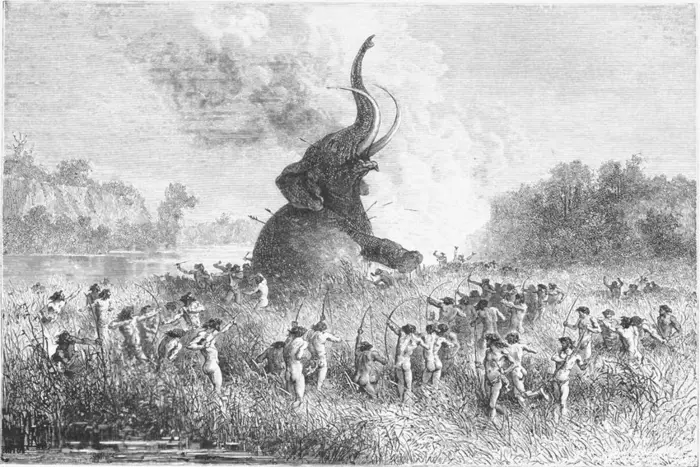
“Extinction,” by contrast, names an event with a clear and final meaning that most people encounter as children, usually in connection with dinosaurs. It comes with imagery attached, and the thing being lost is a species one can picture.
There is a cost to the swap, and the study does not address it. Biodiversity loss and extinction are not synonyms. A forest can lose most of its abundance, its genetic diversity and its ecological function while every species in it remains technically extant, and extinction is the final stage of a process that does most of its damage earlier. A communication strategy built on the word that works may systematically understate what is actually happening.
That is a real trade-off rather than an objection. The alternative, as the data show, is using a precise term that fails to convey that anything is wrong.
Timed for the delegates
The study was released near the start of the UN Biodiversity Conference in Yerevan, Armenia, where representatives of 195 countries are reviewing progress under the Kunming-Montreal Global Biodiversity Framework — an agreement whose name contains the word the study identifies as the problem.
“We are hoping the conference delegates take heed of the study so that they convey their findings in clear, simple language that maximizes its impact, empowering children and communities to make informed decisions and take action,” said Moa Cortobius, a co-author and climate resilience and anticipatory action adviser for Save the Children International.
The scale at issue is the IPBES estimate of at least 1 million plant and animal species at risk of extinction — a figure that has been in wide circulation since 2019 and that is, notably, usually reported in exactly the terms this study finds most effective.
What the study measured, and what it did not
The outcomes were familiarity, concern and stated willingness to support policies. None of those is behaviour.
The gap between expressed concern and action is the oldest problem in survey research on environmental attitudes, and a wording change that moves self-reported concern has not been shown to move voting, donating or anything else. The study establishes that terminology affects what people say in a survey, which is a precondition for affecting what they do rather than evidence of it.
The sample is also American, and the vocabulary findings are unlikely to transfer intact. “Biodiversity” is a Latinate construction that may read differently in languages where its components are more transparent, and the public resonance of “extinction” depends on a cultural familiarity with the concept that is not universal. A conference of 195 countries will need more than one such study.
The study’s other authors are Monica Dean and Carling Monder of USC Dornsife Public Exchange, Georgia Silvera Seamans of Local Nature Lab, Kimberly Tenggardjaja of the California Department of Fish and Wildlife, and Robert Spaull of IPBES. The work was funded by the Golden Belt Community Foundation, and the authors declare no competing interests.
Notes
- Bruine de Bruin, W., et al. npj Biodiversity, 2026. DOI: 10.1038/s44185-026-00163-4.
- University of Southern California. “Word choice matters: The extinction of plants and animals is a crisis, but calling it an ‘extinction crisis’ doesn’t help.” EurekAlert!, 22 October 2026. https://www.eurekalert.org/news-releases/1148762.


Leave a Reply