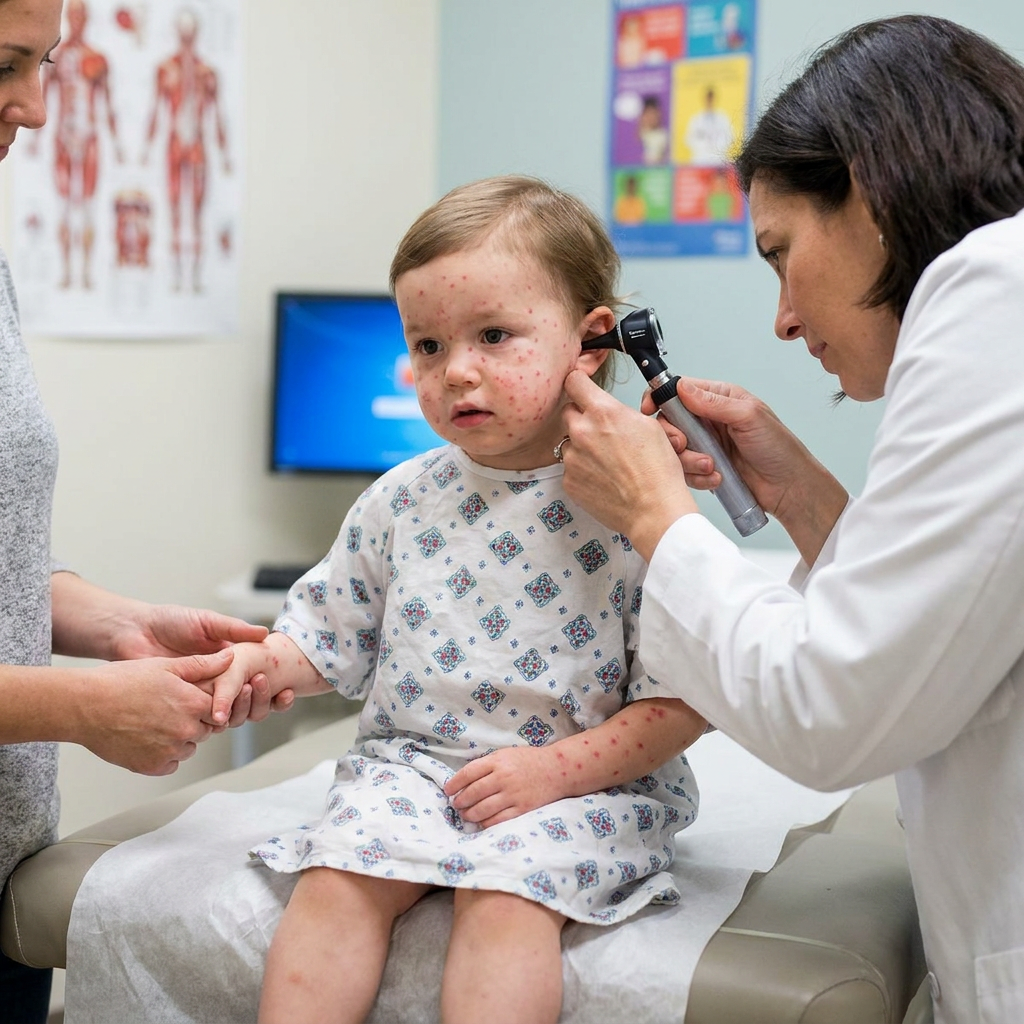
Measles Death Confirmed as U.S. Cases Top 3,100: A Lancaster County, Pennsylvania, infant died from measles amid a rapidly expanding outbreak, according to county coroner Stephen Diamantoni. The Amish girl, born in July with a rare neurologic disorder called Amish lethal microcephaly, died August 18 after receiving palliative care; it remains unclear whether she contracted measles before or after birth. The CDC’s 2026 measles count has now reached 3,134 cases, including 231 newly reported infections, though federal officials have not yet added either Pennsylvania infant death to the national fatality tally. Ninety-four percent of cases involve people who were unvaccinated or had unknown vaccination status, and 8% have required hospitalization. Pennsylvania alone reported 115 new cases, bringing its total to 577, with children accounting for 30% of infections. (cidrap.umn.edu)
Gene Editing Turns Pancreatic Cells Into Insulin Producers: Researchers have identified a genetic “brake” that prevents pancreatic duct cells from becoming insulin-producing beta cells, potentially opening another route toward regenerative diabetes therapies. A genome-wide CRISPR screen of more than 19,000 genes pinpointed ALDH3B2. Disabling it increased conversion of human duct cells into beta-like cells from less than 1% naturally to about 8.5%. The reprogrammed cells activated insulin-related genes and responded to changing glucose levels. When transplanted into diabetic, immune-deficient mice, they released human insulin and lowered blood sugar to near-normal levels for the six-week experiment. Because ALDH3B2 encodes an enzyme, researchers suggest it might eventually be targeted pharmacologically rather than through gene editing. The work remains preclinical, and researchers have not demonstrated that the approach can regenerate functional beta cells safely inside people. (Medical Xpress)
Inflammation Alters Developing Human Brain Tissue: A new experimental system using living human fetal brain tissue provides unusually direct evidence for how maternal inflammation could influence brain development. Researchers at the University of Aberdeen maintained three-dimensional pieces of developing cerebral cortex, called “cerebroids,” outside the body and exposed them to IL-17A, an inflammatory signaling protein associated with maternal immune activation. The treatment caused premature cortical folding, increased tissue thickness and accelerated neuron production and maturation. Researchers traced many effects to sustained activation of the NF-κB pathway; blocking that pathway reversed numerous changes. Published in Nature Neuroscience, the study does not demonstrate that maternal inflammation causes neurodevelopmental disorders. Instead, it provides a human-tissue model for investigating biological mechanisms linking prenatal immune activity with altered brain development and potentially identifying protective interventions. (Medical Xpress)
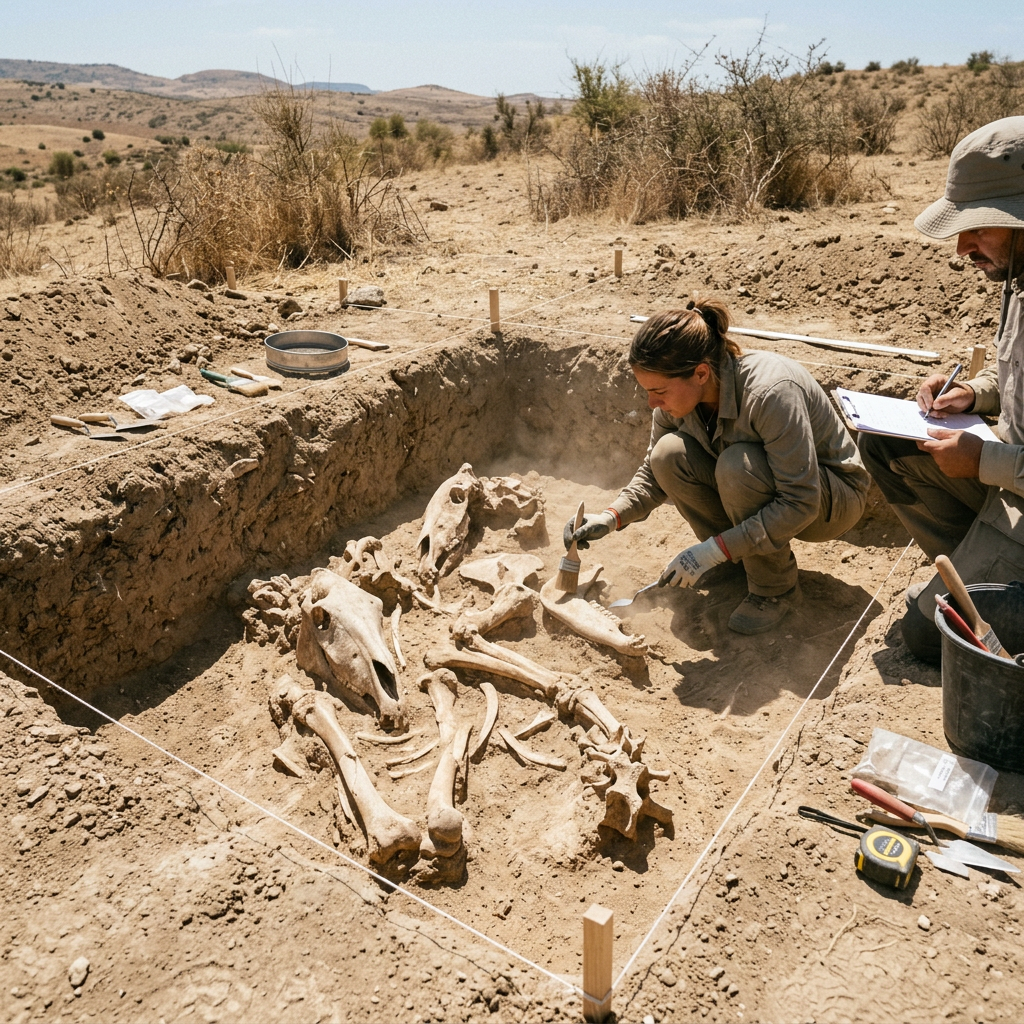
Ancient DNA Retires the American Cheetah: The extinct North American predator Miracinonyx trumani looked remarkably like a cheetah, but ancient DNA shows the resemblance was an evolutionary illusion. Researchers sequenced high-quality genomes from fossils between roughly 23,000 and 31,000 years old and found Miracinonyx was actually the sister species of the modern puma, with the lineages separating approximately 2.6 million years ago. Its long limbs and slender body therefore evolved independently of African cheetahs—a striking example of convergent evolution. The genomes also revealed unexpected ecological flexibility. Northern populations living in the Yukon appear to have adapted to Arctic conditions and consumed substantial amounts of fish. Genetic diversity declined gradually rather than collapsing abruptly through inbreeding, suggesting the species became increasingly vulnerable as environments changed near the end of the Pleistocene. (News)
AI Maps Hidden Structures Near Earth’s Core: Deep learning has transformed millions of earthquake recordings into the densest global map yet of irregular structures near Earth’s core-mantle boundary, 2,900 kilometers underground. Researchers analyzed more than two million seismic records collected from 1990 through 2024, training an algorithm to detect faint “PKP precursor” waves that are difficult to identify manually. The system found 174,929 signals—roughly ten times the combined number in previous global datasets. Instead of isolated anomalies, the expanded record revealed six broad belts of heterogeneous material beneath regions including the North Atlantic, northern Eurasia, Southern Africa, the Pacific and Antarctica. Published in Journal of Geophysical Research: Solid Earth, the findings suggest Earth’s lowermost mantle contains complicated mixtures of ancient subducted crust, chemically distinct material and localized melting, providing new clues about mantle circulation and planetary evolution. (Phys.org)
New Method Maps Where Megaquakes Could Strike: Geophysicists have developed a technique that identifies sections of major faults where enormous earthquakes are most likely to rupture—not when they will happen. Researchers at University of California, Riverside use GPS measurements of subtle ground deformation to identify locked fault regions, or asperities, where tectonic stress accumulates. In a striking real-world test, their model identified the section of Russia’s Kamchatka subduction zone that subsequently ruptured during the 2025 magnitude-8.8 earthquake. The technique, described in Geophysical Research Letters, cannot predict earthquake timing or tsunami magnitude, but mapping where strain is concentrated could substantially improve long-term hazard assessments. Researchers are now applying the approach to subduction zones around Japan, Mexico, New Zealand and the Pacific Northwest and investigating whether it can help characterize California faults. (Phys.org)

Immune Signal Helps Zebrafish Regrow Spinal Cords: A specialized group of immune cells may help explain why zebrafish can regenerate spinal cords while humans generally cannot. Researchers at Technische Universität Dresden found that a subset of neutrophils releases the signaling molecule IL-4 after spinal injury. IL-4 restrains excessive inflammation from other immune cells, creating conditions that allow severed nerve fibers to regrow. When researchers disabled these neutrophils, inflammation intensified, regeneration failed and the fish struggled to recover movement. Remarkably, supplying IL-4 directly restored successful spinal-cord regeneration even without the neutrophils. Published in the Journal of Neuroinflammation, the findings suggest immune cells are active coordinators of tissue repair rather than simply cleanup crews. Whether manipulating IL-4 could improve spinal-cord healing in humans remains unknown. (ScienceDaily)
Gut Bacteria May Spread Across Continents: The human gut microbiome may be considerably more transmissible and evolutionarily dynamic than scientists assumed. Researchers led by the University of Vienna analyzed thousands of bacterial isolates and large international metagenomic datasets using a “reverse ecology” approach. They discovered that familiar bacterial species often contain distinct evolutionary populations adapted to particular intestinal environments. Some lineages were associated with aging, inflammatory bowel disease, colorectal cancer and type 2 diabetes—relationships that can disappear when researchers analyze only at the species level. Particularly strikingly, highly competitive populations showed evidence of spreading across continents within decades, a pattern more commonly associated with pathogens. Published in Nature, the findings suggest person-to-person transmission could be an underappreciated force shaping microbiomes and may eventually enable more precise microbial biomarkers and therapies. (ScienceDaily)
Entangled Particles Test the Standard Model: Physicists have revived a largely dormant 35-year-old test of the Standard Model by exploiting quantum entanglement. The BESIII Collaboration analyzed pairs of entangled lambda hyperons to independently measure Vus, an element of the CKM matrix governing how quarks change flavor. Existing measurements based largely on kaons show a persistent small discrepancy that could indicate incomplete physics—or unresolved experimental and theoretical problems. By examining roughly 10 billion collision events, researchers reconstructed otherwise inaccessible information about hyperon decays and obtained a Vus value consistent with the CKM matrix’s requirement that relevant probabilities sum to one. Published in Nature, the result supports the Standard Model but remains mildly inconsistent with kaon-derived measurements. Improved hyperon measurements could determine whether that disagreement eventually exposes genuinely new physics. (Phys.org)
Ancient Charcoal Reveals Antarctic Wildfires: Antarctica’s ancient rainforests did more than survive months of polar darkness—they repeatedly burned. Researchers reanalyzing a sediment core from the Amundsen Sea discovered microscopic charcoal documenting the southernmost wildfires yet identified, occurring roughly 90 million years ago when forests grew only about 900 kilometers from the South Pole. The Late Cretaceous environment averaged around 12°C annually under atmospheric CO₂ concentrations four to six times modern levels. Charcoal indicates mainly low-temperature surface fires involving conifers, while amber records fire damage to trees and Sphagnum spores reveal early raised peat bogs. Researchers suspect lightning ignited the fires. Published in Communications Earth & Environment, the study suggests recurring wildfire helped transform swampy forests into peatlands, offering an ancient analogue for interactions among warming, drying, fire and carbon-storing wetlands. (Phys.org)
Body Rhythms May Help Shape Consciousness: Conscious experience may depend partly on synchronization between brain activity and rhythms generated by the heart, lungs and other organs. A new theoretical synthesis led by researchers at University of California, Santa Barbara argues that heartbeat, breathing and gastric rhythms provide recurring signals around which neuronal activity can organize. Previous experiments show, for example, that memory performance can vary with breathing phase, while frightening stimuli can reach awareness differently depending on the cardiac cycle. The authors propose that consciousness emerges not exclusively from the brain but from dynamic brain-body coordination, with both unusually weak and excessively strong coupling potentially contributing to disorders including anxiety and depression. Published in Neuroscience of Consciousness, the paper offers a framework rather than proof of a new consciousness theory, but generates experimentally testable predictions about brain-body synchrony. (Medical Xpress)


Leave a Reply