OpenAI Claims Three Major Mathematical and Physics Breakthroughs
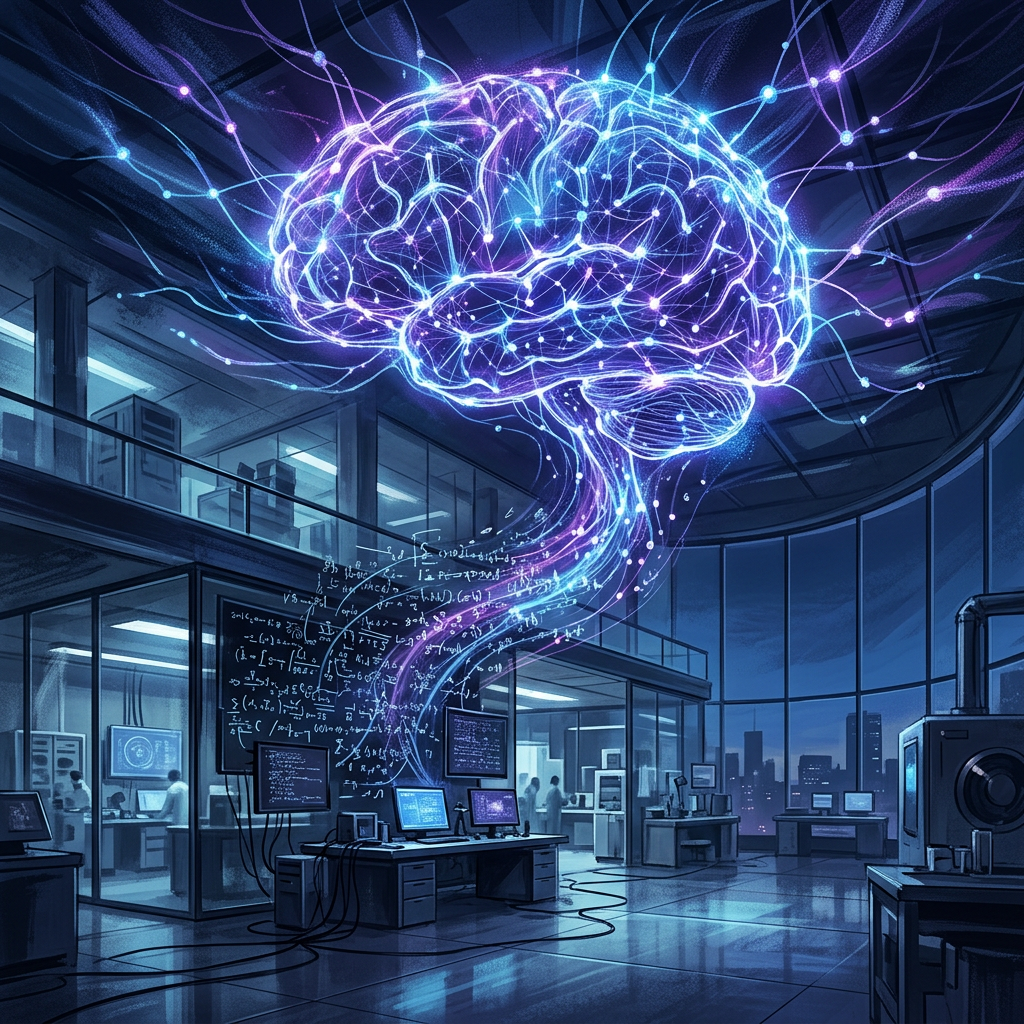
OpenAI has announced three potentially groundbreaking discoveries generated by artificial intelligence, challenging longstanding assumptions in mathematics, computer science and theoretical physics. The company claims its models proved the local smoothing conjecture across all dimensions, with implications for the Kakeya conjecture and related mathematical problems. A second result reportedly disproves the Exponential Time Hypothesis, a foundational assumption about computational complexity. The third concerns a rigorous mathematical construction of interacting quantum field theories, including quantum chromodynamics. OpenAI has released mathematical and computer science materials for examination, including machine-checkable Lean proofs, while an external expert group will review the physics work. Announced October 26, the claims could have far-reaching implications, but their significance and validity still require detailed independent scrutiny. (The Verge)
Brain Cancer Hijacks Neurons to Accelerate Growth
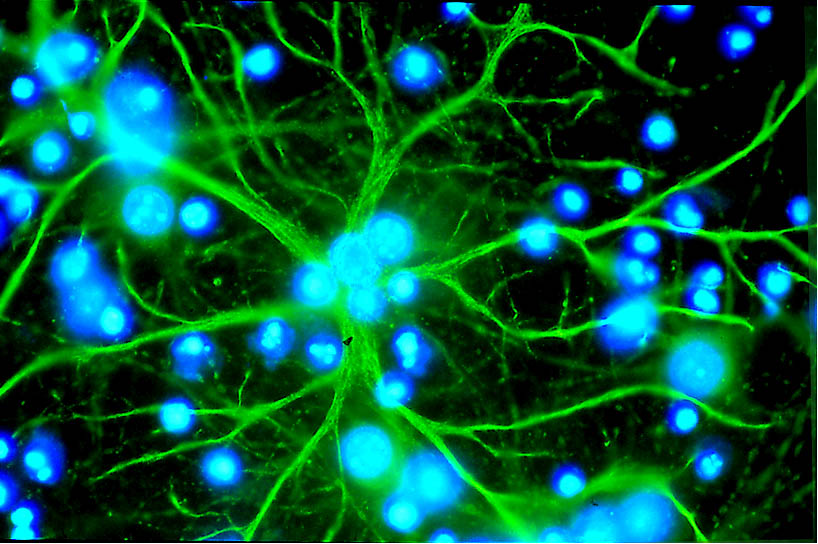
Researchers have discovered how aggressive brain tumors disable neighboring neurons that would otherwise restrain cancer growth. Scientists at Baylor College of Medicine found that glioblastoma manipulates inhibitory brain circuits, allowing excessive electrical activity that promotes tumor progression. The researchers identified two proteins, GAT-1 and DBI, involved in regulating the neurotransmitter GABA, which normally suppresses neuronal excitation. Experiments in mice showed that activating inhibitory neurons slowed tumor growth, while disrupting their activity accelerated it. Remarkably, two existing anti-seizure medications, lorazepam and valproic acid, also reduced tumor proliferation in experimental models. Published in Neuron and reported October 27, the findings suggest that restoring normal brain-circuit activity could complement conventional cancer treatments. However, the approach has not been demonstrated to improve outcomes in human patients. (BCM)
Wind Turbines Have Killed Millions of Bats
Wind turbines may have killed approximately 18.7 million bats across the contiguous United States between 1981 and 2024, according to the most comprehensive nationwide assessment yet. Researchers at the U.S. Geological Survey combined nearly 500 monitoring reports from 277 wind energy facilities with statistical models accounting for incomplete observations. Three migratory species suffered particularly heavy estimated losses: 6.7 million hoary bats, 5.8 million eastern red bats and 3.4 million silver-haired bats. Annual fatalities exceeded an estimated 1.5 million beginning in 2021. Larger turbine rotor areas, reduced ground clearance and proximity to rivers were associated with greater mortality. Published in Proceedings of the National Academy of Sciences, the findings could inform turbine placement and operating strategies that reduce wildlife casualties while supporting renewable energy development. (U.S. Geological Survey)
Greenhouse Gas Concentrations Reach Another Historic High
Atmospheric concentrations of the three most important long-lived greenhouse gases reached unprecedented levels in 2025, according to a new World Meteorological Organization report. Global carbon dioxide concentrations averaged 426.8 parts per million, approximately 53% above preindustrial levels. Methane reached 1,948 parts per billion, while nitrous oxide climbed to 339.1 parts per billion. Carbon dioxide increased by 2.8 parts per million between 2024 and 2025, continuing a decades-long acceleration driven primarily by fossil fuel emissions. The report also highlights rising concentrations of sulfur hexafluoride, an exceptionally powerful industrial greenhouse gas. Released October 27 ahead of the COP31 climate summit, the assessment emphasizes that atmospheric concentrations reflect accumulated emissions, not simply annual output. Continued accumulation commits the planet to additional warming for generations. (World Meteorological Organization)
Gold Nanoparticles Reveal Century-Old Mathematical Puzzle
Physicists have transformed a mathematical problem dating to 1904 into an observable laboratory experiment using ultracold helium droplets and gold nanoparticles. Researchers at the University of Innsbruck investigated the Thomson problem, which asks how mutually repelling electrical charges arrange themselves on a sphere to minimize energy. Scientists placed charges onto superfluid helium nanodroplets, then attached gold atoms to their positions. When the helium evaporated, the remaining nanoparticles preserved the original arrangements for imaging with electron microscopes. Analysis of 25 configurations containing five to 36 charges revealed close agreement with theoretical predictions. Published October 26 in Physical Review Letters, the experiment provides a new way to investigate charge ordering on curved surfaces. Researchers emphasize that the work does not solve the general mathematical problem. (Phys. Rev. Lett.)

Leave a Reply