Scientists Engineer Nanoparticles for Personalized Cancer Vaccines
Researchers at MIT have developed an experimental vaccine platform that uses engineered viruses to stimulate immune responses against cancer. The technology employs M13 bacteriophages, harmless viruses that form nanoscale fibers, as carriers for tumor-specific antigens. By adjusting how densely these antigens cover the fibers, scientists increased the vaccines’ effectiveness in mice. Particles displaying antigens at 35% density generated stronger immune responses than those with 6% density, significantly reducing tumor formation after exposure to cancer cells. The researchers also demonstrated protection against experimental colon tumors using a cancer-specific neoantigen. Published October 30 in Advanced Healthcare Materials, the findings suggest that interchangeable antigens could eventually enable vaccines tailored to individual patients. However, the approach remains preclinical, and its ability to treat established human cancers has not been demonstrated. (Massachusetts Institute of Technology)
Rubin Observatory Discovers Two Hidden Milky Way Companions
Astronomers using early observations from the Vera C. Rubin Observatory in Chile have discovered two previously unknown companions of the Milky Way, demonstrating the telescope’s extraordinary ability to detect faint celestial objects. One discovery, Aquarius IV, is an ultra-faint dwarf galaxy approximately 355,000 light-years from Earth. The second, Rubin-GC1, is a star cluster hidden behind dense clouds of galactic dust. Researchers identified both objects using preliminary observations covering only about 7% of the night sky. Published in two astronomical studies and reported October 28, the findings suggest Rubin’s decade-long survey could uncover hundreds of additional satellite galaxies and star clusters. Such discoveries could help astronomers reconstruct the Milky Way’s formation history and test theories about dark matter, which dominates the mass of many faint dwarf galaxies. (Yale News)
Ancient Spanish Copper Mine Reveals Bronze Age Trade Connections
Archaeologists investigating an ancient copper mine in southern Spain have uncovered evidence suggesting that the Iberian Peninsula played a much larger role in European Bronze Age trade than previously established. Excavations at Las Minillas revealed extensive mining infrastructure, 735 grooved stone hammers and charcoal samples dating mining activity to approximately 1350–750 BCE. Chemical and lead-isotope analyses identified similarities between copper from the site and 11 bronze artifacts discovered in Scandinavia, suggesting possible long-distance connections. Published October 26 in Antiquity, the research identifies Las Minillas as the largest securely dated Late Bronze Age copper mine excavated in Iberia. Researchers propose that southern Iberian mining networks may have supplied distant European markets as older production centers declined. However, direct trade routes and the scale of regional copper exports remain uncertain. (Cambridge Core)
Ancient Indigenous Practice Protects Clams From Ocean Acidification
A traditional Indigenous shellfish-management practice may offer a practical way to protect coastal ecosystems against ocean acidification. Researchers at the University of California, Davis discovered that mixing crushed seashells into beach sediment reduces local acidity and helps young Pacific littleneck clams grow. In a 90-day laboratory experiment, scientists raised juvenile clams under four different conditions, including acidified seawater with and without crushed shells. Clams grown in shell-enriched sediment developed larger shells, while genetic analyses showed that the stress-related changes normally associated with acidic water were substantially reduced. Published in Biogeosciences and reported October 29, the findings provide a biological explanation for an Indigenous stewardship practice used for generations. Researchers caution that the benefits operate locally and have not yet been demonstrated at large ecological scales. (UC Davis)
Scientists Discover Two Superconducting States in One Material
Physicists at Cornell University have demonstrated that uranium ditelluride can support two distinct forms of superconductivity under carefully controlled conditions, advancing the search for materials suitable for future quantum computers. Researchers subjected the compound to extreme pressure and cooled it to approximately 1–2 kelvin above absolute zero. Using precise ultrasound measurements, they identified separate superconducting states and a region where both coexist and interact. Surprisingly, one superconducting state disappeared as temperatures decreased because the competing state became dominant. Published October 30 in Nature Physics, the findings establish uranium ditelluride as a promising candidate for topological superconductivity, an unusual quantum state potentially useful for more robust quantum information processing. However, topological superconductivity itself has not been conclusively demonstrated, and practical applications remain distant. (Cornell Chronicle)
Pancreatic Cancer Steals Cholesterol From Neighboring Cells
Researchers have discovered how pancreatic cancer cells steal nutrients from surrounding tissue while simultaneously weakening the immune system. Scientists at Fox Chase Cancer Center identified a protein called ANO6 that enables cancer-associated fibroblasts to transfer cholesterol and other fats directly to tumor cells through a process known as trogocytosis. The same mechanism also contributes to T-cell exhaustion, reducing immune cells’ ability to attack tumors. In laboratory and mouse experiments, disrupting ANO6 reduced tumor growth and improved markers of immune activity. Two existing drugs, niclosamide and clofazimine, also reduced tumor weight in experimental models. Reported October 30 in Nature Cancer, the findings suggest that targeting ANO6 could simultaneously deprive pancreatic tumors of nutrients and restore immune defenses. However, the approach has not been validated in human patients. (Medical Xpress)
Alzheimer’s-Linked Proteins Help Deliver Genetic Material Into Sperm
Proteins commonly associated with Alzheimer’s and Parkinson’s diseases may perform an unexpected beneficial function in human reproduction. Researchers at Columbia University’s Zuckerman Institute discovered that amyloid fibrils found in semen can transport RNA molecules into sperm cells. Using fluorescent labeling and cryo-electron tomography, scientists demonstrated that the fibers bind genetic material and carry it inside sperm rather than merely attaching to their surfaces. In experiments, embryos fertilized using sperm exposed to amyloid-bound RNA produced at least ten times more of a corresponding fluorescent protein than controls. Published October 26 in Molecular Cell, the findings suggest that amyloids may participate in transferring biological information between generations. Researchers also propose that these naturally occurring structures could eventually deliver therapeutic RNA or CRISPR components, although their safety and effectiveness for gene therapy remain unproven. (Zuckerman Institute)
NASA Discovers Martian Dust Small Enough to Threaten Astronaut Health
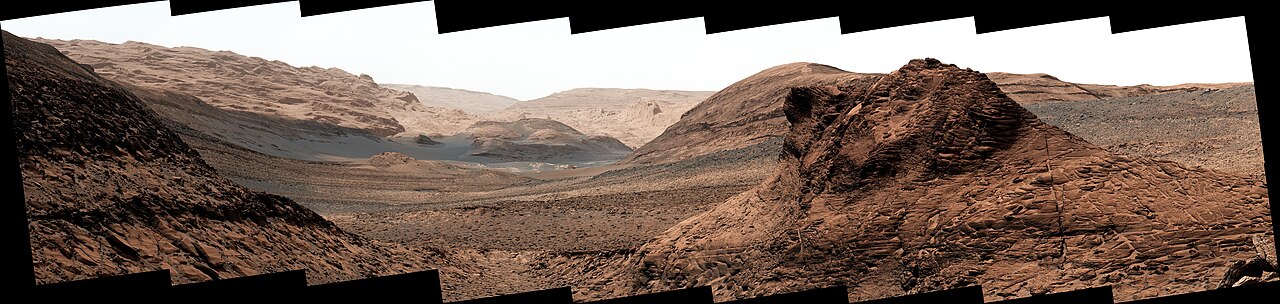
NASA’s Perseverance rover has detected exceptionally fine dust particles on Mars, revealing a potential health hazard for future human explorers. Scientists analyzed dust accumulated on samples of spacesuit materials carried aboard the rover over 1,645 Martian days. Using the PIXL instrument, researchers identified particles smaller than 2.5 micrometers, including ultrafine grains measuring approximately 100 nanometers across. Particles this small can penetrate deep into human lungs, while certain ultrafine particles may enter the bloodstream or reach the brain. Different materials attracted different particle sizes, apparently influenced by static electricity. Published October 27 in Proceedings of the National Academy of Sciences, the findings could inform spacesuit fabrics, habitat filtration systems and dust-removal procedures. However, the study measured dust characteristics rather than directly establishing health effects in astronauts. (NASA)
Mountain Erosion May Release More Carbon Dioxide Than Expected
Scientists have discovered that the geological composition of mountains plays a much greater role in erosion and carbon dioxide emissions than previously recognized. Researchers at the University of Massachusetts Amherst examined Colorado’s East River Watershed using a new technique that measures beryllium-10, a rare isotope produced when cosmic rays strike minerals near Earth’s surface. They found that relatively soft shale erodes approximately three times faster than harder igneous rock, even on gentler slopes. This matters because weathering of certain sedimentary rocks can release carbon dioxide, while weathering of other minerals can absorb it. Published in Science Advances and reported October 30, the findings suggest that geological carbon-cycle models may underestimate emissions associated with mountain erosion. Researchers emphasize that broader measurements are necessary before estimating global impacts. (Phys.org)
Ancient Pompeii Wardrobe Reveals Family’s Final Possessions
Archaeologists excavating a house in Pompeii have uncovered an extraordinary collection of personal belongings preserved since Mount Vesuvius erupted in AD 79. Inside the remains of a wooden wardrobe, researchers discovered cosmetics tools, a glass perfume bottle, an incense burner, a bronze lantern and 38 coins. The most remarkable object was a child’s necklace containing more than 20 small charms depicting deities including Bes and Mercury. Known as a crepundia, such necklaces could serve as protective amulets, identification objects and rattles that helped parents locate their children. A box of lead weights suggests someone in the household may have worked as a trader. Reported October 30, the discovery provides an intimate glimpse of Roman domestic life. Archaeologists suspect the possessions were abandoned during a hurried evacuation, although the occupants’ identities remain uncertain. (The Guardian)
IMAGE CREDIT: NASA



Leave a Reply