Scientists Solve 40-Year Mystery of Common Gut Virus
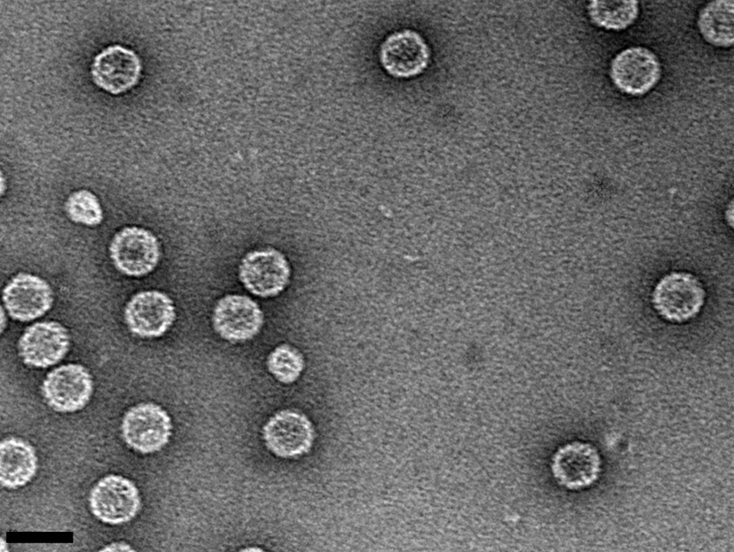
Scientists have discovered that a widespread virus long suspected of infecting human intestinal cells actually attacks bacteria living in the gut. Researchers at Washington University School of Medicine in St. Louis identified the bacterial host of picobirnaviruses, which have been associated with diarrhea and other gastrointestinal conditions for nearly four decades. Using laboratory-grown bacterial cultures, mouse experiments and molecular imaging, the team demonstrated that the viruses reproduce inside gut bacteria rather than human tissue. Published October 29 in Nature Microbiology, the discovery establishes picobirnaviruses as only the third known family of bacteria-infecting RNA viruses. The findings fundamentally change how researchers understand these viruses’ potential effects on human health. However, whether they cause disease indirectly by disrupting beneficial bacterial communities remains unresolved. (WashU Medicine)
Gene Editing Reverses Muscular Dystrophy Progression in Experimental Model
Researchers have developed a gene-editing strategy that halted and even reversed disease progression in an experimental model of Duchenne muscular dystrophy, a severe inherited disorder that progressively destroys muscle tissue. Scientists at the University of Pennsylvania used CRISPR technology to increase production of utrophin, a protein capable of partially replacing dystrophin, which is deficient in affected patients. The approach combines gene-editing techniques with lipid nanoparticle delivery technology related to systems used in mRNA vaccines. Rather than attempting to repair the many possible mutations responsible for Duchenne muscular dystrophy, the researchers focused on strengthening a naturally occurring substitute protein. Published in Molecular Therapy Advances and reported October 28, the findings suggest a potentially broader treatment strategy. However, effectiveness and safety in human patients remain unproven. (Penn Today)
Ancient Martian Meteorite Reveals Evidence of Water 4.1 Billion Years Ago
A meteorite discovered in Mali’s Sahara Desert has provided new evidence that liquid water existed on Mars more than 4.1 billion years ago, potentially strengthening the case for an early habitable environment. Researchers examined Teghaza 001, a reddish igneous rock formed deep within the Martian crust and later blasted into space by an impact. Uranium-lead dating of zircon crystals established its extraordinary age, making it potentially the oldest known Martian meteorite recovered on Earth. Chemical and isotopic analyses revealed that water had penetrated the planet’s crust and interacted with cooling molten rock. Published in Science and reported October 29, the findings provide a rare direct record of Mars’ earliest geological history. Although the evidence supports ancient water activity, it does not demonstrate that life existed there. (Reuters)
Century-Old Fossil Could Rewrite History of Insect Flight
A microscopic fossil discovered in Scotland a century ago may have misled scientists about when flying insects first evolved. Researchers at London’s Natural History Museum reexamined Rhyniognatha hirsti, a 408-million-year-old fossil previously considered the earliest known winged insect. Using advanced confocal microscopy, scientists reconstructed anatomical details of its jaws and discovered that they do not conclusively match those of either insects or centipedes. The findings undermine its longstanding use as a reference point for dating insect evolution. Published in Scientific Reports and announced October 29, the research suggests that flying insects may have appeared as much as 80 million years later than previously estimated. However, the fossil’s precise identity remains uncertain, and the study does not establish a definitive new date for the origin of flight. (Natural History Museum)
Magnetic Implants Could Give Prosthetic Limbs More Natural Control
Engineers at MIT have demonstrated a new method for controlling robotic prosthetics using tiny magnetic beads implanted inside muscles. The system measures changes in distance between paired magnets as muscles contract and stretch, allowing external sensors to track movement more accurately than conventional skin-mounted electrodes. Researchers tested the technology in three participants with below-knee amputations, comparing magnetic measurements with electrical signals recorded from muscles. During virtual prosthetic-control experiments, participants used their muscle movements to guide a cursor across a screen, with the magnetic system providing more accurate and stable control. Published October 29 in Nature Sensors, the findings suggest a path toward artificial limbs that respond more naturally to users’ intentions. However, participants did not control actual prosthetic limbs during these experiments, and larger clinical studies are underway. (Massachusetts Institute of Technology)
Scientists Find Biological Differences in Younger Colorectal Cancer Patients
Researchers have identified cellular differences that may help explain why colorectal cancer can behave more aggressively in younger adults. Scientists at Dana-Farber Cancer Institute, Mass General Brigham and the Broad Institute analyzed 189 tumors from patients aged 29 to over 90, examining gene activity in more than 850,000 cells. Tumors from younger patients contained higher proportions of connective and supporting cells, which have been associated with chemotherapy resistance. Researchers also detected increased activity of long non-coding RNAs and molecular signals potentially involved in cancer invasion. Published October 29 in Nature Medicine, the findings were validated using additional tumor datasets. However, researchers have not established that these biological differences directly cause more aggressive disease. The study could guide future investigations into early-onset colorectal cancer. (Newswise)
Faulty RNA Processing May Trigger Immune Attacks in Lupus
Scientists have uncovered a possible mechanism behind lupus, a chronic autoimmune disease in which the immune system attacks the body’s own tissues. Researchers at the La Jolla Institute for Immunology and University of Washington examined blood samples from 34 patients with systemic lupus erythematosus. They discovered abnormal RNA splicing in neutrophils, immune cells normally responsible for fighting infections, in 33 patients. These errors produced unusual proteins, known as neoantigens, that other immune cells could mistake for foreign threats. Both T cells and antibody-producing B cells recognized these altered proteins, potentially contributing to widespread inflammation. Published October 28 in Nature, the findings suggest that abnormal RNA processing may help sustain autoimmune attacks. Researchers caution that the abnormalities might be consequences of existing inflammation rather than its original cause. (La Jolla Institute for Immunology)
Los Angeles Wildfires Exposed Millions to Toxic Metals
Smoke from the devastating 2025 Los Angeles wildfires exposed millions of residents to unusually high concentrations of toxic heavy metals, according to research published October 28 in Science Advances. Scientists at the California Institute of Technology analyzed hourly air-pollution measurements collected during the Eaton Fire and compared them with smoke from a vegetation-dominated wildfire. The urban fire plume contained approximately 50 times more lead, three times more arsenic and seven times more halogens. Researchers estimated that roughly seven million people experienced a 24-hour period during which airborne lead concentrations exceeded typical background levels by more than 80 times. Burning buildings, vehicles, electronics and household materials contributed to the contamination. The findings highlight the need for more detailed smoke monitoring, although individual health consequences were not directly measured. (Scripps News)
Ancient Silk Reveals Hidden Rituals Behind China’s Bronze Masks
Archaeologists have discovered that elaborate bronze masks and other ceremonial objects from China’s ancient Shu civilization were once associated with finely woven silk. Researchers examining artifacts from Sanxingdui in Sichuan Province identified textile residues on 101 objects, including bronze, gold, jade and ivory pieces dating to approximately 1300–1046 BCE. Microscopic and chemical analyses confirmed mulberry silk fibers, while additional tests revealed mineral pigments, including red ochre, and evidence of organic coloring. Different weaving densities suggest sophisticated textile production comparable to contemporary centers in northern China. Published October 26 in Antiquity, the findings indicate that silk may have been used to wrap, decorate or cushion ritual objects, or offered independently during ceremonies. Whether the silk was manufactured locally remains uncertain. (Cambridge Core)
Scientists Engineer Molecular Qubits for Future Quantum Chips
Researchers have demonstrated a new approach to building quantum-computing components using specially engineered organic molecules that could eventually be integrated into conventionally manufactured chips. German startup NVision developed the technology while investigating molecular techniques for improving medical imaging. Scientists used artificial intelligence to screen hundreds of candidate molecules and synthesized approximately 40 before identifying one with suitable quantum properties. The resulting molecular system allows individual electron spins to be controlled and linked to light, a potentially important capability for connecting quantum bits. Published October 28 in Nature, the research suggests a manufacturing approach resembling techniques used to produce organic LED displays. NVision has partnered with American chipmaker HyperLight to pursue integrated devices. However, scalable quantum processors based on the technology have not yet been demonstrated. (Reuters)
IMAGE CREDIT: Aaron M. Collier, Outi L. Lyytinen, Yusong R. Guo, Yukimatsu Toh, Minna M. Poranen, Yizhi J. Tao



Leave a Reply