Seattle-based actor Billy Finn has taken on one of theater’s most demanding roles: Hamlet in Union Arts Center’s production of Shakespeare’s tragedy, running through October 11. Directed by Victor Pappas, the production places Finn at the center of the familiar story of grief, suspicion, revenge, and unraveling certainty. His performance has drawn particular notice for the energy and volatility he brings to the Danish prince, with BroadwayWorld praising the complexity of his portrayal and describing it as a key force driving the production. Finn’s recent Seattle credits also include work with Seattle Rep, Village Theatre, and Union Arts Center, where he appeared as Middle Scrooge in A Christmas Carol.
Hamlet is part of Union Arts Center’s 2026–27 season, which continues later this month with the Seattle premiere of Douglas Lyons’ Table 17. The sharply observed romantic comedy follows former fiancés Jada and Dallas as a supposedly casual dinner forces them to confront the wounds, chemistry, and unfinished business of their relationship. Directed by Shermona Mitchell and starring Bria Samoné Henderson, Brandon JonesMooney, and Lamar Legend, Table 17 begins previews October 24 and opens October 29 at the Falls Theatre, running through November 15.
For The Exchange, Finn moves from Shakespeare’s enduring questions about mortality, identity, and what lies beyond human experience to a scientific question of his own—one that takes us into the mysteries of consciousness and what, if anything, might remain when the brain and body cease to function.

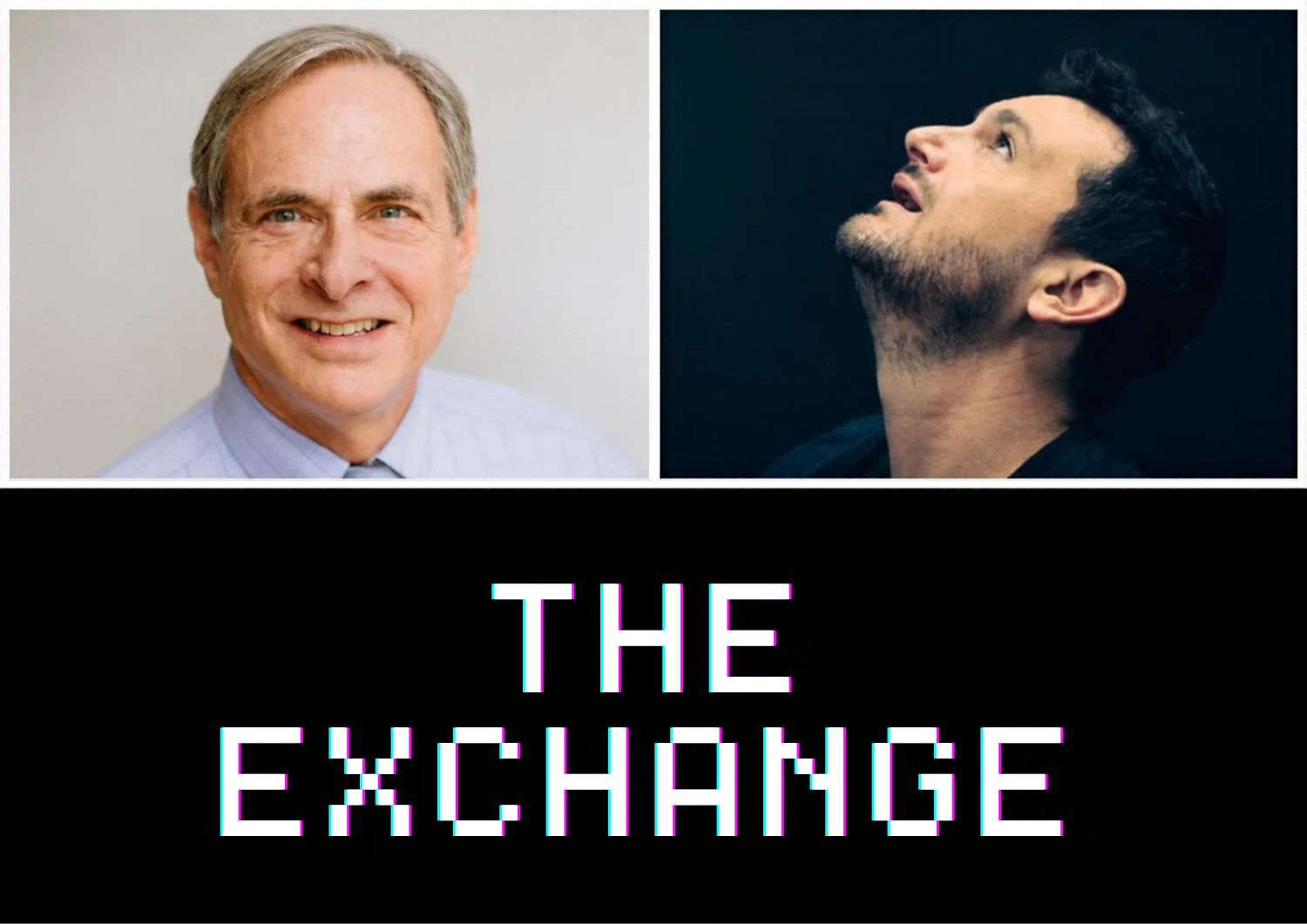
Dr. Bruce Greyson has spent more than four decades investigating one of medicine’s most difficult questions: what happens to consciousness at the edge of death? A psychiatrist and the Chester F. Carlson Professor Emeritus of Psychiatry and Neurobehavioral Sciences at the University of Virginia, Greyson is a longtime member of UVA’s Division of Perceptual Studies, where his research has focused on near-death experiences, death-bed visions, and related phenomena. He previously directed the division from 2002 to 2014 and continues to research and write about near-death experiences in retirement.
Greyson’s interest in the subject began early in his medical career after an encounter with a patient who reported an apparent out-of-body experience while unconscious. That experience helped launch a decades-long effort to study near-death experiences systematically rather than dismiss them as anecdotes. He later co-founded the International Association for Near-Death Studies, edited the Journal of Near-Death Studies for 27 years, and published extensively on the subject. His 2021 book, After: A Doctor Explores What Near-Death Experiences Reveal About Life and Beyond, brought that work to a broader audience, examining what these experiences may tell us about the relationship between the brain, mind, consciousness, and death.
For The Exchange, Greyson takes up a question posed by actor Billy Finn about consciousness, death, and whether anything of the self might persist when the body stops functioning. In answering it, Greyson brings the perspective of a physician who has spent much of his career examining precisely that boundary—and then turns the conversation back toward Finn with a question of his own.

BILLY FINN: While working on this play, I’ve been thinking a lot about death, ghosts, and what really happens to us after we die. According to a theory called Orchestrated Objective Reduction, consciousness may be rooted in quantum processes rather than only in biological structures, meaning that it might not be destroyed when the brain stops functioning. So, I guess I’m asking: is there any scientific possibility that our consciousness can survive death, that ghosts could be real, and that we could actually shuffle off this mortal coil into that undiscovered country?
BRUCE GREYSON: Traditionally, the concept of life after death has been regarded as a matter of religious or philosophical belief, seemingly beyond the reach of scientific inquiry. However, that position is fundamentally flawed and conceptually misguided. The possibility of postmortem survival is not only a valid subject for scientific inquiry, but an empirical approach to studying consciousness beyond death is both feasible and potentially transformative for our current mercenary society.
The confusion about whether or not life after death is amenable to scientific inquiry stems from confusing physicalism with science. Physicalism (formerly called materialism) is a philosophical theory that postulates that everything in the world can be fully accounted for in physical terms; it assumes that everything we experience – thought, emotions, perceptions, memories, intentions, etc. – are explainable by the workings of the brain. Science, on the other hand, is not a philosophical theory but rather a systematic method for investigating the world, beginning with careful observation of patterns in nature a method for investigating the world. Physicalism was developed as one of several theories developed to explain what science discovers. The major competing theories about the world are physicalism (the belief that only physical things are real), idealism (the belief that only mental things are real), and dualism (the belief that both physical and mental things are real), although there are several theories, including variations of these three major ones.
While physicalism is widely assumed by many scientists to be true, it is important to recognize that it is not an immutable doctrine. Theories scientists once accepted as obvious (like the theory that the sun revolves around the Earth) were later shown to be wrong or incomplete as science uncovered new findings that contradicted the old theory. While theories assume that certain concepts are true, science never makes claims about truth; it proposes hypotheses about how things work, tests those hypotheses against empirical data, and refines them based on outcomes. It is a journey of continual questioning, continually eliminating false assumptions and crafting new models that fit the facts better than older models do – but acknowledging that future research may well find even better models to replace our new ones. The understanding that science is fundamentally a dynamic tool designed for inquiry rather than a set of fixed beliefs is crucial for recognizing that science is not an entity that inherently accepts or rejects ideas. The strength of science lies in its self-correcting nature. As new technologies emerge and methodologies improve, this inherent flexibility allows science to investigate phenomena that may not fit within the currently popular philosophical theory.
Understanding the distinction between a philosophical theories and scientific methods clarifies why questions about consciousness after death are not beyond the scope of scientific inquiry, but in fact, can be explored scientifically just like any other observed phenomena.
The controversial Orchestrated Objective Reduction theory posits that consciousness arises not from the electrical and chemical processes in the brain, but rather from quantum processes orchestrated by cellular structures within brain microtubules. This does not quite explain consciousness: the theory never spells out how quantum state collapse leads to consciousness. Furthermore, the theory does not imply continuation of consciousness after brain death: it does not explain what the quantum processes persist in after the brain’s microtubules and its cellular structures have died.
There are, however, several theories of consciousness that do imply postmortem consciousness. The most prominent of these theories is the filter or transmission theory, which speculates that the mind exists outside of the brain, and the role of the brain is to receive thoughts and other mental content from the mind, filter out those that are not important for survival in the physical world, and convert the remainder into electrical and chemical signals that the body can understand and use to negotiate in the physical world. A metaphor for this process might be a cell phone, which receives radio signals from an external source, filters out all the signals except the one phone call you want to hear, and converts that one call’s radio signal into a sounds that you can understand. This filter or transmission theory was first described by Hippocrates more than 2000 years ago, and over the past century scientists have amassed a substantial amount of empirical evidence that supports it, while contradicting brain-based models of consciousness. We need to keep in mind, however, that the filter theory, like all theories (including physicalism and Orchestrated objection Reduction), is a conceptual model of reality; it is not reality. As Alfred Korzybski wrote a century ago, “the map is not the territory.”
The scientific approach to understanding reality begins with observing facts and formulating hypotheses to explain and predict them. Some facts to consider when exploring the possibility of “shuffling off this mortal coil into that undiscovered country” include personal accounts from, and experiments involving, people who have been revived after clinical death (near-death experiences), apparent encounters with deceased individuals, and children reporting memories suggestive of reincarnation, and phenomena suggesting that, even during life, mind can function independent of the physical brain.
These phenomena comprise a large body of data, culled from scientific observations and controlled experiments, that supports the idea of consciousness survival bodily death. They can be can be grouped roughly into evidence that people now deceased still exist in some form, evidence that people now living had lived before, and evidence that consciousness can function independent of the brain. Some of these findings come from research into near-death experiences.
Evidence that people now deceased still exist in some form includes apparitions (sometimes called spirits or ghosts) of the deceased, either spontaneous or invoked, that provide verifiable information unknown to any living person; communications through mediums allegedly from deceased persons that provide accurate information and traits unique to the particular deceased person; experiments in which deceased persons communicate the key to decoding messages that they encrypted prior to death; and “instrumental transcommunication” (“electronic voice phenomena”), a controversial phenomenon, with less rigorous scientific investigation, in which living persons claim to receive messages from deceased individuals through voice recordings or other electronic media, such as computers.
Evidence that people now living had lived before include verifiable memories of a previous life, often voiced by preschool children when they encounter something that apparently reminds them of the alleged past life; unexpected personality traits, likes and dislikes attributed to a previous life, such as young children who refuse to eat food that is not prepared as they claim their mother did in their prior lives; unlearned skills attributed to a previous life, such as young children speaking an unlearned foreign language fluently, or playing a musical instrument they had not been taught; and birthmarks or birth defects attributed to death wounds or trauma in a prior life, sometimes corroborated by autopsy reports of the alleged previous personality.
Evidence that the mind can function independent of the brain comes from “terminal lucidity,” in which people suffering from advanced irreversible dementia who had been unable to speak or recognize family for extended periods unexpectedly recover mental function shortly before death, including recognizing family and showing appropriate emotional responses to them, and carrying on meaningful conversations; out-of-body experiences, in which people claim to leave their physical bodies (often during documented periods of unconsciousness) and report accurate perceptions of their environs from a visible perspective outside the body (in some experiments, persons claiming to leave their bodies can accurately identify visual images observable only from a particular viewpoint away from the body); and experiments in which a person’s purported out-of-body essence is detected, sometimes by electromagnetic or mechanical detectors or by animals as detectors.
Much evidence suggestive of consciousness surviving after death comes from near-death experiences. This includes enhanced mental activity (cognition, perception, and memory formation) while the brain is medically documented to be anesthetized or in coma or otherwise seriously impaired; accurate out-of-body perceptions while in coma or anesthetized; apparent encounters with deceased persons during a near-death experience in which accurate information unknown to the near-death experiencer is communicated; and apparent encounters during near-death experiences with deceased persons who were not yet known to have died.
None of this scientific evidence suggestive of survival after death is conclusive, compelling belief in an afterlife; but much of it is compatible with such a belief, while it is incompatible with a physicalist model of consciousness created by the physical brain (or by quantum processes in physical microtubules within the brain). Dismissing these observations merely because they do not fit the physicalist framework is not a good scientific practice. A truly scientific approach embraces all observed phenomena, regardless of how it aligns with current theories. As we dive deeper into the mysteries of consciousness – including the question of whether it can function independent of the brain and may persist beyond death, we must remain open to the likelihood that our understanding will continue to evolve. Scientific research into the possibility of postmortem consciousness is not merely an academic endeavor; it is a profound exploration of what it means to be human and the nature of our reality.
BRUCE GREYSON: I can appreciate that playing Hamlet would compel you to ponder ideas about death, ghosts, and what happens to us after death. My twofold question for you (you can answer either or both parts) is: What role might the portrayal of an afterlife in theatrical productions have on cultural acceptance or rejection of the idea of consciousness after death? And would knowing whether there is scientific research supporting or rejecting consciousness after death change how actors might portray characters like Hamlet?
BILLY FINN: I think all portrayals of an afterlife – whether in theatre, film, literature, philosophy, or religion – have a collective impact on our perceptions, hopes and fears about what happens after we die. When I was a kid, I was terrified of dying because I thought it was like what happens to the villain at the end of Indiana Jones and the Last Crusade when he drinks from the wrong grail and immediately disintegrates into a skeleton.
Thankfully, my ideas about death and the afterlife have evolved over time – in large part due to portrayals of those things that I have seen and read. Plays like “Waiting for Godot” by Samuel Beckett, “No Exit” by Jean-Paul Sartre, and – of course – “Hamlet” by William Shakespeare have consciously and subconsciously shaped my understanding of death and what comes next.
What theatre does better than all other art forms is it forms community between the actors telling the story and the audience listening to it. Plays that wrestle with these themes have always made me feel a little less alone and a little less afraid of whatever comes next. Hopefully, they can lead to a readier acceptance of death by reminding us in the moment that we are all alive in the present moment.
And would knowing whether there is scientific research supporting or rejecting consciousness after death change how actors might portray characters like Hamlet?
I think if I knew for certain that there was something after death, it would certainly change the way I approach playing Hamlet. Knowing for sure that there IS an “undiscovered country” would perhaps make my Hamlet less haunted by the prospect of dying. But again, not knowing exactly what that undiscovered country IS – what it looks like, how we move through it, etc – would retain a lot of the great mystery found in the play.
As a student himself, Hamlet revels in questions and philosophy and morality. Knowing one way or the other what happens after we die would only cause him to have even MORE questions – including and especially “to be or not to be?”


Leave a Reply