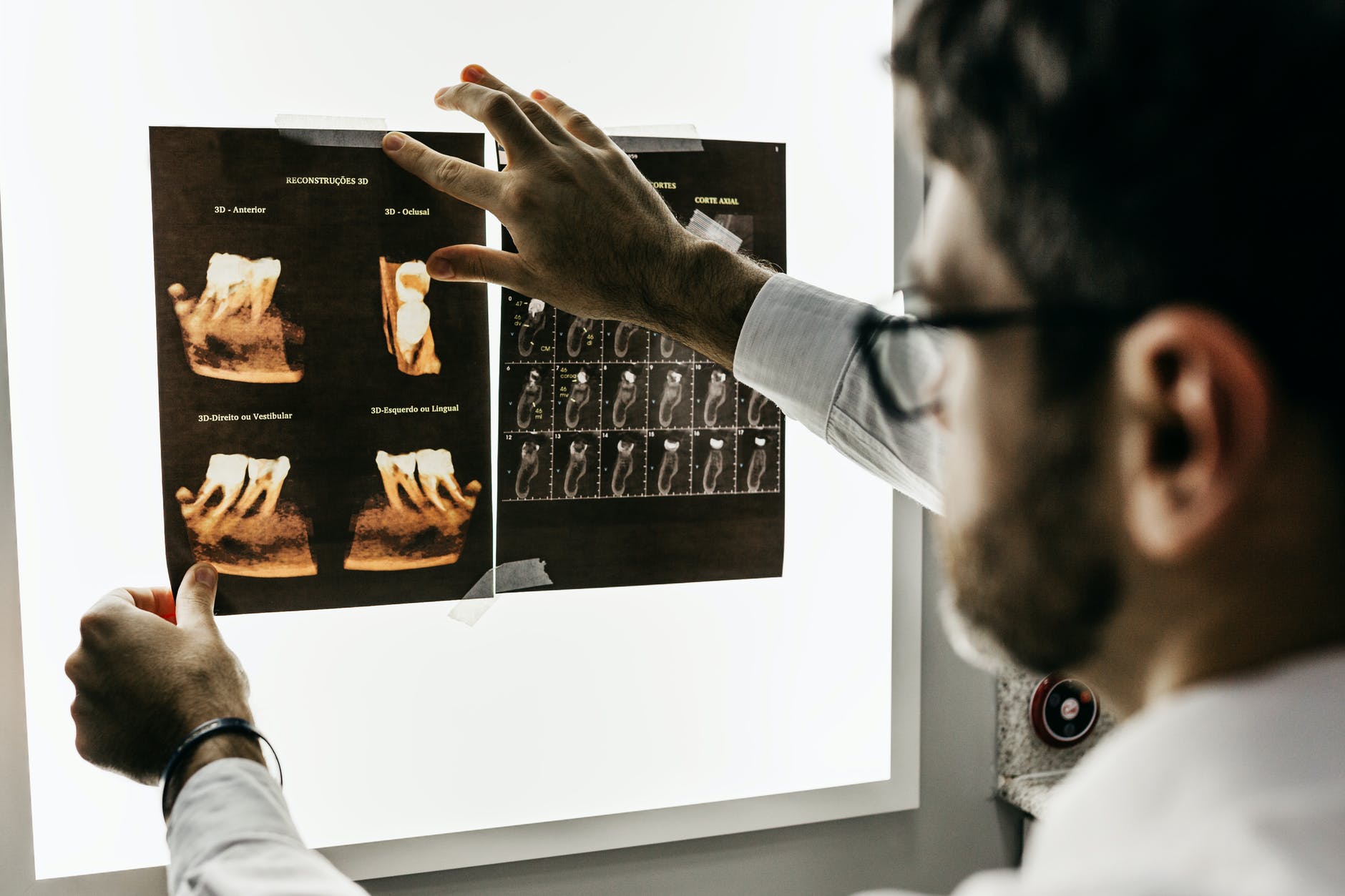
Dentists and gastroenterologists tend to work at opposite ends of the same tube. One looks after the gums, teeth and jaw; the other handles the stomach and bowel. Patients, though, have long noticed that trouble in one place often travels with trouble in the other, and clinicians have reported for years that people with inflammatory bowel disease seem to suffer more gum disease than average. What nobody has been able to say with confidence is why.
A new study published in October offers a partial answer, and it is written in DNA. Drawing on enormous genetic datasets, an international team has found that three common oral conditions and five gastrointestinal disorders share a substantial amount of genetic architecture, and that at least one of the oral diseases may sit upstream of a gut disease rather than simply keeping it company.
A map of shared risk
The researchers examined periodontitis (the chronic inflammatory gum disease that can loosen teeth), dental caries and temporomandibular disorders, which affect the jaw joint and the muscles that move it. They paired each against five gastrointestinal disorders, producing fifteen oral–gut combinations to test.
Their raw material was genome-wide association data from large populations of European ancestry, supplemented by individual-level records from the UK Biobank. Genome-wide association studies scan millions of points across the genome looking for variants that turn up more often in people with a given disease. By comparing those patterns between diseases, researchers can estimate how much of the inherited risk two conditions hold in common.
The answer, in this case, was a lot. Fourteen of the fifteen oral–gastrointestinal pairs showed significant genetic correlation across the whole genome. That is an unusually consistent result. It suggests the overlap is not a quirk of one disease pairing but a broad feature of how the mouth and the gut are wired.
Drilling down, the team identified 400 candidate pleiotropic loci, stretches of the genome that appear to influence more than one disease at once, spread across 390 chromosomal regions. Some of those regions behaved like hotspots, recurring again and again across different disease pairs. When the researchers looked at what the genes in those regions actually do, two themes dominated: the immune response and the signaling pathways of the gastrointestinal tract.
That finding fits a story that has been building for some time. Both the gums and the gut are mucosal surfaces, heavily colonized by microbes and patrolled by immune cells that must constantly decide what to tolerate and what to attack. When that balance tips toward chronic inflammation, disease follows. If the same inherited immune settings shape how both surfaces respond to their microbial neighbors, it would make sense for their diseases to cluster in the same people.
Testing cause and effect
Correlation, even at the genetic level, does not establish that one disease causes another. To probe that question, the team turned to Mendelian randomization, a technique that uses genetic variants as a kind of natural experiment. Because the variants a person inherits are assigned at conception and are not altered by later lifestyle or illness, they can stand in for lifelong differences in disease risk, reducing some of the confounding that plagues ordinary observational studies.
The researchers ran the analysis in both directions. Genetic liability to periodontitis was associated with a higher risk of inflammatory bowel disease. When they reversed the question, asking whether genetic liability to inflammatory bowel disease raised the risk of periodontitis, the effect vanished. In the authors’ words, the forward association held “whereas no reverse causal association was observed.”
If that one-way relationship holds up, it hints that inflammation beginning in the mouth could contribute to disease further down the digestive tract. Researchers have proposed several routes by which that might happen, from oral bacteria swallowed and carried into the gut to inflammatory signals circulating in the bloodstream. The new study does not test those mechanisms directly, but it gives them a sharper target.
Genes are not destiny
The team also asked how everyday life interacts with inherited risk. Using the UK Biobank data, they found that diet, body mass index, physical activity, smoking and mental health all modified the genetic risk of developing oral and gastrointestinal disease together.
That matters for patients. A genetic predisposition shared between the mouth and the gut is not something anyone can change, but the factors layered on top of it are, at least in part. The results add weight to the idea that a person’s habits and wellbeing can shift where their genetic risk actually lands.
Reading the results carefully
The authors are explicit that their findings are hypothesis-generating rather than conclusive. Mendelian randomization rests on assumptions that can be difficult to verify, and genetic correlation tells researchers where to look, not what they will find there. The work was also confined largely to people of European ancestry, so it remains unclear how well the patterns hold in other populations, whose genetic backgrounds and environmental exposures can differ considerably.
Still, the study pushes a long-standing clinical hunch onto firmer ground. It suggests that the mouth and the gut may be better understood as parts of a single inflammatory system than as separate territories, and that care for one might eventually be counted as care for the other. For now, the practical message is a familiar one with a new rationale: looking after your gums may matter for more than your smile.
The research was supported by the Noel Martin Foundation at the University of Sydney. The authors declared no conflicts of interest.
Featured image: Photo by Jonathan Borba on Pexels.com
Notes
- “Shared Genetic Pathways Linking Oral Diseases to Gastrointestinal Disorders: An Integrative Multi-Omics Study,” published October 8, 2026. DOI: 10.1002/imm3.70062.
- International Society for Health Data Science, news release via EurekAlert!, https://www.eurekalert.org/news-releases/1147107.


Leave a Reply