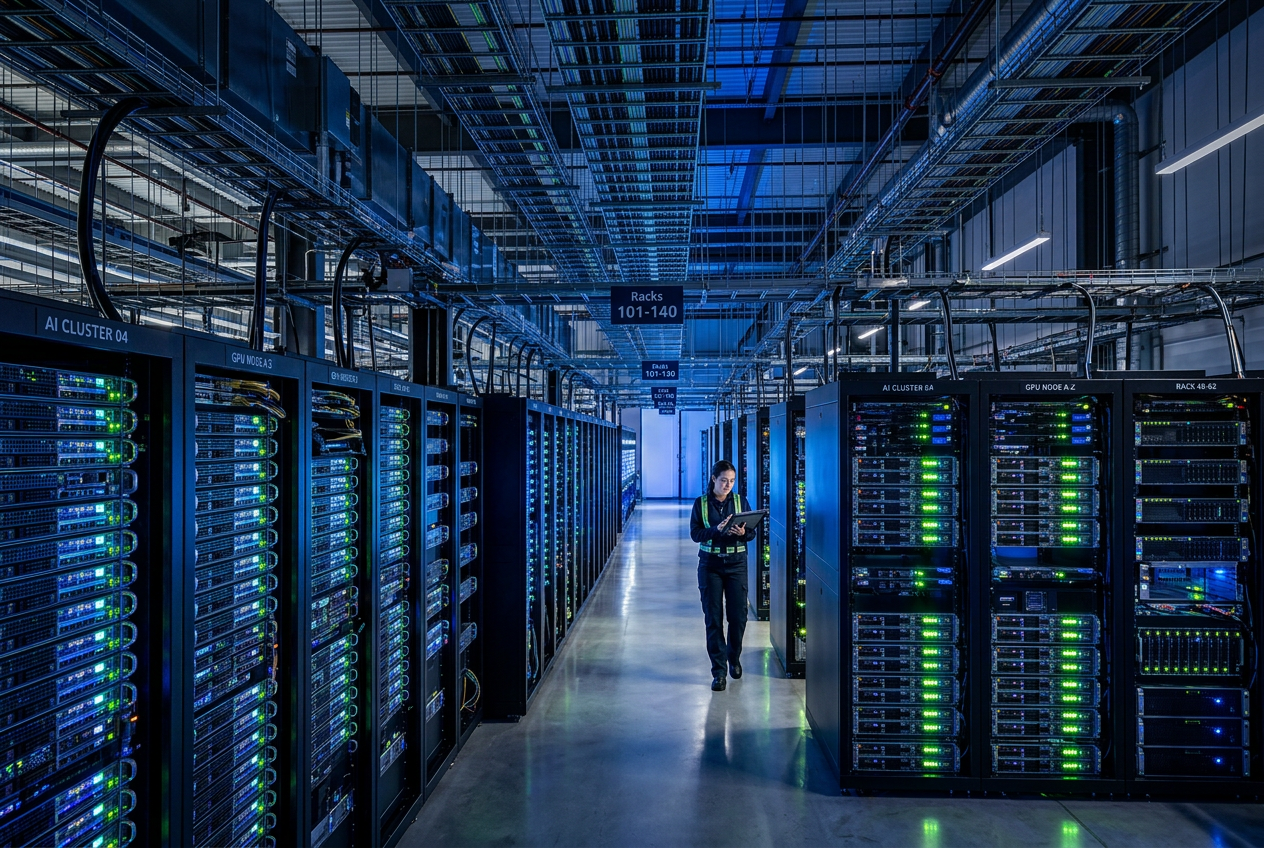
The boom in artificial intelligence runs on electricity, but it also runs on water. Data centers generate enormous amounts of heat, and many of them shed it through evaporative cooling systems that consume freshwater, sometimes in regions where freshwater is already scarce. As new facilities spring up across Texas and the American West, communities are asking an uncomfortable question: where will all that water come from?
Engineers at the University of Texas at Austin think part of the answer may lie in water nobody else wants. In a study published in Water Research, they show that desalination, the process of separating salt from water, could turn salty or contaminated sources into cooling water for data centers, easing the pressure on local freshwater supplies.
“We’re not waiting for a futuristic technology to come along and solve this problem for us,” said Vaibhav Bahadur, a professor in the Walker Department of Mechanical Engineering at UT Austin’s Cockrell School of Engineering. “We can solve parts of this problem with the technology we already have; there’s just a cost to it.”
Two ways to take the salt out
The researchers compared the two main families of desalination technology. Membrane systems, chiefly reverse osmosis, push water through filters that let water molecules pass while holding back salt. They are relatively energy-efficient, but they struggle with water that is saltier than seawater.
Thermal systems take the opposite approach, essentially boiling water and collecting the purified vapor. They can handle extremely salty water, but they consume far more energy and are prone to scaling, the mineral buildup that clogs equipment and drives up maintenance costs.
Which approach makes sense depends on the water available. A key finding of the study is that even the most energy-intensive treatment would use only a small fraction of a data center’s total energy footprint. For facilities that already draw staggering amounts of power for computation, the added cost of cleaning their own cooling water may be easier to absorb than critics might assume.
An oilfield problem becomes a resource
One of the most intriguing potential sources is produced water, the briny, often contaminated water that comes up alongside oil and gas. The Permian Basin of West Texas and southeastern New Mexico generates staggering volumes of it.
“The Permian (Basin) puts out 1,200 Olympic-sized swimming pools per day,” Bahadur said. Most of that water is currently injected back underground for disposal, a practice that has been linked to earthquakes in the region and is running into physical limits. “We’re also running out of space to bury that water, by as early as 2030,” he said.
For Bahadur, that makes produced water a problem in search of a use. “We need to find a way to use it, and cleaning it up for data centers is a great way to do that,” he said.
Measuring local water stress
To compare options in a consistent way, the team introduced a new metric called Saline Water Utilization Intensity, or SWUI, which captures how much a data center’s water use would stress local supplies depending on its source and treatment method.
The researchers modeled three data center scenarios. The one that performed best was in Longview, Texas, where a facility drawing on brackish groundwater, which is saltier than freshwater but far less salty than seawater, and treating it with a two-stage reverse osmosis system produced the lowest local water stress of the cases examined. Brackish aquifers are widespread in Texas and largely untapped for drinking water, making them a natural candidate for industrial use.
The analysis does not suggest that desalination is free or simple. Treatment plants must be built and maintained, and the concentrated brine left over must be disposed of responsibly. But it reframes the debate: instead of choosing between data centers and drinking water, communities may be able to steer facilities toward water sources that do not compete with residents and farms.
Tools for local decision-makers
The study is part of a broader effort by the COMPASS consortium, which is developing software to help public officials evaluate proposed data center projects. Many of those decisions are made by small towns and counties suddenly courted by some of the world’s largest technology companies.
According to Ning Lin, chief economist at the Bureau of Economic Geology in UT Austin’s Jackson School of Geosciences, local officials often have no objective analysis of water, power usage and other important factors when weighing those deals. “We hope to give decision-makers the tools they need to protect and benefit their communities,” Lin said.
As demand for computing power keeps climbing, those tools may become essential. The data center boom is not slowing down, and the water it needs has to come from somewhere. The UT Austin work suggests that, with existing technology and a willingness to pay for it, some of that water could come from sources that no one else is using.
Notes
- “System-scale design and analysis of desalination systems for meeting water needs of data centers.” Water Research, published September 12, 2026. DOI: 10.1016/j.watres.2026.126748.
- University of Texas at Austin, “Can salty, dirty water cool data centers?” news release via EurekAlert!, October 9, 2026, https://www.eurekalert.org/news-releases/1147161.



Leave a Reply