Tardigrades are famous for surviving almost anything. The microscopic animals, nicknamed water bears for their stubby legs and lumbering gait, can endure near-total dehydration, extreme cold and even the vacuum of space, then spring back to life when conditions improve. Scientists have spent years trying to understand how they pull it off, and whether any of their tricks could be borrowed.
A new study suggests one of those tricks could help solve a long-standing problem in medicine: how to freeze human blood without damaging it. Researchers led by Hui Yang and Leming Sun report in ACS Applied Materials & Interfaces that a fragment of a tardigrade protein, combined with a common sugar, protected red blood cells during freezing as well as or better than the standard method, without the need for glycerol.
“This study was our first attempt to translate a lesson from an extraordinarily resilient organism into a practical cell-preservation strategy,” said Sun, one of the study’s corresponding authors.
The Problem With Glycerol
Most donated red blood cells are refrigerated and must be used within about six weeks. Freezing allows them to be stored for years, which is valuable for rare blood types, military stockpiles and disaster preparedness. But freezing is dangerous for cells. As water turns to ice, sharp crystals can puncture cell membranes, and the cells burst when thawed.
The standard solution is glycerol, an antifreeze-like compound that prevents ice crystals from forming inside cells. Glycerol works, but it creates a new problem. Before frozen blood can be transfused, the glycerol must be removed, and that removal process is time-consuming and itself damages some of the cells.
Borrowing From Water Bears
Tardigrades protect themselves differently. Among their tools is a family of proteins called CAHS, short for cytosolic abundant heat-soluble proteins. CAHS proteins interact with trehalose, a sugar that stabilizes cell membranes and proteins under stress. Trehalose is familiar outside biology too: food manufacturers use it to help reduce freezer burn in frozen foods.
The researchers wanted to know whether a CAHS protein could help trehalose protect red blood cells in place of glycerol. They made a surprising discovery along the way. It was not the full-length CAHS protein that provided the protection, but a specific section of it, a short motif. Working with a fragment rather than a whole protein could make the approach simpler and cheaper to produce.
Changing How Ice Forms
In their method, the team combined the CAHS fragment with trehalose at low temperature, helping the sugar load into the cells, and then froze the cells in liquid nitrogen. The combination changed how ice formed and melted around the cells, shielding them from damage during both freezing and thawing.
Just as important, the protective mixture could be removed after thawing. Simple centrifugation, spinning the sample to separate the cells, washed away the CAHS fragment and trehalose.
Better Recovery in Mice
The researchers tested the method on mouse red blood cells. Up to 89 percent of cells preserved with the tardigrade-inspired approach recovered fully after thawing, compared with about 82 percent of cells frozen with glycerol.
The thawed and washed cells were biocompatible, meaning they did not provoke harmful reactions. To test whether they still worked, the team transfused them into anemic mice. The cryopreserved blood significantly improved the animals’ red blood cell counts and hemoglobin levels without causing an inflammatory response.
Sun sees potential practical benefits for blood banking. “If further developed, it could make the process simpler after thawing, reduce concerns associated with residual glycerol, and help preserve the quality of stored cells,” he said.
From Mice to Blood Banks
The researchers hope the work will lead to better cryopreservation strategies and, eventually, to protective methods that could let blood function at room temperature, which would dramatically simplify storage and transport, particularly in remote areas or emergencies.
Significant hurdles remain. The experiments used mouse red blood cells, and human cells may respond differently. Blood banks handle large volumes, so the method would need to be scaled up and shown to work reliably and affordably. Regulators would also require extensive testing to confirm that the protein fragment does not cause problems in people, even after washing.
Still, the study shows how the survival strategies of a tiny animal can inspire practical medical tools. Tardigrades have spent hundreds of millions of years perfecting ways to survive extremes. Borrowing even a fragment of that toolkit may help keep donated blood alive longer.
The work was funded by the National Natural Science Foundation of China, the Guangdong Basic and Applied Basic Research Foundation and the Natural Science Basic Research Plan in Shaanxi Province of China.
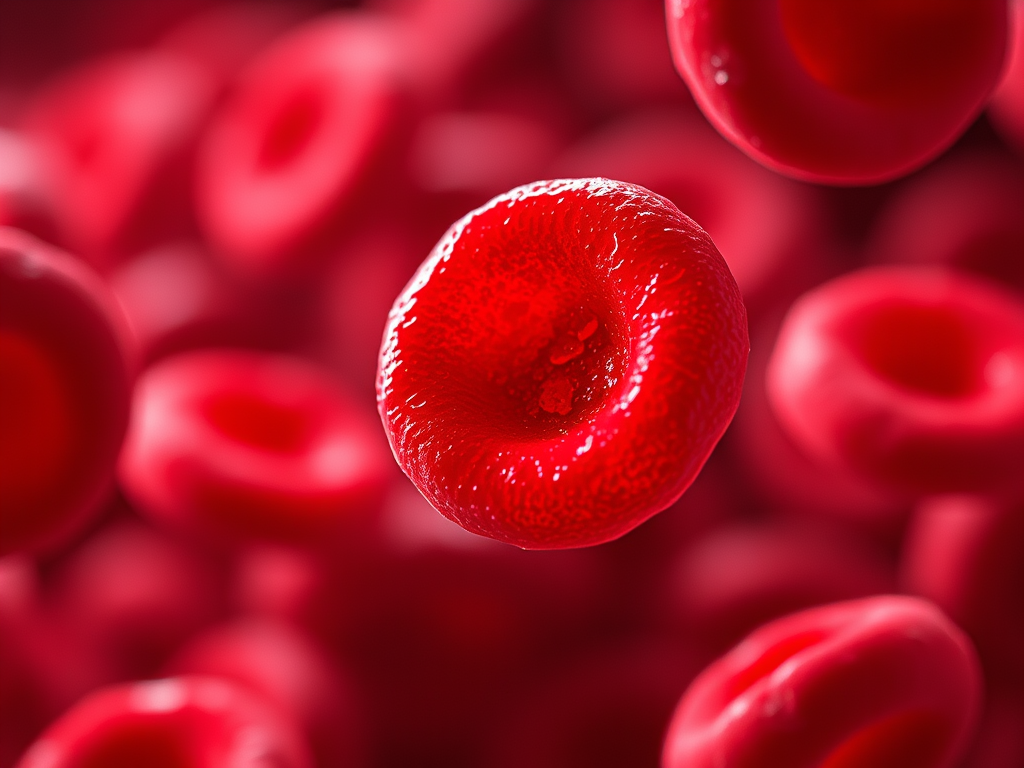
Featured image: Red blood cells. Scientific Inquirer media library.
Endnotes
- Yang, H., Sun, L., and colleagues. “A Tardigrade-Derived CAHS-Motif Enables Glycerol-Free Red Blood Cell Cryopreservation with Enhanced Low-Temperature Trehalose Loading and Synergistic Suppression of Ice Damage.” ACS Applied Materials & Interfaces, 16 September 2026. DOI: 10.1021/acsami.6c12445.
- American Chemical Society. “A trick from tardigrades could help human blood withstand freezing.” EurekAlert!, 8 October 2026. https://www.eurekalert.org/news-releases/1147001


Leave a Reply