Every solar panel faces a basic contradiction. To collect the electricity generated inside a silicon cell, manufacturers print thin metal lines, called gridlines or fingers, across its surface. But those same lines block sunlight from reaching the silicon beneath them. Make them wider, and they carry current better but cast more shadow. Make them narrower, and more light gets in, but resistance rises. Every fraction of a percent of efficiency lost to that trade-off adds up across the vast number of panels now being installed worldwide.
Researchers at the Ningbo Institute of Materials Technology and Engineering of the Chinese Academy of Sciences, working with Soochow University and two solar companies, Zhejiang Gonda Electronic Technology and JA Solar Technology, report a new metallization strategy that eases that trade-off. Their tunnel oxide passivated contact, or TOPCon, solar cells reached a certified power conversion efficiency of 26.31 percent. The work, led by Professor Ye Jichun, is published in Matter.
The Industry’s Workhorse
TOPCon cells have become a mainstream technology in the solar industry. They add an ultrathin layer of silicon oxide and a layer of doped polysilicon to the cell, a combination that reduces losses where the metal contacts meet the silicon. The thin layers “passivate” the surface, preventing electrons and holes from recombining before they can be collected.
That passivation, however, is delicate. Conventional manufacturing prints gridlines using a paste containing silver and aluminum, then fires the cell at high temperatures so the metal makes contact with the silicon. According to the researchers, that firing step can degrade the passivation layers and cause the printed lines to spread and widen, increasing shading.
A New Silver Paste
The team attacked the problem from two directions. First, they developed an aluminum-free silver paste designed to behave better during printing and firing. By optimizing its molecular configuration and the network of hydrogen bonds between its molecules, they gave the paste high thixotropy, a property that lets it flow easily under pressure during screen printing and then firm up quickly so it holds its shape. The paste is also less corrosive toward the delicate layers beneath it.
The result is taller, narrower gridlines. The team achieved a gridline aspect ratio, the ratio of height to width, of 55 percent, which reduces the area of cell surface left in shadow.
Laser-Assisted Contacts
Removing aluminum from the paste creates a new challenge: making good electrical contact without the aggressive chemistry that aluminum provides. To solve that, the researchers used a customized laser-enhanced contact optimization process, known as LECO.
In this step, a single-frequency laser scans the front gridlines while the cell is under reverse electrical bias. The combination generates localized Joule heating, the warming caused by electric current passing through resistance, along with high carrier injection. Together, these form low-resistance contacts at discrete points while confining the reaction to those tiny sites, sparing the surrounding passivation layers.
According to the researchers, the approach resolves the trade-off between low contact resistivity and preserving passivation, without compromising manufacturability.
Record Current
The combined strategy delivered a certified efficiency of 26.31 percent, which the researchers describe as among the highest reported for TOPCon technology. The cells also reached a short-circuit current density of 41.98 milliamps per square centimeter, which they describe as the highest certified value reported to date for large-area TOPCon cells. Higher current density is a direct sign that more light is getting into the cell and being converted to electricity, consistent with reduced shading.
For context, most commercial silicon panels convert a little over 20 percent of incoming sunlight into electricity, and the best laboratory silicon cells have exceeded 27 percent. Gains of a fraction of a percentage point at the cell level can translate into meaningful increases in power across utility-scale solar farms.
From Lab to Factory
The involvement of industrial partners suggests an eye toward production, and the researchers emphasize that their method does not compromise manufacturability. Screen printing and laser processing are both already widely used in solar manufacturing, which could make the approach easier to adopt than techniques requiring entirely new equipment.
The release does not report long-term stability data, module-level performance, production costs or how the silver content of the new paste compares with conventional pastes. Silver use is a significant cost and supply concern for the solar industry, so those details will matter for commercial uptake. The release also does not list a full set of authors or funders.
Still, the study shows that rethinking how metal is printed and bonded to a solar cell, rather than changing the silicon itself, can push one of the industry’s dominant technologies closer to its limits.
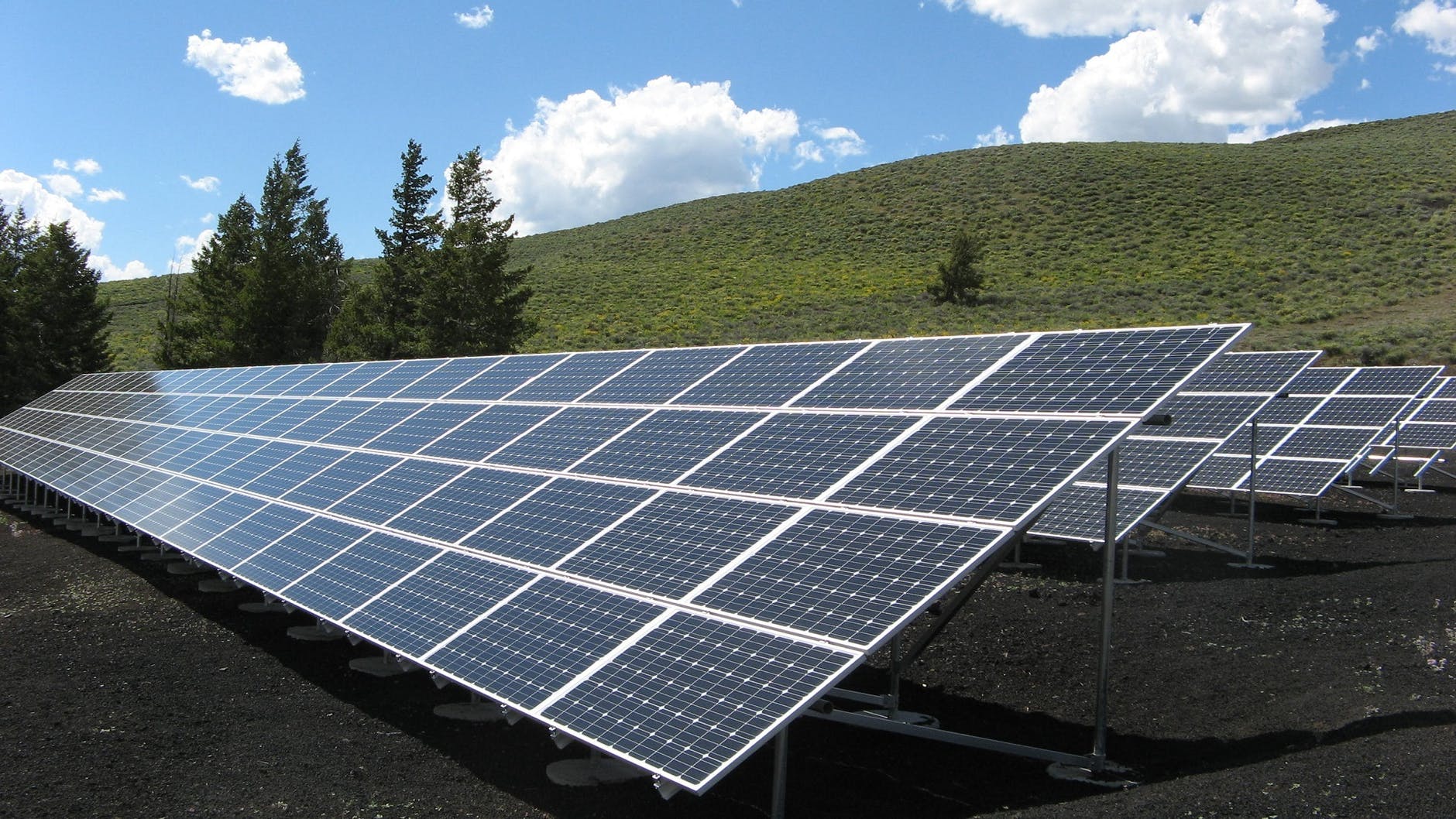
Featured image: Black and silver solar panels. Photo by Pixabay on Pexels.com. (The press release figure showing the device structure and performance of the TOPCon cells is credited to NIMTE.)
Endnotes
- “26.31%-Efficiency TOPCon Solar Cells Enabled by Synergistic Metallization with Reduced Optical Shading and Contact Resistance Losses.” Matter, 6 August 2026. DOI: 10.1016/j.matt.2026.102965.
- Ningbo Institute of Materials Technology and Engineering, Chinese Academy of Sciences. “New strategy improves power conversion efficiency of TOPCon solar cells.” EurekAlert!, 12 August 2026. https://www.eurekalert.org/news-releases/1139960



Leave a Reply