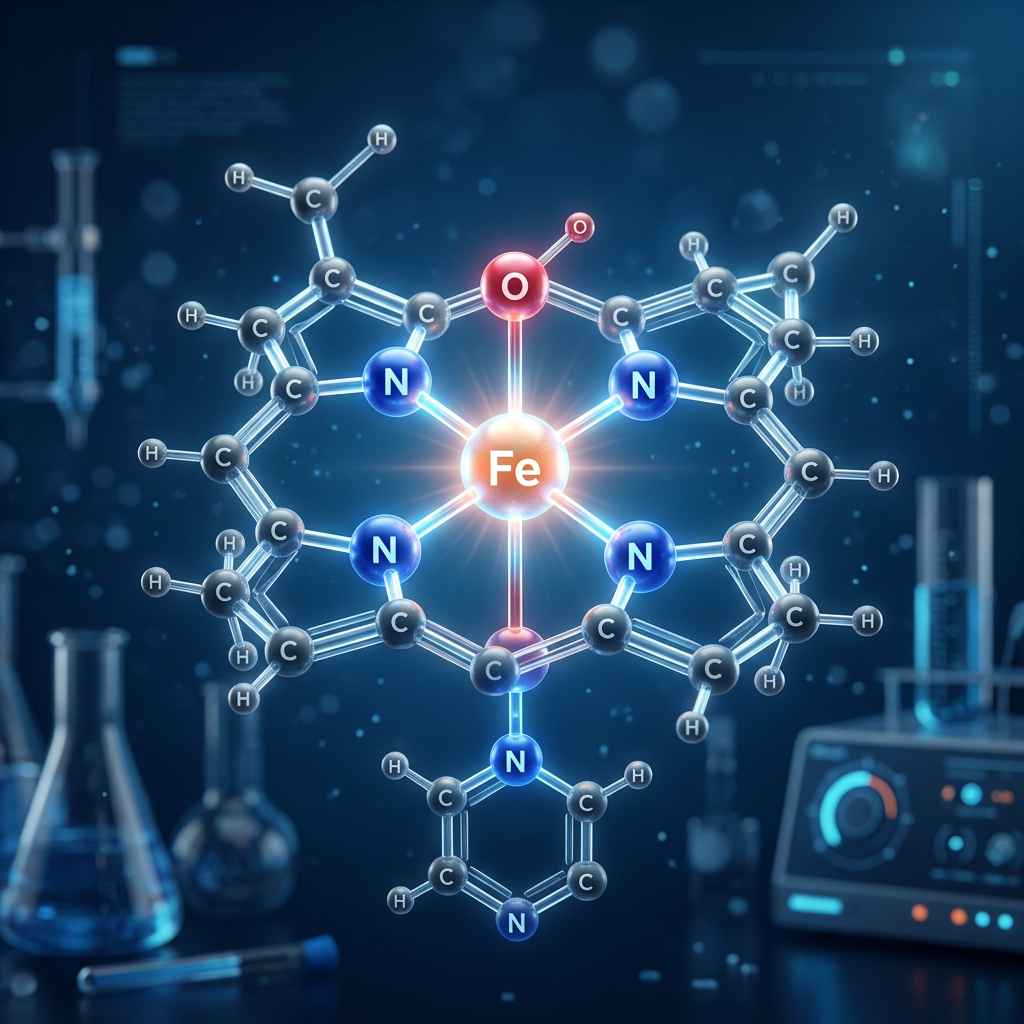
Hydrogen burns cleanly, producing only water, which makes it a promising fuel for industry, transportation and energy storage. But hydrogen rarely comes out of a production process pure. Whether it is made from natural gas, biomass or other sources, it usually emerges mixed with gases such as nitrogen and carbon dioxide. Separating out high-purity hydrogen efficiently and cheaply is one of the key hurdles to a hydrogen economy.
Researchers at the Korea Advanced Institute of Science and Technology (KAIST) report a polymer membrane that filters hydrogen through a carefully built molecular network, letting the small hydrogen molecules pass while holding back larger ones. The work, led by Professor Tae-Hyun Bae of KAIST’s Department of Chemical and Biomolecular Engineering, is published in Nature Communications.
“By stitching polymer chains together with crosslinkers that fit together like Lego blocks,” Bae said, “we formed a network inside the membrane that selectively allows only small hydrogen gas molecules to pass through.”
Crystals Versus Plastics
Membranes are an attractive way to separate gases because they can work continuously and use less energy than methods that rely on cooling or chemical absorption. The challenge is building a membrane with pores precisely sized to let the target molecule through.
Crystalline materials such as metal-organic frameworks and covalent organic frameworks have beautifully uniform pores. But they are difficult to manufacture as large, defect-free films, and their pores are often not small enough to sort tiny molecules like hydrogen. Polymer membranes, essentially specialized plastics, are much easier to process and scale up, but controlling the size and shape of their pores has been difficult, limiting their performance.
Measuring a Network’s Completeness
The KAIST team built a modular polymer network in which polymer chains are linked together by crosslinkers, small molecules that bridge one chain to another. Crosslinking is a common way to tighten up a polymer’s structure, and researchers have traditionally measured it with metrics such as the degree of crosslinking.
The researchers argue that those metrics miss something important. A crosslinker attached to a polymer chain at only one end does not create a pathway through the material. What matters for separation is how many crosslinkers are connected at both ends, completing the bridges that form a continuous network of pores.
To capture that, the team introduced a new measure, the Bridge Connectivity Degree, or BCD: the proportion of crosslinkers connected at both ends. Dr. Hongju Lee, the study’s first author, now a postdoctoral researcher at the Korea Institute of Science and Technology, said that “this study is different in that it defines ‘how completely the network is connected’ as a quantitative value.”
Pores Smaller Than 3 Angstroms
Raising the BCD paid off. A membrane the team designated ms-oDMB-DB50 reached a BCD of 73 percent. Compared with the original DB50 membrane, it showed significant improvements in both hydrogen permeability, how readily hydrogen passes through, and hydrogen-to-nitrogen selectivity, how well it separates the two gases.
Analysis indicated that the membrane contains numerous ultramicropores smaller than 3 angstroms, about a third of a billionth of a meter. Those pores are too small for carbon dioxide to access but large enough for hydrogen.
Proving that such tiny pores exist is itself a challenge. The researchers proposed a “density-probe method” that uses helium, which is even smaller than hydrogen, to verify the ultramicropores experimentally.
Durable and Strong
Practical membranes must hold up over time and under stress. The new membrane ran stably for 100 hours without losing performance, and its tensile strength was about twice that of previously reported high-performance polymer membranes, according to the release.
One hundred hours is a promising start but far short of the thousands of hours industrial separation units must operate. The release does not report performance with real, mixed industrial gas streams, which can contain contaminants such as water vapor that degrade membranes, or the cost of producing the material at scale.
A Design Principle
The broader contribution may be the concept itself. By defining network completeness as a measurable quantity, the researchers offer a design target for engineering polymer membranes more precisely, borrowing ideas from reticular chemistry, the deliberate assembly of molecular building blocks into ordered frameworks.
“We hope this study will serve as a starting point for extending reticular synthesis,” Lee said.
The research was supported by the Global C.L.E.A.N. Project and the Mid-Career Researcher Program, both funded by Korea’s Ministry of Science and ICT. Suhyeon Choi of KAIST is the second author.
Featured image: A molecular model illustrating chemical bonding. Scientific Inquirer media library. (The press release research overview figure is credited to KAIST.)
Endnotes
- Lee, H., Choi, S., et al. (corresponding author Bae, T.-H.) “Network completeness enables angstrom-scale transport pathways in polymer membranes.” Nature Communications, 23 July 2026. DOI: 10.1038/s41467-026-73860-0.
- Korea Advanced Institute of Science and Technology (KAIST). “KAIST develops high-efficiency, eco-friendly hydrogen separation membrane that filters hydrogen through a molecular ‘network.’” EurekAlert!, 12 August 2026. https://www.eurekalert.org/news-releases/1139771
Leave a Reply