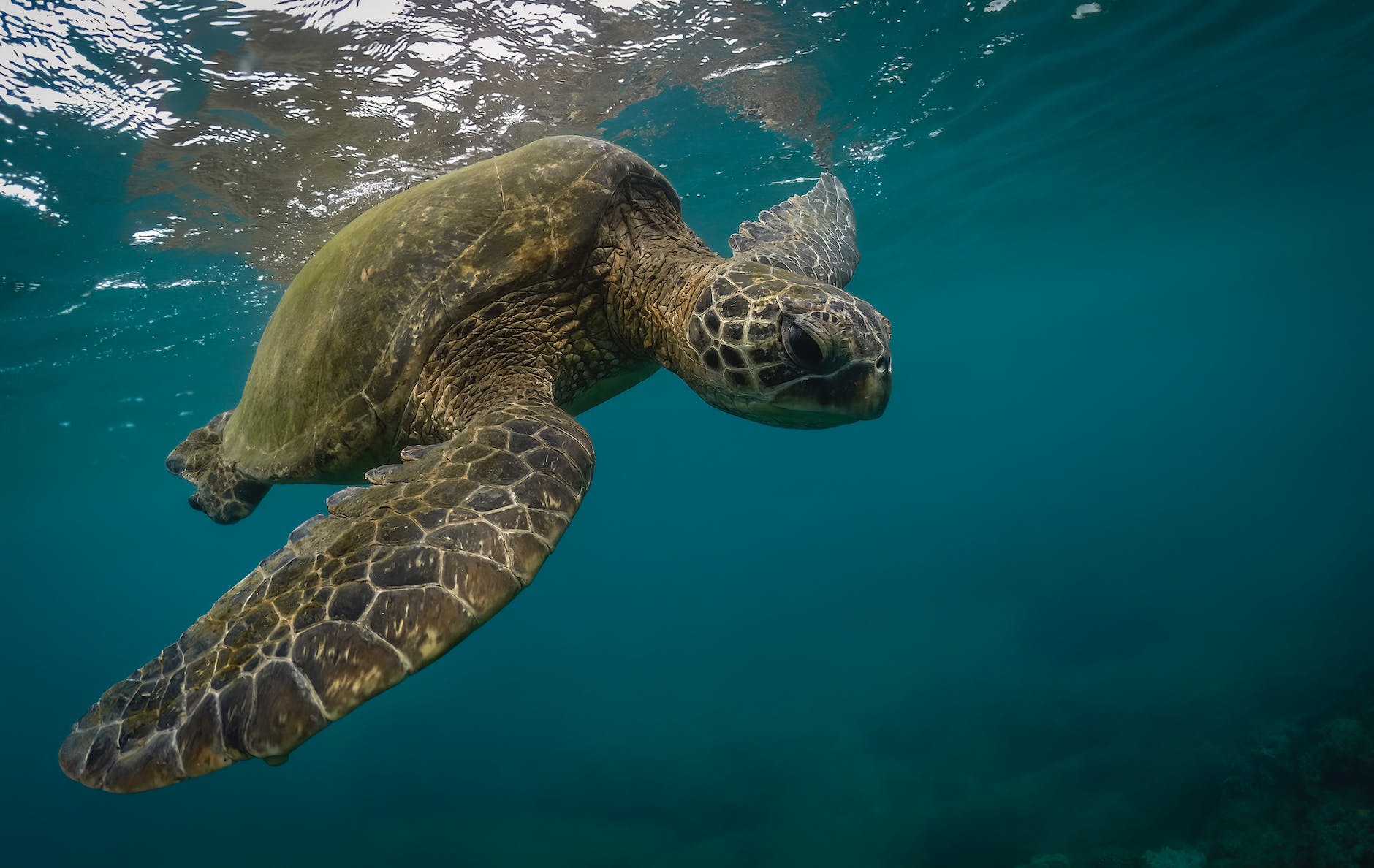
Some of the best wildlife habitat on the east coast of the United Arab Emirates was never meant to be habitat at all. In 2003, developers dug a lagoon at the edge of the Khor Kalba mangroves as part of a planned waterfront project. The plans changed, the construction never happened, and the basin stayed. Two decades later, it has become a favorite hangout for young green turtles.
A study published in Aquatic Conservation tracked juvenile green turtles in the Al Qurm Wa Lehhfaiiah Protected Area, on the UAE’s Gulf of Oman coast, and found them both deeply attached to the wetland and strongly drawn to the man-made basin. The research was led by the Sharjah Environment and Protected Areas Authority (EPAA), working with the University of Exeter through the Sharjah Marine Science Research Centre at the University of Khorfakkan.
“Our results show just how critical coastal wetlands can be to young green turtles,” said Dr Owen Exeter of the University of Exeter.
The Last Mangroves on the Coast
The protected area holds the last mangrove ecosystem on the UAE’s east coast. It is designated a Ramsar wetland of international importance and has been a Key Biodiversity Area since 2013. The government of Sharjah protects most of it from building development, fishing and boating.
Green turtles spend much of their early lives in coastal nurseries like this, feeding and growing before they move into the open ocean. Knowing which habitats they rely on, and how long they stay, is central to protecting a species that faces threats across its range.
Tracking Young Turtles
The team tracked nine juvenile green turtles, each with a shell length under 60 centimeters. The animals proved highly resident, spending more than 80 percent of their time inside the protected area.
Within the wetland, they had a clear favorite. The turtles were five times more likely to be found in the man-made basin than in the surrounding habitats, a pattern the researchers describe as strong reliance.
“The fact these turtles are using the artificial basin appears to be a happy accident,” Exeter said.
Why the Basin Works
Several features seem to make the lagoon attractive. Its floor is covered in algae, which likely provides food for the turtles, whose diet shifts toward plants and algae as they grow. The researchers also believe that few predators, such as sharks, make it through the mangroves into the basin, giving young turtles a relatively safe place to feed.
But the basin does not work on its own. The natural mangrove channels that link it to the sea are vital, allowing turtles to move in and out with the tides. Without those connections, the researchers say, the basin would be unlikely to have become turtle habitat at all.
That distinction matters for anyone hoping to replicate the result. Brendan Whittington-Jones of the EPAA said the findings show that “coastal wetlands, including engineered ones, can provide valuable habitat for juvenile turtles.” The lesson is not that any artificial pond will do, but that engineered features can add value when they are woven into a healthy, connected natural system.
A 700-Kilometer Journey
Not every turtle stayed put. One tracked animal swam more than 700 kilometers south to central Oman. That trip is a reminder that protecting a nursery is only part of the job. Once turtles leave, they enter waters where they face a different set of dangers, including fishing, boat and ship traffic, and pollution. Nesting beaches, meanwhile, are being lost to coastal development.
Mobile species like green turtles, the researchers argue, need conservation management that extends well beyond the wetlands where they grow up, potentially across national borders.
Wetlands Under Pressure
The study arrives at a time when coastal wetlands are disappearing worldwide. “Wetlands are among the most threatened ecosystems globally,” Exeter said. Mangroves, salt marshes and lagoons are routinely drained, filled or built over, even though they shelter young fish and turtles, protect coastlines from storms and store large amounts of carbon.
Against that backdrop, the Khor Kalba story is unusual in two ways. A development project, abandoned rather than completed, left behind a feature that turtles now depend on. And because the surrounding area is protected, that feature has remained connected to the mangroves and the sea.
The study is small. Nine turtles is a modest sample, and tracking data cannot capture everything the animals do or how the population as a whole uses the area. The release also does not report how long each turtle was followed. Even so, the results add weight to the case for protecting what remains of the UAE’s east coast mangroves, and for thinking carefully about how coastal engineering might help, rather than harm, the animals that use these waters.
Featured image: A green sea turtle. Photo by Stephen Leonardi on Pexels.com. (The press release photo of a green turtle in the Al Qurm Wa Lehhfaiiah Protected Area is credited to Owen Exeter.)
Endnotes
- “Residency and Habitat Use of Juvenile Green Turtles in a Protected Coastal Wetland in the Gulf of Oman, United Arab Emirates.” Aquatic Conservation, 13 November 2026. DOI: 10.1002/aqc.70493.
- University of Exeter. “Turtles thrive in unique UAE wetland.” EurekAlert!, 13 November 2026. https://www.eurekalert.org/news-releases/1151273



Leave a Reply