
Parents have long suspected that idle hands invite trouble. A large international study now puts numbers behind that intuition, while adding important nuance about what kind of free time matters and why. Surveying more than 58,000 adolescents in 21 countries, researchers found that unstructured, unsupervised free time was one of the strongest predictors of involvement in crime and violence, second only to having delinquent friends.
The study, published in PLOS ONE, comes from researchers in the International Self-Report Delinquency Study (ISRD) consortium, a project that began in the early 1990s with European countries and later expanded to every continent. This analysis draws on its fourth wave, known as ISRD4. The Brazilian arm of the project was supported by the São Paulo Research Foundation (FAPESP).
What Counts as Unstructured Time
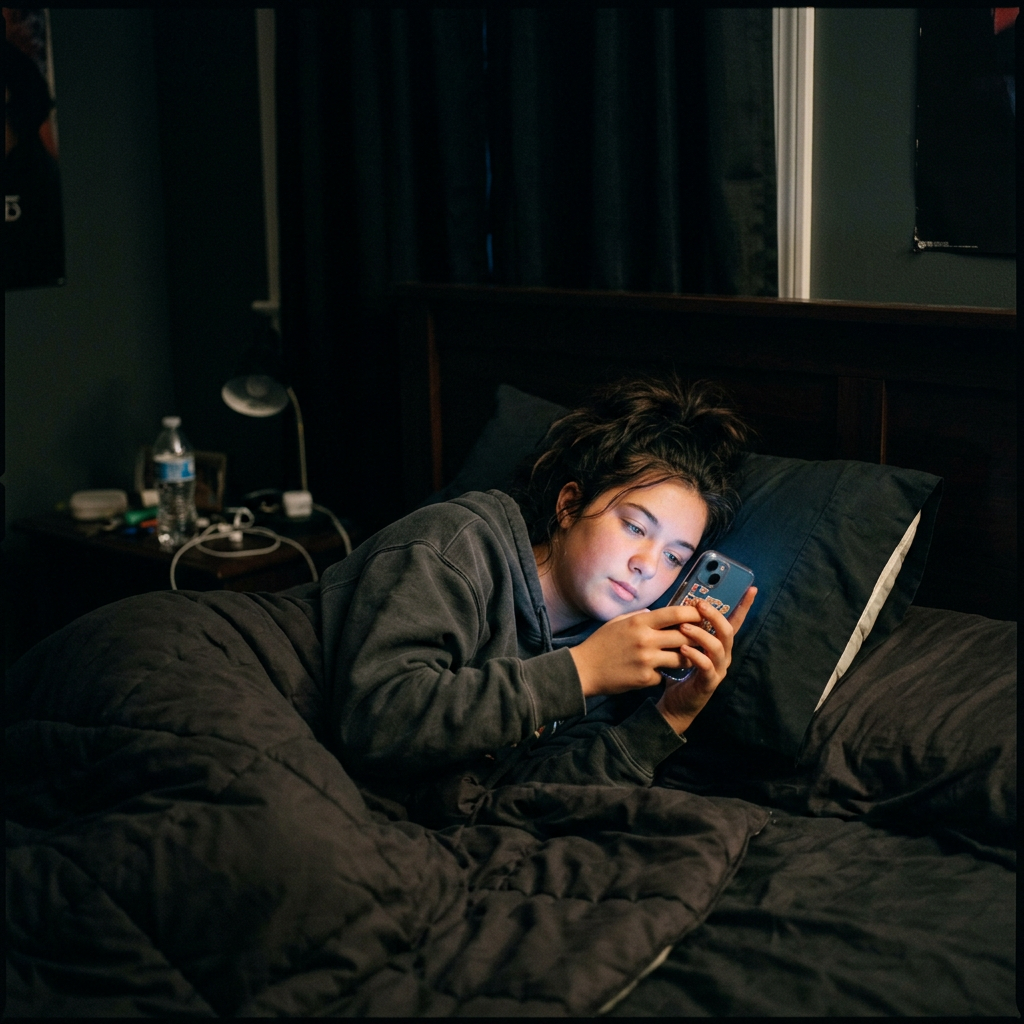
The researchers define unstructured free time as time spent without adult supervision and without organized activities that have educational, cultural or athletic goals. They looked at two kinds. One takes place at home and is mostly linked to internet use. The other happens outside the home, on streets, in neighborhoods and in public spaces.
“Unstructured free time is a very important variable for understanding adolescents’ involvement in violence,” said Marina Rezende Bazon, a psychologist and professor at the University of São Paulo’s Ribeirão Preto Faculty of Philosophy, Sciences, and Letters, who coordinates the Brazilian ISRD team. She described young people who “wander around without a specific goal, often in contexts of vulnerability.”
A Close Second to Delinquent Friends
Across the full sample, association with delinquent peers was the strongest single predictor of involvement in crime. Unstructured free time ranked a close second, and it helped explain crime and violence in every country surveyed.
The two factors appear to reinforce each other. “When we combine delinquent peers and unstructured free time, we have a particularly problematic combination,” Bazon said.
The release offers a striking estimate of what reducing that time might achieve. On average, a 20 percent reduction in unstructured free time spent away from home was associated with a 9.6 percent decrease in the prevalence of offenses and a 7.4 percent decrease in their incidence across the total sample. Because the data are observational, that is an association rather than a demonstration of cause and effect, but it gives policymakers a sense of scale.
Asking Teenagers Directly
In Brazil, the team surveyed about 1,900 adolescents aged 13 to 17 from public and private schools in Ribeirão Preto and Sertãozinho, in the interior of São Paulo state, following a standardized international protocol. Students completed anonymous questionnaires on tablets.
Rather than asking directly about crimes, the self-reported delinquency approach asks about specific behaviors, such as whether a teenager has ever taken something from a store without paying. “Adolescents tend to respond quite honestly when anonymity is guaranteed,” Bazon said.
That method captures behavior that never reaches the authorities. “Official data reflect the activities of law enforcement agencies more than the phenomenon of youth violence itself,” she said. The surveys also asked about victimization, including offenses based on skin color, religion, sexual orientation or physical appearance, whether in person or online.
Girls, Screens and Shifting Supervision
The study turned up notable changes among girls. Their participation in online offenses targeting other people’s physical appearance has increased. Bazon links that to a narrowing gap in how closely boys and girls are supervised online. “Girls have always been more closely supervised by their families than boys,” she said, but that difference appears to matter less on screens.
Girls were also more likely to fall into what researchers call the victim-aggressor overlap, a group of young people who both commit and experience offenses. Members of that group showed more severe psychological distress, family problems and academic difficulties.
Who Gets Watched
Bazon argues that the findings challenge narrow assumptions about which young people commit offenses. “Youth violence is a much broader and more cross-cutting phenomenon,” she said. “What changes is who ends up being more closely monitored, approached by the police, and institutionalized.”
The survey has a significant blind spot, which the researchers acknowledge. Because it was conducted in schools, it missed adolescents who are out of school or in the socio-educational system, groups that may be among the most vulnerable. “We have adolescents who spend two or three years out of school,” Bazon noted.
From Findings to Policy
The results point toward a practical response: giving adolescents more access to structured activities, such as sports, arts and educational programs, particularly outside school hours and in vulnerable neighborhoods. Bazon framed such programs as a matter of both rights and prevention. “This type of policy, while addressing citizens’ rights, has the potential to prevent young people from becoming delinquent,” she said.
The next wave of the ISRD is planned to explore misogyny, online hate crimes and adverse childhood experiences, topics that could help explain the patterns emerging in this round. For now, the message is that how teenagers spend their unsupervised hours, and with whom, matters across cultures and continents.
Featured image: Teenagers looking at a smartphone. Photo by Anna Shvets on Pexels.com.
Endnotes
- International Self-Report Delinquency Study (ISRD) consortium. “Unstructured spare time as an international predictor of adolescent crime.” PLOS ONE, 15 May 2026. DOI: 10.1371/journal.pone.0349291.
- Fundação de Amparo à Pesquisa do Estado de São Paulo (FAPESP). “Unsupervised free time increases the likelihood that adolescents will engage in violent behavior.” EurekAlert!, 11 August 2026. https://www.eurekalert.org/news-releases/1139714


Leave a Reply