Hydrogen has a reputation as the clean fuel of the future, and a reputation as a logistical headache. Burning it or running it through a fuel cell produces only water, but hydrogen gas is notoriously hard to store and transport. It must be compressed to high pressures or chilled to extremely low temperatures, and it leaks through materials that hold other gases easily.
One workaround is to carry hydrogen in a different form and release it only when needed. Methanol is a strong candidate. It is a liquid at ordinary temperatures, it carries a high hydrogen content, and it can be converted into hydrogen on demand. The catch is finding catalysts that do the job efficiently.
A study led by Hui Zhou of Tsinghua University, published in Energy & Environment Nexus, suggests that the key to better platinum catalysts may lie not in the platinum itself but in the oxygen atoms surrounding it.
“Our results show that the oxygen species surrounding platinum are not simply spectators,” Zhou said.
Reforming Methanol in Water
The researchers focused on a process called aqueous phase reforming of methanol. Instead of vaporizing the fuel, it converts liquid methanol and water directly into hydrogen and carbon dioxide at temperatures between 150 and 250 degrees Celsius, in compact reactors. Conventional steam reforming, by contrast, runs above 300 degrees Celsius and requires turning the methanol into vapor first, which costs energy and adds equipment.
Platinum is a well-known catalyst for this reaction, but it is usually dispersed on a support material, typically a metal oxide, to make the most of the expensive metal. The team wanted to know how much the choice of support matters, and why.
Five Supports, Five Oxygen Environments
The researchers prepared platinum catalysts on five oxide supports: aluminum oxide, zirconium oxide, cerium oxide, titanium oxide and silicon oxide. Each offered a different surface oxygen environment. Some surfaces were rich in hydroxyl groups, pairs of oxygen and hydrogen atoms. Others offered reactive oxygen within the crystal lattice. Still others had relatively inert oxygen.
They then combined catalytic testing with spectroscopy and other characterization techniques to follow two linked steps: the breakdown of methanol, and the water-gas shift reaction, in which carbon monoxide reacts with water to produce more hydrogen and carbon dioxide.
Aluminum Oxide Wins Clearly
Platinum on aluminum oxide outperformed the rest. At 250 degrees Celsius, it produced hydrogen at a rate of 846.9 micromoles per gram of platinum per second, with 97.3 percent selectivity for methanol reforming. Its activity was about 2.5 times that of platinum on cerium oxide and about 20 times that of platinum on silicon oxide at the same temperature.
The researchers trace that performance to hydroxyl groups. The aluminum oxide surface carried abundant hydroxyls, which supplied hydroxyl species that converted carbon monoxide intermediates through the water-gas shift reaction. Water splitting on the surface then replenished those hydroxyls, keeping the cycle running.
In Zhou’s words, “surface hydroxyl groups can provide the right oxygen chemistry to promote hydrogen production without trapping key intermediates too strongly.”
When More Reactive Is Worse
One might expect that the more reactive the oxygen, the better the catalyst. The results say otherwise. On cerium oxide, reactive lattice oxygen favored the formation of formate intermediates. Those molecules bound too strongly to the surface and could block active sites, slowing hydrogen production.
Titanium oxide and silicon oxide had the opposite problem. On those supports, the interaction between platinum and the support was weak. Methanol formed methoxy species on the surface, but the reaction stalled before those intermediates could be converted efficiently into carbon monoxide and hydrogen.
The picture that emerges is one of balance, a chemical version of the Goldilocks principle. The best surface provides enough oxygen chemistry to keep the reaction moving, but not so much that intermediates stick and clog the catalyst.
A New Design Rule
The authors argue that surface oxygen species should be treated as a key descriptor of catalyst performance in aqueous methanol reforming. Much previous work has focused on factors such as platinum particle size or oxygen vacancies, gaps in the oxide lattice. The new results suggest that designers should instead balance oxygen reactivity, the strength with which intermediates bind and the interaction between metal and support.
Their conclusion points to hydroxyl-rich amphoteric oxide supports, materials like aluminum oxide that can behave as either acids or bases, as a particularly promising route to better platinum-based methanol reforming catalysts.
The study is a laboratory comparison of five catalysts, and the press release does not report how long the catalysts remained stable, how they performed over repeated cycles, or what the process would cost at scale. Platinum is also expensive, which keeps pressure on researchers to get the most out of every atom. Still, by showing that the oxygen around the metal can steer the entire reaction pathway, the work offers a clearer target for anyone hoping to make methanol a practical carrier for hydrogen.
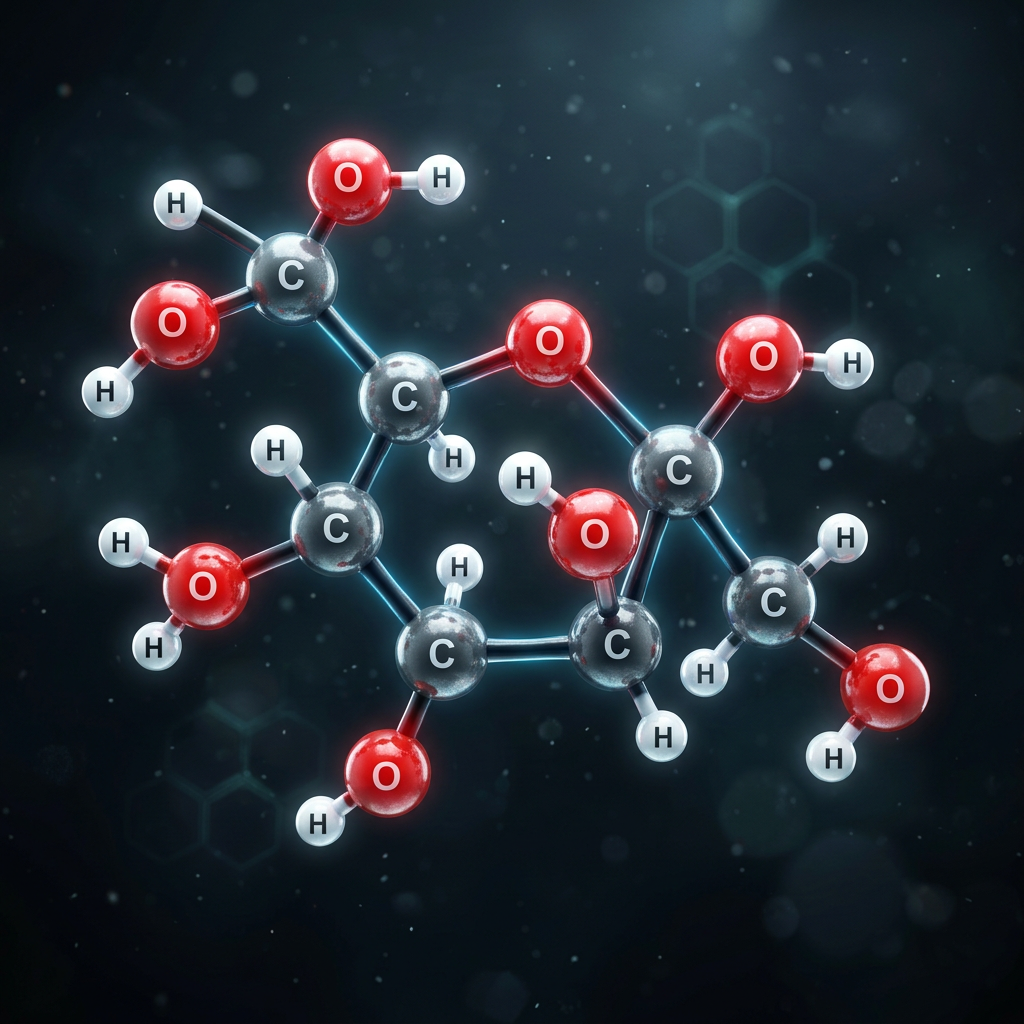
Featured image: A 3D molecular model illustrating atoms and bonds. Scientific Inquirer media library.
Endnotes
- Yang, Y., Bie, X., Zhu, Y., Quan, X., Yu, B., Li, Q., Zhang, Y., and Zhou, H. “Surface oxygen species dictate reaction pathways in platinum-catalyzed aqueous phase reforming of methanol.” Energy & Environment Nexus, 7 July 2026. DOI: 10.48130/een-0026-0013.
- Shenyang Agricultural University Collaborative Journals. “Surface oxygen species steer hydrogen production from methanol over platinum catalysts.” EurekAlert!, 11 August 2026. https://www.eurekalert.org/news-releases/1139720


Leave a Reply