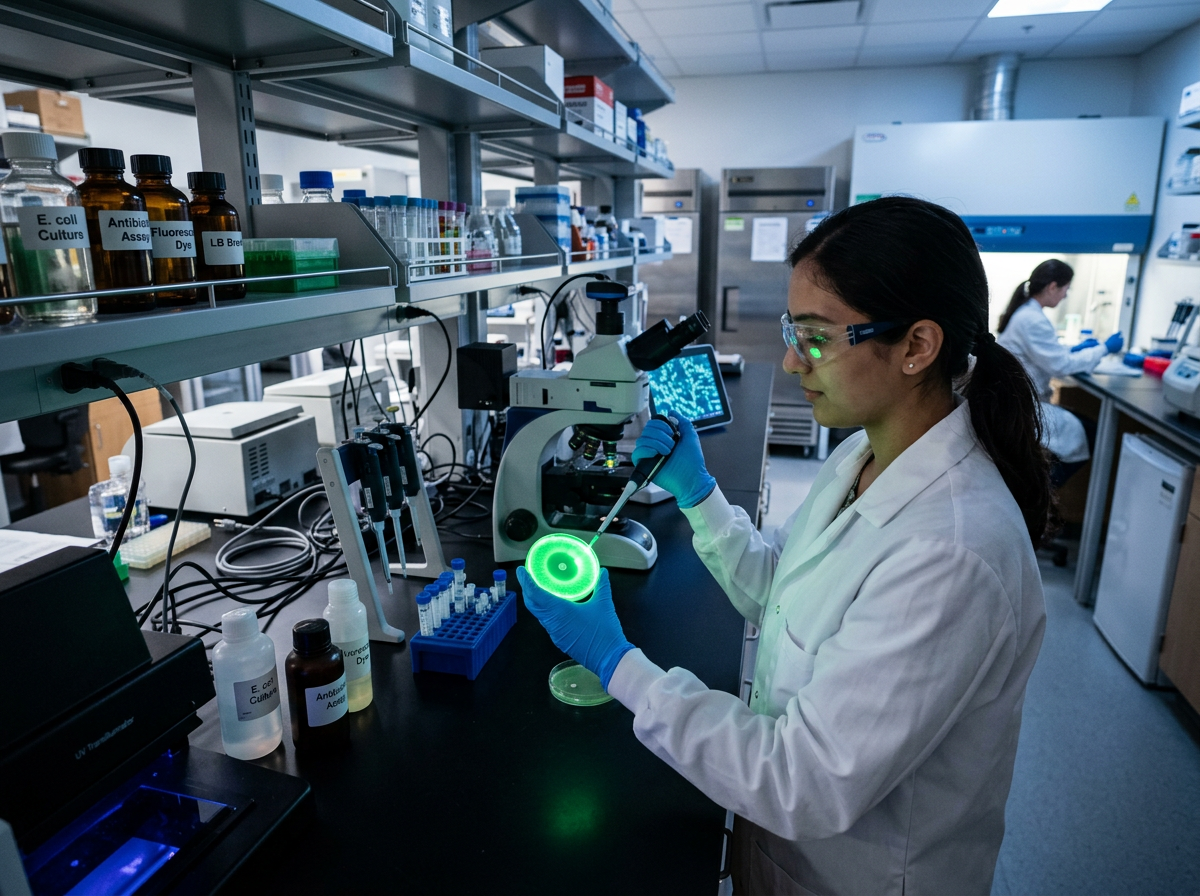
For students in the sciences, the teaching laboratory is where theory becomes practice. It is also a place filled with acids, solvents and disinfectants that can be hazardous with repeated exposure. A new survey of young scientists in Nigeria suggests that frequent contact with laboratory chemicals, combined with a diet low in fruits and vegetables, is linked to a higher rate of self-reported health symptoms.
The study, by Kanayo Samuel Okonji, Alaba Olanrewaju Daramola and Olufemi Ebenezer Folaranmi, is published in the open-access journal New Contaminants.
Surveying 426 Students
The researchers carried out a cross-sectional, questionnaire-based study of 426 undergraduate and postgraduate students in Ekiti State, in southwestern Nigeria. Participants were studying chemistry, biochemistry, microbiology and medical laboratory science, all disciplines that involve regular hands-on lab work.
Exposure was common. Some 78.6 percent of participants reported frequent contact with laboratory chemicals. The most frequently cited were acids, reported by 71 percent, organic solvents, by 64.5 percent, and disinfectants, by 58.7 percent.
Symptoms and Exposure
The researchers asked about symptoms they describe as related to oxidative stress, a state in which reactive molecules overwhelm the body’s defenses and can damage cells. Reported symptoms included fatigue, headaches, pallor and easy bruising.
Among students with frequent chemical exposure, 62.7 percent reported such symptoms, compared with 35.2 percent of those exposed less often. After adjusting for other factors, frequent chemical exposure was associated with 2.84 times higher odds of reporting symptoms.
The Diet Connection
Diet mattered too. Fruits and vegetables are major sources of dietary antioxidants, compounds that help neutralize reactive molecules. Students with low antioxidant intake had 2.31 times higher odds of reporting symptoms, independent of their chemical exposure.
The strongest association appeared when the two factors coincided. Students who reported both frequent chemical exposure and low antioxidant intake had 2.96 times higher adjusted odds of symptoms than the reference group.
The researchers were careful about how they interpret that finding. They found no statistically significant interaction between chemical exposure and diet, which means the data do not show that a poor diet amplifies the effects of chemicals. Instead, the authors describe a combined association: each factor is linked to symptoms on its own, and students with both are most likely to report problems.
“Our findings support a more comprehensive approach to student wellbeing,” Okonji said, one that pairs a strong laboratory safety culture with awareness of healthy eating.
Knowing Versus Doing
The survey also exposed a gap between knowledge and behavior. Some 57 percent of students showed good knowledge of chemical hazards, but only 46 percent reported good compliance with preventive laboratory practices. Students with better knowledge were significantly more likely to follow safe practices, suggesting that training can make a difference when it sticks.
Based on their results, the researchers recommend regular safety training, better access to personal protective equipment, appropriate use of fume hoods, improved spill management and waste disposal, and closer supervision by institutions.
“Laboratory training is essential for developing the next generation of scientists,” Okonji said. The release concludes that such training should be accompanied by consistent safety practices.
What the Study Cannot Show
The authors are explicit about the study’s limits, and they are substantial. The research relied on self-reported questionnaires. It did not measure chemical concentrations in the labs, the amounts of chemicals that entered students’ bodies, biological markers of oxidative stress, or blood parameters.
The symptoms themselves are also nonspecific. Fatigue and headaches, for instance, have many possible causes, from lack of sleep to academic stress. For that reason, the authors caution against reading the results as evidence that chemicals are causing oxidative stress or blood disorders in students. Because the study captured a single point in time, it also cannot establish which came first.
Even with those caveats, the findings raise a practical point for universities. In settings where protective equipment, ventilation and supervision may be uneven, students may be exposed more than they should be, and safety practices lag behind what students know. Strengthening lab safety, and paying attention to students’ overall health, including diet, are low-cost steps that could help protect the people training to become tomorrow’s scientists.
Featured image: A scientist examines a glowing petri dish in a microbiology lab. Scientific Inquirer media library.
Endnotes
- Okonji, K. S., Daramola, A. O., and Folaranmi, O. E. “Combined effects of dietary and laboratory chemical exposures with self-reported oxidative stress-related symptoms among young scientists: implications for environmental safety in chemical laboratory settings.” New Contaminants 2: e019, 11 June 2026. DOI: 10.48130/newcontam-0026-0016.
- Shenyang Agricultural University Collaborative Journals. “Laboratory chemical exposure and diet linked to self-reported health symptoms among young scientists.” EurekAlert!, 11 August 2026. https://www.eurekalert.org/news-releases/1139718


Leave a Reply