Offer someone $50 today or $100 in a year, and the choice says something about them. Psychologists and economists have long treated a preference for the smaller, immediate reward as a sign of impulsivity, an inability to wait. Research has also linked impulsivity to reward sensitivity, how strongly a person responds to pleasurable things. But why the two go together has remained unclear.
A study from HSE University suggests a surprising answer, and it starts with sugar. People who strongly like sweet tastes do tend to grab immediate rewards. But according to the researchers, that is not because they cannot wait. It is because they dislike uncertainty. The work is published in Frontiers in Psychology.
“We are used to thinking of impulsivity as an inability to delay gratification,” said lead author Anna Davidovich, a research assistant at the Centre for Cognition & Decision Making of the HSE Institute for Cognitive Neuroscience.
Sugar as a Window Into Reward
Measuring reward sensitivity directly is tricky, so the team used a proxy: preference for sweet tastes. The 149 young participants took the standardized Kampov-Polevoy sweet-taste test, which presents sugar solutions of varying strength. Those who preferred the most concentrated sucrose solution were classified as “sweet likers.” The rest were “sweet dislikers.”
Sweet liking has been studied before as a marker linked to reward processing, which made it a convenient, non-invasive way to sort people by how strongly they respond to pleasure.
Participants then completed decision-making tasks. Some measured risk aversion, asking them to choose between a smaller guaranteed reward and a larger, uncertain one. Others measured impulsivity, asking them to choose between rewards available immediately and larger rewards available later.
Cautious, Not Impatient
Sweet likers were significantly more likely to take the smaller guaranteed reward, a sign of greater risk aversion. On the impulsivity tasks, they also preferred a smaller immediate reward over a larger delayed one, the classic marker of impulsive choice.
But a revealing pattern emerged when both options were in the future. Faced with a choice between two delayed rewards, sweet likers were willing to wait for the larger one. If they were simply impatient, that should not have happened.
The key analysis came next. When the researchers statistically accounted for risk aversion, the apparent impulsivity of sweet likers largely disappeared. Their tendency to grab immediate rewards, in other words, was mostly explained by their discomfort with risk.
The Uncertainty in Waiting
Any delayed reward carries some uncertainty. The promise might not be kept, circumstances might change, the reward might never arrive. For someone who strongly dislikes uncertainty, taking what is available now is a way of eliminating that risk.
Davidovich said that choosing a smaller immediate reward “may stem from a desire to avoid uncertainty,” rather than from an inability to wait. “This changes our understanding of the nature of impulsive behaviour,” she said.
A Possible Role for the Opioid System
The researchers propose a biological explanation involving the brain’s opioid system, which plays a role in pleasure. Receptors in this system are also involved in assessing threats and uncertainty. The authors suggest these receptors may be more sensitive in people who prefer sweet tastes, so that such people experience both greater reward and a stronger sense of potential loss or uncertainty.
If that is right, the same underlying sensitivity that makes sugar especially appealing could make an uncertain future feel especially uncomfortable. That would explain why reward sensitivity and apparent impulsivity tend to travel together without one causing the other.
For now, that mechanism is a hypothesis. The study measured taste preferences and choices, not brain activity or receptor function.
Implications for Addiction
The distinction between impatience and uncertainty aversion is not merely academic. Impulsive choice is a feature of many addictions, and treatments often aim to strengthen people’s ability to delay gratification. If some apparently impulsive choices are actually driven by a desire to avoid uncertainty, different strategies might be more effective for some people.
The team plans to study the underlying neurobiology using electroencephalography (EEG) and computational models of decision-making. They believe the work could eventually help improve the diagnosis and treatment of addictions.
The study has limits. It involved 149 young participants, and laboratory choices about hypothetical or modest rewards may not perfectly mirror real-world decisions. Sweet-taste preference is also only one proxy for reward sensitivity. Still, the findings offer a fresh way to think about a familiar behavior: sometimes, what looks like an inability to wait may be a reasonable reluctance to bet on an uncertain future.
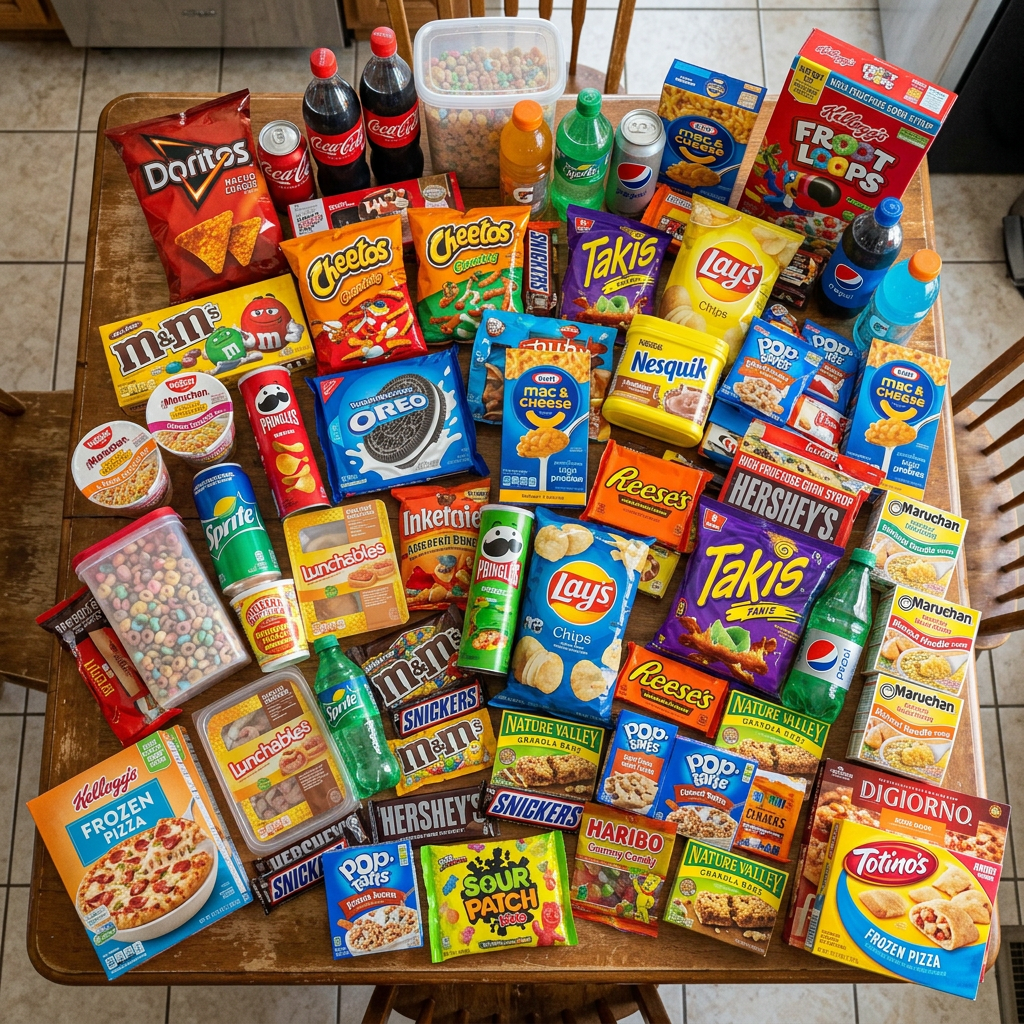
Featured image: An assortment of snack foods and drinks. Scientific Inquirer media library.
Endnotes
- Davidovich, A., et al. “Sweet-taste liking is associated with preference for less risky and immediate rewards in economic decision-making.” Frontiers in Psychology, 20 May 2026. DOI: 10.3389/fpsyg.2026.1764306.
- HSE University. “Scientists discover why people who crave sweets make more impulsive choices.” EurekAlert!, 11 August 2026. https://www.eurekalert.org/news-releases/1139623

Leave a Reply