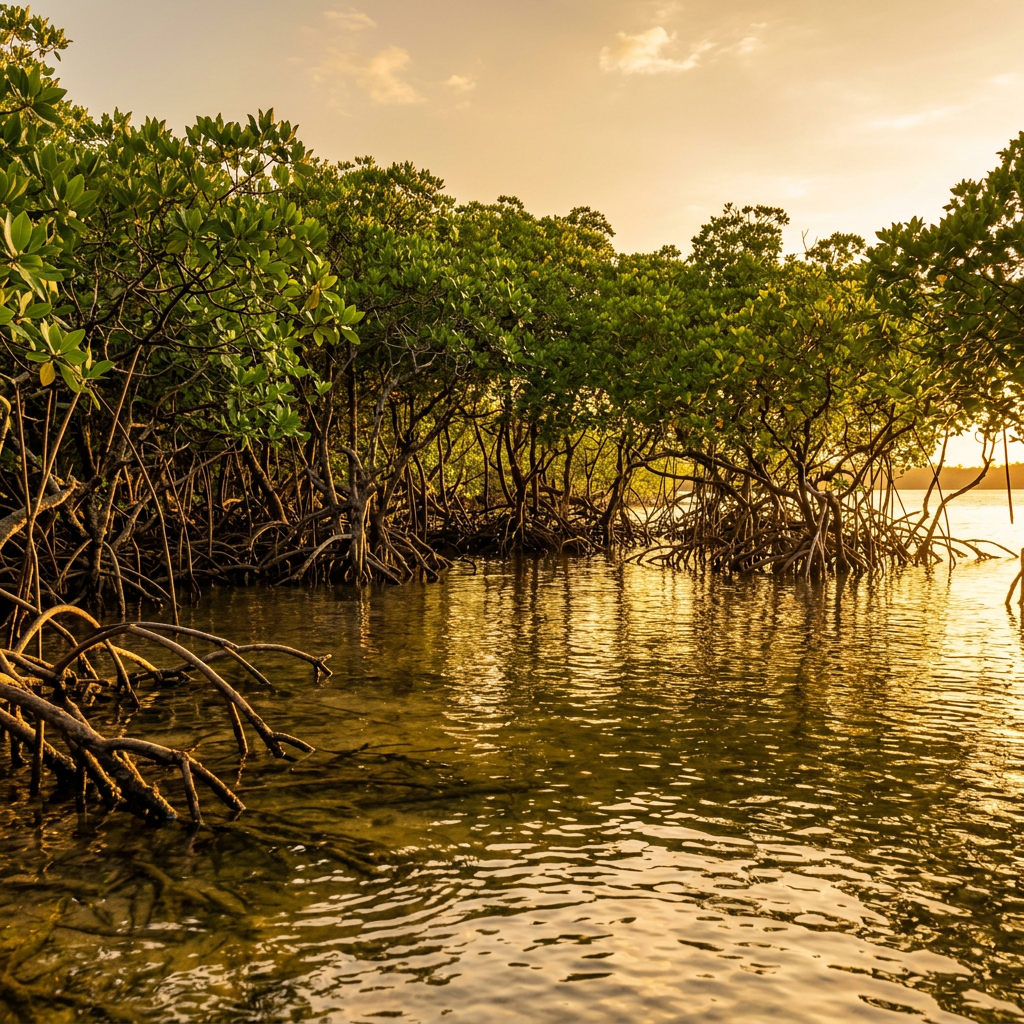
Planting trees is the easy part of ecological restoration. The harder question is whether the ecosystem those trees belong to comes back. A national study of China’s mangrove forests suggests that, at least for birds, the answer has largely been yes.
Researchers at Ningbo University report in The Innovation that China’s mangrove area grew by 166 percent between 1998 and 2020, from 10,617 to 28,194 hectares. Over the same period, the number of coastal bird species recorded rose from 148 to 397, and the number of species on the IUCN Red List of threatened species climbed from 11 to 21.
Policy Before Growth
The expansion followed a series of national measures, including the 2000 China Wetland Protection Action Plan and the 2009 revision of the Marine Environmental Protection Law. The fastest growth came between 2003 and 2008. Guangdong, Hong Kong, Macao and Guangxi together accounted for 88 percent of the national increase. Average vegetation cover also rose, from 31 percent to 38 percent, so the forests improved in density as well as extent.
Birds as a Yardstick
To judge whether ecosystem function was returning, the team used birds as an indicator. Birds sit high in the food web, respond quickly to changes in habitat and food, and are widely recorded by volunteer observers. The researchers combined long-term satellite data on mangrove extent and density with coastal bird records and analyzed them using a path model, a statistical method that tests chains of cause and effect.
The model traced a sequence. Policy and a warming climate drove mangrove expansion. Larger, denser forests improved marine conditions and shifted phytoplankton communities, and bird diversity rose in turn. Mangrove area tracked bird abundance and species richness closely. Phytoplankton had the strongest direct effect on overall diversity and abundance, while mangrove area had the strongest effect on the number of species. Climate had no significant direct effect on birds, acting only indirectly through mangrove growth.
Not Every Bird Wins
The authors flag two important caveats. First, much of the bird data comes from observation databases in which survey effort varies by place and year, so some of the apparent increase may simply reflect more people looking. Second, denser mangroves are not good for every species. Shorebirds such as sandpipers and plovers feed on open mudflats and can lose foraging ground as forest spreads across tidal flats.
For that reason, the researchers argue, restoration should aim at whole coastal wetlands, including mudflats, shallow water and forest edges, rather than simply planting more trees. They suggest the approach of linking a specific policy to an animal group high in the food web over 22 years could help other coastal nations balancing restoration with conservation.
Featured image: A mangrove forest at golden hour. Scientific Inquirer media library. (The press release image, a summary graphic of the study’s findings, is credited to Yang H., Yang X., Huang K., et al., The Innovation, 2026.)
Endnotes
- Yang, H., Yang, X., Huang, K., et al. “China’s mangrove expansion boosts avian diversity.” The Innovation, 1 October 2026. DOI: 10.1016/j.xinn.2026.101400.
- Innovation Press. “From 148 to 397 species: China’s restored mangroves are bringing the birds back.” EurekAlert!, 1 November 2026. https://www.eurekalert.org/news-releases/1150053




Leave a Reply