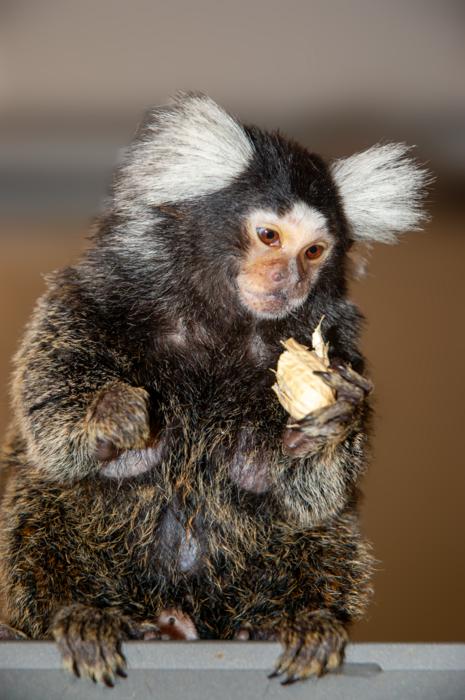
Much of neuroscience still runs on mice, yet many findings in mice never carry over to humans, and many drugs that work in mice fail in people. Marmosets, small monkeys far closer to us in evolutionary terms, are increasingly used as a bridge. But comparing the two species runs into a basic problem: researchers need to know which part of one brain corresponds to which part of the other.
A team led by Partha Mitra of Cold Spring Harbor Laboratory in New York has built what it describes as the first map that systematically links brain regions between mice and marmosets. The work is published in Communications Biology.
Why It’s Hard
“It’s the kind of problem that nobody wants to address, because it’s hard,” Mitra said. Comparing genomes is relatively simple, because DNA can be lined up base by base. Brain circuits vary even within a single species, and different research teams have produced atlases that divide the same mouse brain in different ways.
The team found that experts often disagree about how small structures should be grouped into larger ones. Some atlases place several regions under an “amygdala” umbrella, for example, while others assign those same regions to the cerebral cortex. Most atlases do agree on the smallest identifiable units, which the researchers call leaf-level regions.
Start With the Cities
So the team matched those smallest regions first and built the larger picture from there. Mitra compares it to maps of a country: state borders may shift between atlases, but people generally agree on where the cities are, even if a city goes by different names.
Reviewing more than 100 published studies, the researchers manually matched only regions that could be reliably identified. They found direct, one-to-one matches for 43 percent of mouse brain regions and 47 percent of marmoset regions. They also found that the marmoset cerebral cortex is divided into many more specialized regions than the mouse cortex.
A Stepping Stone
The authors describe the map as an intermediate step rather than a final answer, a shared reference that other labs can build on. Mitra said it will help researchers ask how brain regions connect and how those connections compare across species.
That could matter for medicine. A more precise comparison between mice and marmosets could make it more reliable to carry laboratory results toward treatments for people. Mitra also suggested the work may eventually deepen understanding of humans, both as a species and as individuals with different ways of thinking.
The study was funded by the National Institutes of Health, including the National Institute of Mental Health and the National Institute of Neurological Disorders and Stroke, and by Cold Spring Harbor Laboratory.
Featured image: Marmoset monkeys. Credit: David Omer’s Lab. (The press release image, comparing leaf-level structures in cortical regions of the mouse and marmoset brain, is credited to Mitra lab/CSHL.)
Endnotes
- Mitra, P., et al. Communications Biology, 2026. DOI: 10.1038/s42003-026-10716-9.
- Cold Spring Harbor Laboratory. “New brain map links mice and primates.” EurekAlert!, 13 August 2026. https://www.eurekalert.org/news-releases/1139929


Leave a Reply