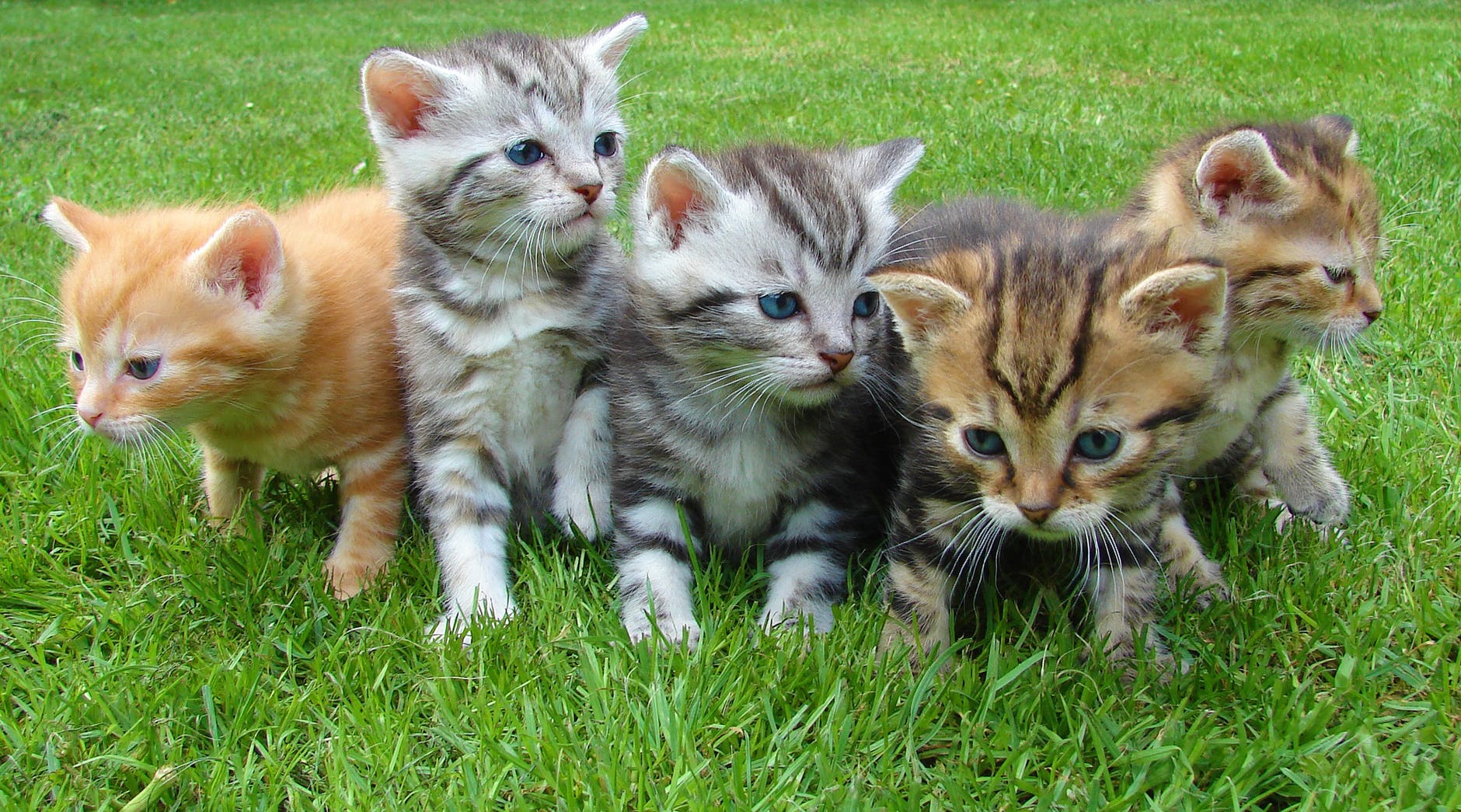
Roughly one in 16 pet cats in the United States and Canada may be carrying Giardia duodenalis, a microscopic gut parasite that can cause diarrhea in animals and people alike. That is the headline finding of what its authors describe as the largest study yet of the parasite in North American house cats, published in PLOS One.
Most of the infected cats carried strains of the parasite that are adapted to cats and pose little risk to their owners. But close to a fifth carried strains with the potential to infect humans as well.
157,000 Stool Samples
The study, led by veterinarian Margaret Wingerd of VCA SouthPaws Veterinary Specialists & Emergency Center in Fairfax, Virginia, was retrospective. The team analyzed existing records from Antech Diagnostics, a commercial veterinary laboratory, covering stool tests run between March 2022 and August 2023. The samples, more than 157,000 in all, came from cats in 49 U.S. states, Washington, D.C., and five Canadian provinces. The cats ranged in age from one day to 26 years.
Every sample had been screened with a PCR test that detects Giardia DNA and can tell its genetic types apart. Overall, 6.3 percent tested positive, a figure at the high end of earlier U.S. estimates.
Among positive samples, 18.5 percent belonged to the parasite’s assemblages A or B, genetic groupings capable of infecting people and other mammals. Scientists describe such strains as having zoonotic potential, meaning they could pass between species.
Who Gets Infected
Kittens stood out. Cats younger than one year tested positive at a rate of about 11 percent, compared with 1.3 percent for cats older than ten, and nearly 20 percent of infected kittens carried the strains that can reach humans. Males tested positive more often than females, 6.9 percent against 5.7 percent. Unneutered cats were infected more often than spayed or neutered cats overall, though among kittens the pattern reversed. The authors suggested, without testing the idea, that shelter stress and early neutering might explain that reversal.
Geography and season mattered too. The Midwest had the highest infection rate, 7.8 percent, and the South the lowest, 5.9 percent. The Northeast had the largest share of potentially zoonotic strains among infected cats. Infections were least common in summer.
What It Does and Doesn’t Show
The strain data establish that a meaningful minority of cats harbor parasites capable of infecting people. They do not show that any cat actually passed Giardia to an owner. The U.S. Centers for Disease Control and Prevention has long described cat-to-human transmission as unlikely, because the types that usually infect each host are different. The authors even raise the possibility of the reverse, that some cats picked up human-adapted strains from people.
Other limits follow from the design. Because the records were collected for clinical testing, the researchers had no information on whether the cats lived indoors or outdoors, whether they had symptoms, or where they had traveled. Cats whose stool is sent to a lab may not represent cats in general. Canadian samples were left out of the statistical models, so the findings on age, sex, season and region apply to U.S. cats.
Readers should also know who did the work. Seven of the 11 authors are employees of Antech Diagnostics, part of Mars Petcare Science & Diagnostics, which funded the research internally and makes the test used in the study. The authors declared no competing interests.
Their practical recommendation is routine stool testing for cats, especially in households with young children, older adults or anyone with a weakened immune system. A healthy-looking cat, particularly a kitten, can carry the parasite without any sign of it.
Endnotes
- Wingerd, M., Kimmerlein, A., Jimenez Castro, P. D., Evason, M. D., Willcox, J. L., Lozoya, C. E., Tereski, J., Mitchell, K., Bergman, P. J., Leutenegger, C. M., & Kerl, M. E. (2026). “Giardia duodenalis in domestic cats from the US and Canada: Prevalence and zoonotic potential.” PLOS One, 21(10), e0358546. https://doi.org/10.1371/journal.pone.0358546
- PLOS (October 7, 2026). “1 in 20 pet cats in North America might have Giardia infection, with young, male, unneutered cats especially at risk, per analysis of more than 150,000 feline stool samples.” EurekAlert! https://www.eurekalert.org/news-releases/1145998
- StudyFinds (October 8, 2026). “Cat gut parasite strains that can infect humans.” https://studyfinds.com/cat-gut-parasite-strains-infect-humans/



Leave a Reply