We send dogs to find people buried in rubble and rely on bees to find flowers, yet scientists still do not fully understand how either animal uses smell to track an odor to its source. Research from the University of Colorado Boulder points to a major player that is easy to overlook: the air itself.
In a study featured on the cover of PRX Life, the team reports that turbulent wind reshapes the timing of odor signals in systematic ways. Those patterns, they propose, may carry information animals use to navigate toward the source of a scent.
A Scent Is Not a Steady Stream
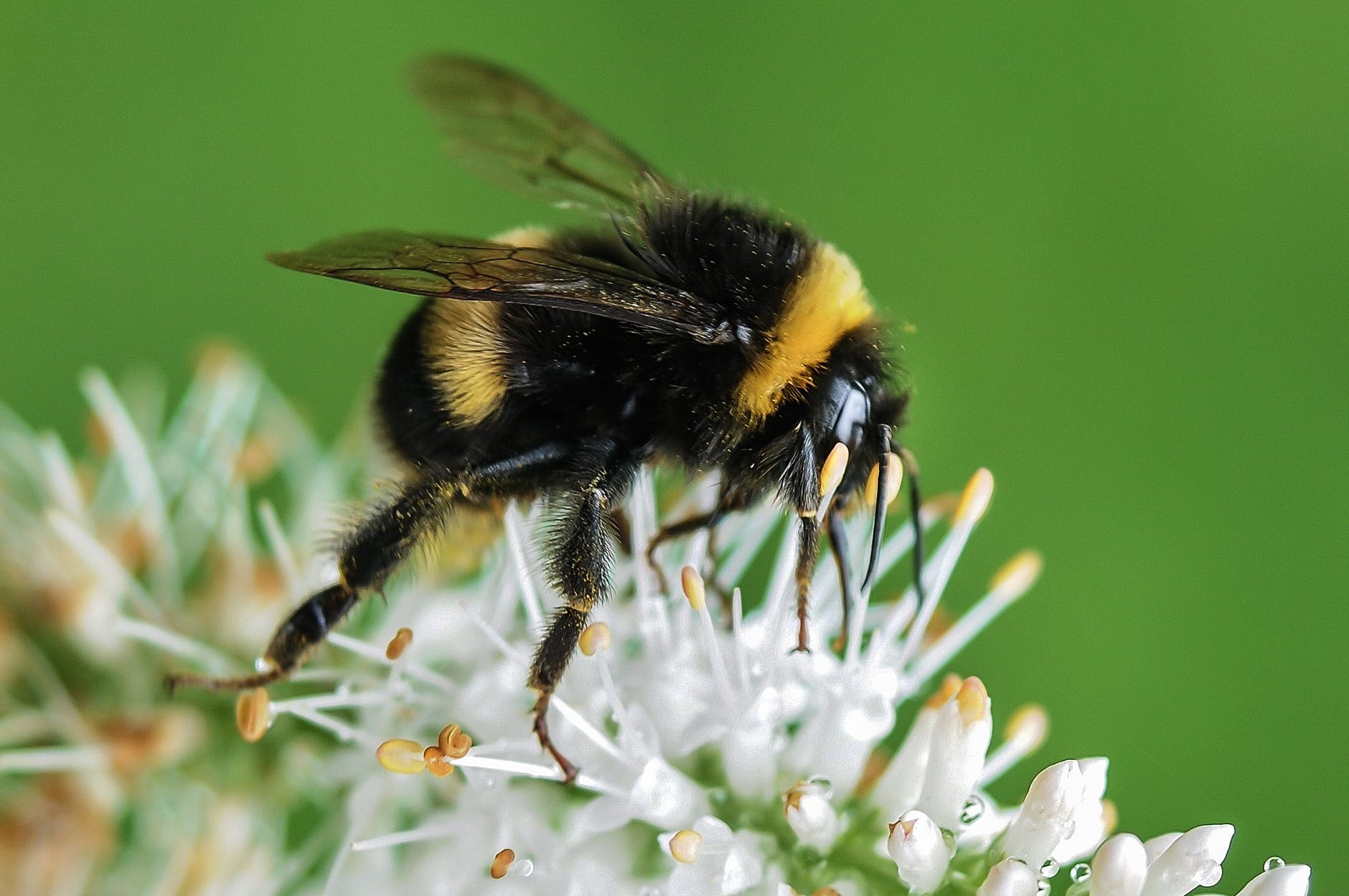
Elle Stark, a postdoctoral researcher and the study’s lead author, uses a bergamot flower to illustrate the problem. As scent drifts away from the bloom, turbulent eddies stretch the plume into thin filaments that fold, spread, rotate and mix. By the time it reaches a bee, the signal is no longer a smooth gradient. It arrives as brief bursts of odor separated by stretches of clean air.
Animals somehow make sense of this, a skill called olfactory navigation, refined over millions of years of evolution. The CU Boulder team wanted to know what in that intermittent signal might be useful.
Reading Odor Like Music
Their approach was to classify odor signals by the frequencies they contain, much as a listener might recognize a song from its pitches. Stark suggests this frequency content may help animals locate a source.
The study identifies three basic ways turbulence changes an odor signal on its way from source to nose. It filters out some frequencies, spreads others and creates new ones. Because those changes are systematic, they could tell an animal something about how far the odor has traveled and from which direction.
John Crimaldi, a professor at CU Boulder and a lead investigator of the Odor2Action research network, said these changes likely help animals judge distance and direction. Odor plumes are invisible, so his group studies them with computer simulations and with wind-tunnel experiments in which plumes are lit by lasers. The resulting footage resembles smoke curling from a candle that has just been blown out, and it is converted into quantitative data.
The work joins physics to neuroscience. It is part of Odor2Action, an international network of 16 institutions studying how animals use odors to guide behavior, and it involved a collaboration with Jonathan Victor, a neuroscientist at Weill Cornell Medicine.
Toward Noses That Can Find Things
The air is only the first stage of transformation. Animals actively sample their surroundings by moving through plumes, flicking antennae and sniffing, all of which change the signal again, and the nervous system modifies it further. Stark said future research should trace how each stage alters the signal so that scientists can understand how animals use it.
The longer-term payoff is practical. Current electronic noses can detect that a chemical is present but generally cannot tell where it came from. “By understanding how air and wind transform odor signals,” Stark said, engineers might mimic animal navigation in devices for search and rescue or for tracing hazardous chemical leaks.
The link between these frequency changes and actual animal behavior remains a hypothesis that the physics makes plausible. By the time an odor reaches an animal, Crimaldi said, the airflow has already transformed it. The next challenge is understanding how the nervous system uses that transformed information.
Endnotes
- Stark, E., Crimaldi, J., et al. (May 13, 2026). “Temporal Reformatting of Odor Signals by Flow Environments.” PRX Life. https://doi.org/10.1103/mrkx-yldh
- University of Colorado Boulder (August 10, 2026). “Decoding smell: Study reveals how wind transforms odor signals.” EurekAlert! https://www.eurekalert.org/news-releases/1139544
Featured image: Photo by Skitterphoto on Pexels.com.



Leave a Reply