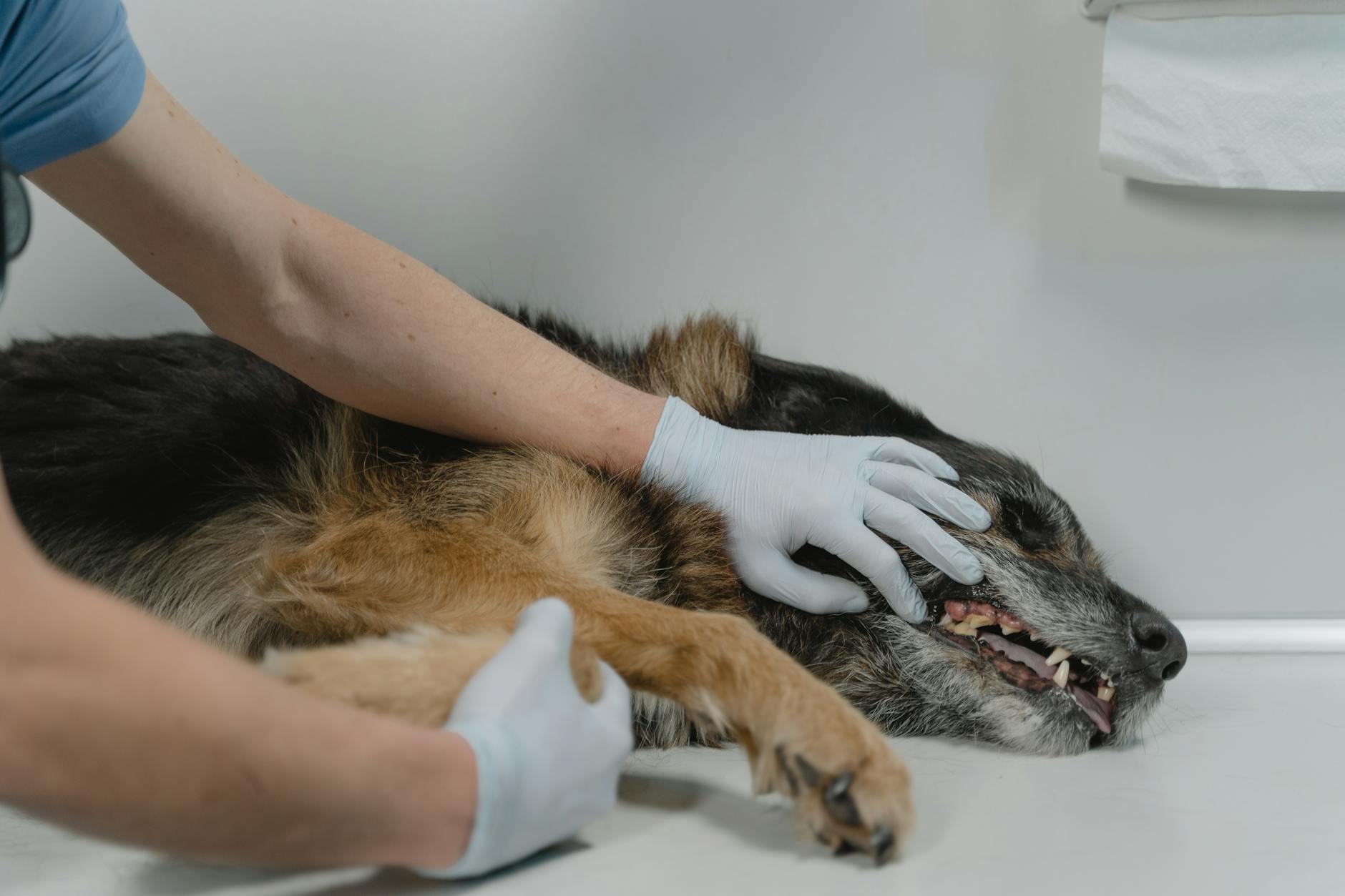
Dogs have spent thousands of years being bred to work and live alongside people, and individual dogs spend months or years being trained to understand what their owners want. A study published in JNeurosci asks what those two forces, one acting over generations and the other within a single lifetime, have done to the canine brain.
The answer, according to a team at Harvard University led by Mélina Cordeau, is that both have left measurable marks on the brain’s communication pathways.
Breeding Shapes Word Processing
The researchers examined brain structure in 108 dogs using a noninvasive three-dimensional imaging technique. They compared dogs from lineages bred for close involvement in human work and family life with dogs from more ancestral lineages.
Selective breeding for life with people was linked to differences in brain pathways related to communication. The strongest differences involved pathways that handle vocal and word processing, the circuitry a dog would use to make sense of human speech.
Training Strengthens Connections
To separate the effects of training from those of ancestry, the team compared trained service dogs with dogs of similar breeding that had not received that training. Training was associated with stronger pathways for interpreting cues and carrying out responses. Trained dogs also had stronger connections between brain areas involved in responding to communication from others.
The researchers also report that patterns of connection between brain regions could predict how trainable a dog was. If that holds up, it raises the possibility of identifying promising assistance dogs early, though the summary of the study does not say how accurate the prediction was.
Taken together, the authors conclude, the results show that dogs’ capacity to communicate with people has been shaped both by genetic selection across many generations and by learning over the much shorter span of an individual life.
Better Training, Better Partnerships
“I think this type of research can help us better understand not only dogs” but also the relationship between dogs and people, Cordeau said. Knowing how dogs process human communication, and how breeding and training shape that processing, could help people interact with dogs more effectively and refine training methods, she said, including making assistance-dog training more effective and better tailored to each animal.
Those applications remain prospective. The study links brain structure to breeding history and training, but structural imaging cannot show what the dogs actually understand, and an association between training and stronger connections does not by itself establish that training built them. Dogs selected for service work may have started out different. The summary does not describe the breeds included or how many of the 108 dogs were trained service animals.
Still, the work adds anatomical evidence to a long line of behavioral research showing that dogs are unusually attuned to people. It suggests that attunement is written into the brain by both the breeder and the trainer. The research was funded by the U.S. National Science Foundation and the Fyssen Foundation, and the authors report no competing financial interests.
Endnotes
- Cordeau, M., et al. (August 10, 2026). “Selection and Learning Shape Communication Networks in the Dog Brain.” JNeurosci. https://doi.org/10.1523/JNEUROSCI.2174-25.2026
- Society for Neuroscience (August 10, 2026). “Evolution and training have influenced dogs’ capacity for communication.” EurekAlert! https://www.eurekalert.org/news-releases/1138269
Featured image: Photo by Tima Miroshnichenko on Pexels.com.
Leave a Reply