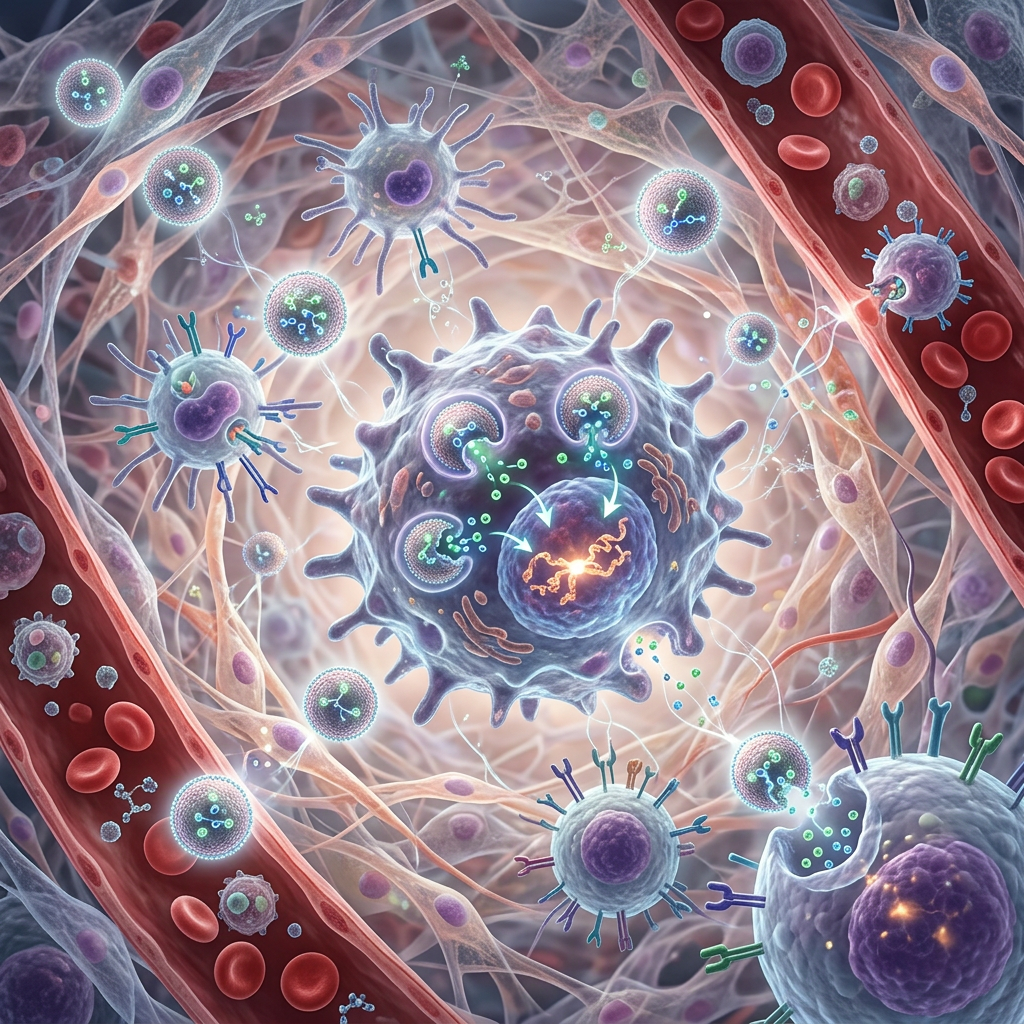
SGLT2 inhibitors were developed to lower blood sugar in people with type 2 diabetes. Over the past decade they have turned out to protect the heart as well, for reasons that are still being worked out. A small human trial at Vanderbilt University Medical Center now points to one possible explanation. The drugs appear to act on the immune system.
In a pilot study published in Circulation, a journal of the American Heart Association, researchers found that the SGLT2 inhibitor empagliflozin reduced the number of circulating immune cell clusters that have been linked to cardiovascular disease. Animal experiments had hinted that these drugs affect immunity, but evidence in people had been missing.
“This study provides the first direct evidence of SGLT2 inhibitors altering human immune cells,” said Mona Mashayekhi, an assistant professor of medicine in the Division of Diabetes, Endocrinology and Metabolism at Vanderbilt Health. That change, she said, may be part of how the drugs lower cardiovascular risk.
Sticky Cells in the Bloodstream
The clusters in question are called monocyte-platelet aggregates. They form when platelets, the cell fragments responsible for blood clotting, stick to monocytes, a type of white blood cell. The aggregates are thought to contribute to inflammation in blood vessels and, through it, to cardiovascular disease.
The team enrolled 16 women with obesity and prediabetes. After baseline testing, the women took empagliflozin for three months. A comparison group of women followed a low-calorie diet over the same period. The researchers measured immune cells at two weeks and again at three months, using advanced genetic sequencing and cell imaging.
Among the women taking the drug, monocyte-platelet aggregates fell significantly within two weeks, and the reduction had grown larger by week 12. The diet group showed no such drop. Because both groups were pursuing weight loss, the researchers take the contrast as a sign that the drug’s effect on these cells goes beyond what losing weight would accomplish.
They also saw a shift inside the monocytes themselves. The cells moved away from a highly inflammatory metabolic state toward a steadier one centered on ordinary energy production.
Why the Mechanism Matters
Mashayekhi said it is notable that the drug seems to act on immune cells at the cellular level and with some specificity. Understanding how SGLT2 inhibitors dampen the inflammation that accompanies obesity, she said, could help identify which patients stand to benefit most. It could also reveal other targets along the same pathway for future drugs.
Chronic, low-grade inflammation is a well-established feature of obesity and a contributor to the heart disease that often comes with it. A medicine that quiets one inflammatory process in the blood, independent of its effect on sugar or weight, would help explain the cardiac benefits seen in large outcome trials of this drug class.
A Pilot, With a Larger Trial Under Way
The study’s limits are plain from its design, and the paper’s own title calls it a pilot. It was small. It included only women. The comparison was with a diet group, not with a placebo, so participants knew what they were getting. And it measured a marker in the blood, not heart attacks or strokes. Whether the fall in aggregates is itself what protects the heart, or simply travels alongside something else that does, has not been shown.
A more rigorous test is already enrolling at Vanderbilt Health. The randomized, placebo-controlled trial plans to include 74 participants with obesity and metabolic syndrome. Like the pilot, it will follow immune changes over three months. It will also collect and analyze fat tissue to study obesity-related inflammation more directly.
The research was supported by grants from the National Institutes of Health, with additional support from core facilities at Vanderbilt and the Tennessee Center for AIDS Research.
Endnotes
- “SGLT2 Inhibitor Empagliflozin Reduces Circulating Monocyte-Platelet Aggregates: A Pilot Study.” (September 15, 2026). Circulation. https://doi.org/10.1161/CIRCULATIONAHA.125.077432
- Vanderbilt University Medical Center (October 6, 2026). “Human trial: Popular diabetes drug shown to lower inflammation, which may protect the heart.” EurekAlert! https://www.eurekalert.org/news-releases/1146674


Leave a Reply