Childhood Cancers May Spread by Changing Their Cellular Identity
Researchers at the University of East Anglia have proposed a new explanation for why some childhood cancers spread aggressively despite carrying relatively few genetic mutations. Rather than acquiring additional mutations, tumor cells may exploit developmental programs that allow young cells to switch between different biological states. This flexibility, known as cellular plasticity, could enable cancer cells to become invasive, survive treatment or establish tumors in distant organs. The researchers reviewed evidence involving neuroblastoma, Ewing sarcoma, osteosarcoma, medulloblastoma and rhabdomyosarcoma. Published in Trends Open and reported November 9, the work suggests that future treatments might prevent cancer cells from entering dangerous states rather than targeting mutations alone. However, this is a proposed framework based on existing evidence, not a demonstrated new therapy. (Medical Xpress)
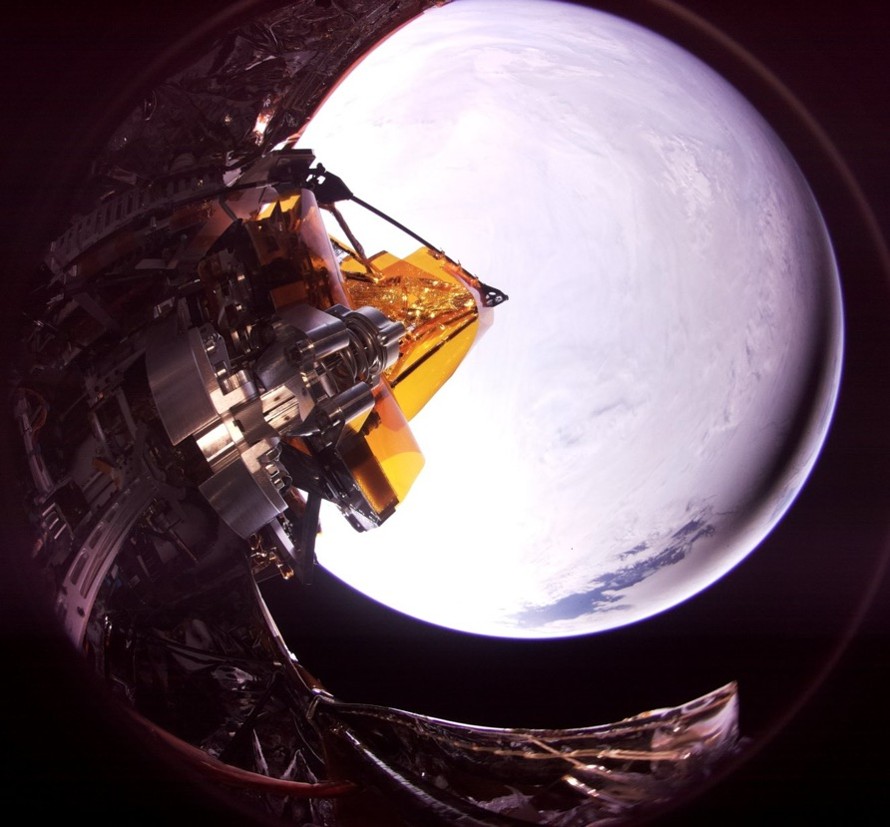
Robot Builds Structure in Space Without Astronaut Assistance
Engineers at Caltech have demonstrated automated construction of a structural framework in orbit, potentially opening the door to spacecraft and telescopes too large to launch fully assembled. Developed under DARPA’s NOM4D program, the ASTRA system uses robotic machinery to connect composite tubes and specialized joints into a lightweight truss. Launched in March 2026, the experiment successfully assembled an additional structural section in space. The technology could eventually support enormous antennas, solar-power arrays and scientific instruments extending hundreds of meters or more. However, technical difficulties prevented completion of the planned 1.4-meter reflector antenna. Announced November 5 and described in further reporting November 9, the achievement establishes an important proof of concept, although reliable large-scale orbital manufacturing remains a future goal. (DARPA)
CERN Detects Evidence of a Particle Decay Sought for 40 Years
Physicists at CERN have found evidence of an extraordinarily rare particle decay, marking a milestone in a search spanning more than four decades. Researchers working with the Large Hadron Collider’s LHCb experiment detected signs that a neutral beauty meson containing a beauty quark and down antiquark can decay into two muons. The process is predicted to occur approximately once in ten billion beauty-particle decays. Improvements to the detector and machine-learning techniques helped scientists distinguish the signal from overwhelming background activity. Announced November 3, the result reached a statistical significance of 3.2 standard deviations, sufficient to claim evidence but not a confirmed discovery. The measurements agree with the Standard Model while constraining possible undiscovered particles and forces. Further observations are required to reach the five-standard-deviation discovery threshold. (CERN)
Ocean’s Sticky Marine Snow May Store Six Times More Carbon
Scientists have discovered that the physical consistency of marine snow, the sinking mixture of dead plankton, waste and organic debris in seawater, plays a major role in how much carbon reaches the deep ocean. Researchers at UC San Diego’s Scripps Institution of Oceanography and the University of Lincoln developed advanced microscopy techniques to observe bacteria interacting with individual particles. They found that bacteria more easily colonize and break down less viscous material, while stickier regions resist degradation. Laboratory observations and computer simulations suggest highly viscous particles can transport more than six times as much carbon into deep water as less viscous particles. Reported November 8, following research published in Science in October, the findings could improve climate models by revealing an overlooked factor controlling ocean carbon storage. (ScienceDaily)
Existing Drug Could Make Pancreatic Cancer More Vulnerable to Immunotherapy
Researchers at Japan’s Chiba University have identified a potential treatment strategy for pancreatic cancer involving iptacopan, an existing drug approved for certain rare diseases. The drug blocks complement factor B, an enzyme involved in immune signaling that appears to help pancreatic tumors maintain their protective environment. Scientists found that elevated levels of the enzyme in human pancreatic cancer tissue were associated with poorer survival and more frequent recurrence through the bloodstream. In laboratory and mouse experiments, iptacopan reduced cancer-cell proliferation, increased the presence of tumor-fighting CD8-positive T cells and decreased immunosuppressive regulatory T cells. Combining the drug with chemotherapy and immune checkpoint inhibitors produced stronger tumor suppression. Published in The American Journal of Pathology and reported November 9, the findings are preclinical and do not establish effectiveness in patients. (Medical Xpress)
Scientists Discover How Brain Support Cells Sustain Neural Activity
Researchers in South Korea have identified a molecular mechanism that allows astrocytes, the star-shaped support cells of the brain, to sustain neuronal activity and blood flow during prolonged stimulation. Scientists at the Institute for Basic Science and Sungkyunkwan University compared brain responses in mice exposed to brief five-second sensory stimulation and longer 20-second stimulation. During sustained activity, water entered astrocytes through AQP4 channels, triggering calcium signaling and the release of D-serine, a molecule that helps maintain neuronal communication and blood-vessel dilation. Blocking parts of this pathway reduced sustained brain responses, while supplying D-serine restored them. Published in Advanced Science and reported November 5, the findings could improve understanding of neurovascular dysfunction associated with Alzheimer’s disease and stroke. However, the mechanism has not yet been established as a therapeutic target in humans. (Medical Xpress)
Gene Therapy Shows Lasting Benefits Four Years After Treatment
An experimental gene therapy has maintained its benefits for four years in three patients with Crigler-Najjar syndrome, a rare inherited liver disorder that prevents the body from properly processing bilirubin. Without treatment, dangerous bilirubin accumulation can cause permanent neurological injury. The therapy, GNT0003, uses an engineered adeno-associated virus to deliver a functioning copy of the UGT1A1 gene to liver cells. Researchers reported that two patients receiving the therapeutic dose discontinued the intensive blue-light phototherapy normally required to control the disease, while a third substantially reduced treatment. All three maintained bilirubin concentrations below the threshold associated with neurotoxicity. Published in the New England Journal of Medicine and reported November 6, the results demonstrate encouraging durability. Larger clinical trials are underway, and the treatment is not yet an established cure. (New England Journal of Medicine)
Medieval Sanitation System May Have Spread Parasitic Infections
Archaeological research in Trondheim, Norway, suggests that an early public sanitation system unintentionally contributed to the spread of intestinal parasites. Scientists investigating the city’s medieval population between AD 1000 and 1600 combined skeletal evidence with studies of historical waste-management practices. Authorities had introduced organized disposal systems that separated human waste from other refuse and moved foul-smelling latrine material outside the urban center. However, that waste was subsequently incorporated into agricultural manure and spread on fields supplying the city’s food. Analysis of latrine deposits revealed widespread roundworm infection, suggesting that the system repeatedly returned parasite eggs to residents through contaminated crops. Reported November 7 by researchers at the Norwegian University of Science and Technology, the findings illustrate how well-intentioned public health reforms could produce unintended consequences before the discovery of microbial disease transmission. (Phys.org)
Chinese Space Station Sets New Record for Coldest Quantum Gas in Space
Physicists aboard China’s Tiangong space station have cooled a cloud of atoms to an equivalent temperature of approximately 9.7 picokelvin, setting a new record for ultracold quantum gases in space. Researchers at Peking University used laser-based optical traps and evaporative cooling to manipulate roughly 20,000 rubidium atoms into a Bose-Einstein condensate, a state in which particles behave collectively as a quantum wave. Microgravity allowed the team to observe the cloud’s expansion for seven seconds, considerably longer than previous experiments aboard the International Space Station or in terrestrial drop towers. Published in Science and reported November 6, the achievement could support more precise measurements of fundamental physical forces and experiments involving exotic quantum states. The reported temperature describes the atoms’ expansion energy rather than an ordinary thermodynamic temperature measurement. (Science)
New Mineral Technology Removes More Than 99% of Radioactive Contaminant From Water
Researchers at the University of Manchester have developed two experimental methods for trapping technetium-99, a long-lived radioactive contaminant that can migrate through groundwater near nuclear facilities. In one study, scientists incorporated technetium directly into engineered minerals called layered double hydroxides, removing more than 99% of the contaminant from laboratory liquid-waste samples. A second approach adapted a compound used in nuclear medicine to bind technetium to hydroxyapatite, a calcium phosphate mineral found naturally in bones. Laboratory experiments achieved removal rates approaching 99%, including tests simulating flowing groundwater. Published in Environmental Science & Technology and reported November 6, the findings could improve cleanup strategies at legacy nuclear sites such as Sellafield in Britain and Hanford in Washington State. Long-term performance under field conditions still requires validation. (Phys.org)
IMAGE CREDIT: Caltech/Momentus


Leave a Reply