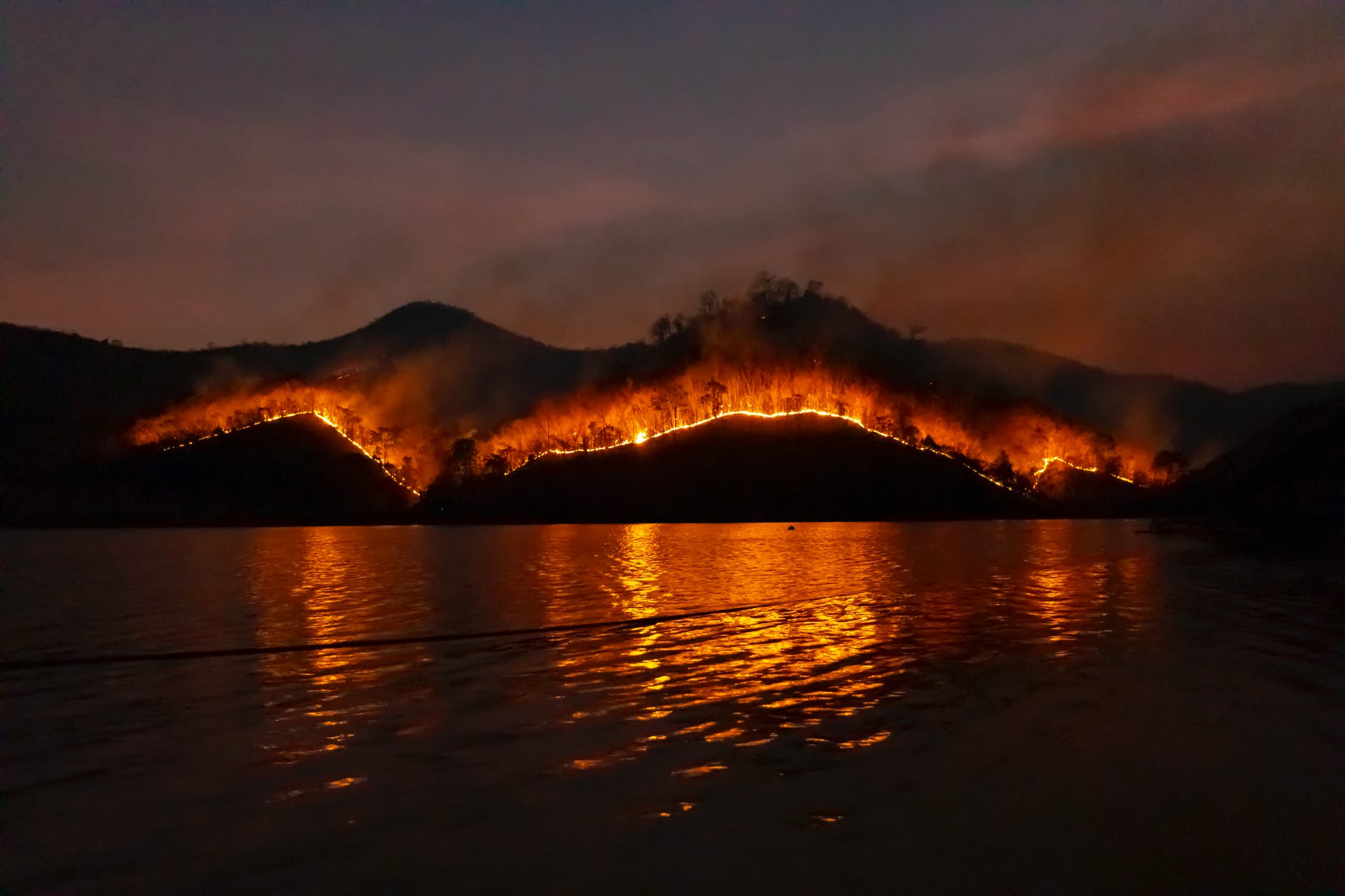
Meeting Colorado’s wildfire building code adds between 0.6 and 10.8 per cent to the cost of a new house, and most of the upper end comes from one feature: the deck.
After the Marshall Fire destroyed more than 1,000 structures in Boulder County in 2021, and the East Troublesome Fire took hundreds of homes in Grand County the year before, Colorado moved to tighten how houses are built in fire-prone areas. The state enacted the Colorado Wildfire Resiliency Code in 2022 and revised it in 2025.
A common objection to such codes is cost, in a state that also needs more affordable housing. A new report led by CIRES, the Cooperative Institute for Research in Environmental Sciences at the University of Colorado Boulder, puts numbers to that objection. Meeting the code typically raises the cost of a new single-family home by 0.6 to 10.8 per cent.
“Colorado needs more affordable housing, and the homes we build today will shape our communities’ wildfire risk for decades,” said Virginia Iglesias, a CIRES scientist and director of Earth Lab.
Where construction money actually goes
The finding rests on a fact about how houses are priced. Foundation, framing, floors and insulation account for 85 to 90 per cent of total construction costs. The features that make a house resistant to wildfire sit mostly in the remaining tenth.
Those features work by denying a fire its routes in. Most houses lost in wildfires are not consumed by a wall of flame; they ignite from embers carried ahead of the fire, which land on roofs, collect against siding or blow through vents into attics. A roof of non-combustible material, vents screened to keep embers out, windows that resist breaking under heat, and siding that does not readily ignite address those pathways.
Improved roofs, vents, windows and siding add relatively modest costs, the report found. That is the core of its argument: the expensive parts of a house are not the parts that determine whether it survives a fire.
Eight counties, five approaches
The researchers evaluated new single-family homes across eight Colorado counties: Boulder, Jefferson, El Paso, Summit, Grand, Delta, La Plata and Las Animas. The selection spans the Front Range, mountain resort areas and the Western Slope, with different labour markets, building traditions and fire conditions.
For each, the team compared five construction approaches, from pre-code practices through to stricter resilience standards, and priced them out.
The resulting range, roughly 0.6 to 10.8 per cent above homes built under earlier practices, held up across the counties despite those regional differences. That consistency is itself a finding, since it suggests the cost of compliance is not dominated by local labour or supply conditions.
On a $600,000 house, that range runs from roughly $3,600 at the low end to about $65,000 at the high end, a spread wide enough that the detail of which features are included matters more than the headline figure.
It is mostly the deck
The single largest driver of the cost difference between protection levels turned out to be deck requirements. Exclude exterior decks, and the gap between protection levels fell from 10.2 percentage points to 1.2.
Decks are a known weak point. A wooden deck is combustible material attached directly to the house, often elevated, with a space underneath where embers and debris accumulate. Building one to resist fire means non-combustible or fire-rated materials and closing off the underside, and those materials cost considerably more than standard lumber.
The practical implication is that the headline range conflates two different decisions. The core shell of a code-compliant house, the roof, vents, windows and siding, is relatively cheap to upgrade. Making a deck fire-resistant is where the money goes, and a homeowner choosing a smaller deck, a patio at grade, or no deck at all faces a very different figure.
The risk being priced against
The report cites projections that without meaningful mitigation, the probability of home loss to wildfire in Colorado could rise five-fold by mid-century under moderate warming and development scenarios.
Two forces drive that. Fire seasons in the western United States have lengthened and fire behaviour has intensified with warming and drought. At the same time, housing has expanded into the wildland-urban interface, the zone where development meets undeveloped vegetation, putting more structures in the path of fires that do start.
Against a five-fold increase in the chance of losing a house, a few per cent on construction cost is a different proposition than it appears in isolation. Insurance markets have already begun to reflect that calculation: insurers in high-risk western areas have raised premiums sharply or withdrawn from some markets entirely, and mitigation features increasingly affect whether coverage is available at all.
Codes of this kind draw on evidence from post-fire investigations, which repeatedly find houses that survived beside houses that burned, often because of differences in roofing, vents or what was stacked against a wall. California has required similar measures in its highest-hazard zones since 2008, and comparisons of survival rates between older and newer housing stock there have shaped how other states have written their own rules.
Knowing is not the same as doing
Iglesias framed the report as an input to a decision rather than a conclusion about it.
“This study informs the discussion by quantifying the costs of wildfire-resilient construction, helping builders, homeowners, and policymakers understand how greater protection can fit within housing budgets,” she said.
“Reducing wildfire losses starts with a shared understanding of risk and how to address it,” she said. “Education, access to lower-cost compliant materials, and contractor familiarity with those options can translate that understanding into affordable, resilient homes.”
That last point names a real obstacle. A code is only as effective as the supply chain and workforce behind it. If compliant materials are hard to source locally, or if local contractors have not built to the standard before, the cost in practice can exceed the cost on paper. Those gaps tend to close as a code becomes routine.
The report covers new construction, which is the easier case. Retrofitting an existing house, replacing a roof or rebuilding a deck, generally costs more than building it correctly the first time, and most houses in Colorado’s fire-prone areas already exist.
The report notes one internal inconsistency: although eight counties are listed, a later passage refers to seven.
Notes
- “Building wildfire-resilient homes costs less than residents expect.” Cooperative Institute for Research in Environmental Sciences, University of Colorado Boulder, 2026. DOI: 10.25810/9vsh-pb94.
- University of Colorado at Boulder. “Building wildfire-resilient homes costs less than residents expect.” EurekAlert!, 20 October 2026. https://www.eurekalert.org/news-releases/1148534.
Photo by Sippakorn Yamkasikorn on Pexels.com



Leave a Reply