Smithsonian scientists used DNA from museum specimens and fossil bones to map the explosive evolution of more than 60 honeycreeper species, finding a burst of diversification 2.5 to 3.5 million years ago and extensive hybridization.
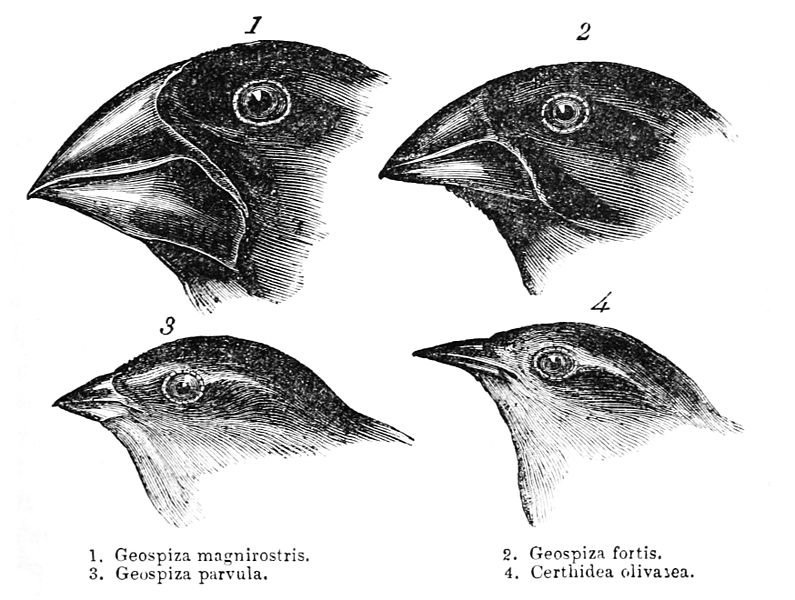
Hawaii’s honeycreepers are one of evolution’s great showpieces. From a single ancestral finch that reached the islands millions of years ago arose more than 60 species, with beaks shaped for sipping nectar, cracking seeds, probing bark and picking insects from leaves. Their diversity rivals that of the famous Galápagos finches.
It is also one of conservation’s great tragedies. Most honeycreeper species are now extinct, and many survivors are hanging on in shrinking mountain forests. Now Smithsonian scientists have produced the most comprehensive family tree of the group yet, published in the Proceedings of the National Academy of Sciences.
“The findings are bittersweet because while we have a much better understanding of the relationships between the Hawaiian honeycreepers and the role hybridization played in their evolution, they also show we have lost more Hawaiian honeycreeper lineages than we previously knew,” said Michael Campana, a genomicist at the Smithsonian’s National Zoo and Conservation Biology Institute and the study’s lead author.
Genomes from the museum drawer
Building a complete family tree for a group that has lost most of its members is a challenge. Many species disappeared before scientists could study them alive. The team turned to museum collections in the United States and Europe, using minimally invasive methods to collect genetic material from specimens gathered over centuries. They also extracted usable DNA from fossil bones.
Working with old specimens is difficult. DNA breaks into short fragments over time and can be contaminated by modern genetic material, so researchers must use specialized laboratory methods and careful statistical checks to piece together reliable sequences. Advances in sequencing technology over the past two decades have made it possible to recover entire genomes from specimens that once yielded only scraps of genetic information.
The study covers 17 living species, 18 species that were still alive when Europeans arrived in Hawaii in 1778 but have since vanished, and two species known only from fossils.
“This really highlights how improvements in genetic sequencing have transformed traditional natural history museum collections into vast repositories of historical and comparative genetic information,” said Helen James, curator of birds and chair of vertebrate zoology at the Smithsonian’s National Museum of Natural History.
An evolutionary big bang
The genomic data showed that most honeycreeper species arose in a burst of diversification about 2.5 to 3.5 million years ago. That timing coincides roughly with the formation of the island of O‘ahu, which would have created new habitats and opportunities for birds to spread and specialize.
Bursts of this kind, known as adaptive radiations, occur when a lineage encounters a range of open ecological niches, as on young volcanic islands with few competitors. Each new island in the Hawaiian chain offered fresh forests, flowers and insects, and the honeycreepers diversified to exploit them.
The honeycreepers’ diversity of beak shapes illustrates the process. Some species evolved long, curved bills for drinking nectar from native lobelia flowers. Others developed thick, finch-like beaks for cracking hard seeds, or short, pointed bills for gleaning insects. The ‘akiapōlā‘au uses a lower bill like a chisel to chip into bark and a long, curved upper bill to extract grubs, a combination found in no other bird.
A tangled tree
The honeycreeper tree turned out to be more of a web. The researchers confirmed genetic mixing between the ‘ō‘ū, Psittirostra psittacea, and the Lāna‘i hookbill, Dysmorodrepanis munroi, two species that have both been lost. They also found that populations of ‘amakihi, Chlorodrepanis species living on different islands, still share genetic material.
Such hybridization, sometimes called reticulate evolution, is increasingly recognized as an important force in the origin of new species. Rather than splitting cleanly like the branches of a tree, lineages can exchange genes, combining traits in new ways. The paper’s title describes the honeycreepers as a reticulated adaptive radiation.
Counting what was lost
The study also puts the scale of loss in sharper relief. Of the 37 species included, only 17 survive. By placing extinct and living species in a single evolutionary framework, the researchers can show which branches of the family tree have been pruned away entirely, information that can help conservationists understand how much evolutionary history has disappeared and where to focus efforts.
Honeycreepers have suffered from habitat destruction and introduced predators, but their most devastating threat today is disease. Avian malaria, carried by mosquitoes introduced to Hawaii in the 19th century, has wiped out birds in lowland forests. As the climate warms, mosquitoes are moving higher into mountain refuges. Several species have declined to just a few hundred individuals, and the ‘akikiki, a small Kaua‘i honeycreeper, is believed to have nearly or entirely disappeared from the wild in recent years.
Conservation agencies have begun releasing mosquitoes carrying a bacterium that prevents them from reproducing successfully, an effort to suppress mosquito populations in key forests.
Next: disease
The team plans to use the new data to study introduced diseases, including avian malaria and avian pox.
“The genomic data we generated for this study should also be useful for understanding the morphological evolution of the honeycreepers, as well as to offer clues about how the genomic variation of some honeycreeper species may have influenced their ability to survive disease,” said Robert Fleischer, scientist emeritus at the National Zoo and Conservation Biology Institute and the study’s senior author.
Some honeycreeper populations appear to have developed partial tolerance to malaria. Identifying the genetic basis of that resilience could help conservationists decide which populations to protect or use in captive breeding programs.
Museum collections, often seen as records of the past, are increasingly serving as tools for protecting the future. For Hawaii’s honeycreepers, specimens collected long ago may help ensure that the remaining species do not join the many already lost.
Notes
- Campana, M., et al. “Reticulated adaptive radiation and phylogenomic diversity loss in the Hawaiian honeycreepers.” Proceedings of the National Academy of Sciences, 2026. DOI: 10.1073/pnas.2536533123.
- Smithsonian. “Smithsonian scientists resolve the Hawaiian honeycreeper family tree.” EurekAlert!, 3 August 2026. https://www.eurekalert.org/news-releases/1138599.


Leave a Reply