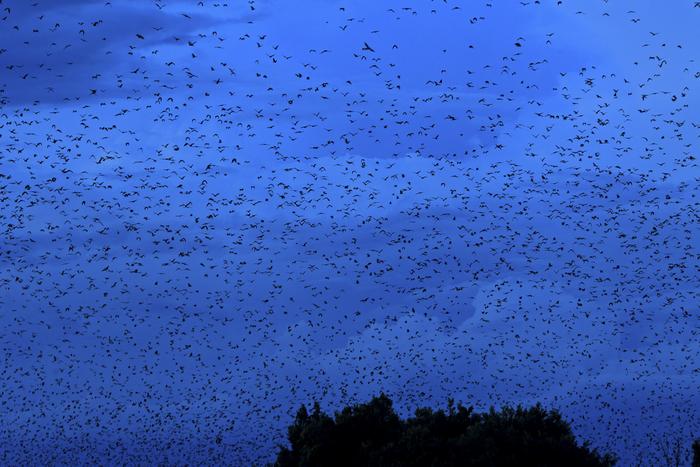
Tulane-led researchers find that the world’s largest bat family carries two separate gene systems for building antibody heavy chains, a discovery that could help explain how bats live with dangerous viruses.
Bats have a reputation problem. They are linked, in the public imagination and in the scientific literature, to some of the most feared viruses on the planet. They serve as natural reservoirs for a long list of pathogens that can cause severe disease when they spill over into people or other animals. And yet the bats themselves rarely seem to get seriously ill.
How the only mammals capable of true flight manage to coexist with such viruses has puzzled researchers for years. A new study published in Science Advances adds an unexpected piece to the puzzle. Researchers at Tulane University, working with collaborators at Stanford University and the U.S. Centers for Disease Control and Prevention, have found that vesper bats, the largest family of bats on Earth, carry two distinct sets of the genes that produce antibodies. Every other known mammal has only one.
“We’ve never seen anything like this in a mammal before,” said Hannah Frank, associate professor of ecology and evolutionary biology at Tulane University’s School of Science and Engineering and the study’s corresponding author. “This completely changes our understanding of how mammalian immune systems can be organized and raises exciting new questions about why bats have been so evolutionarily successful and how they respond to viruses.”
A family that conquered the world
Vesper bats, the family Vespertilionidae, are an evolutionary success story. The group includes more than 500 species and is found on every continent except Antarctica. Familiar North American species such as the big brown bat and the little brown bat belong to it, as do bats living from tropical rainforests to high-latitude forests.
Scientists have long wondered what has allowed this one family to diversify so widely and thrive in so many environments. Frank and her colleagues suggest that the newly discovered antibody system may be part of the answer.
Rewiring the antibody blueprint
To understand the discovery, it helps to know how antibodies are built. Antibodies are Y-shaped proteins that the immune system uses to recognize and neutralize invaders such as viruses and bacteria. Each antibody is assembled from four protein chains: two larger heavy chains and two smaller light chains.
The immune system’s ability to recognize an almost unlimited range of threats comes from the way these chains are produced. The genes that encode them are arranged in clusters of interchangeable segments, which immune cells shuffle and recombine to generate a vast diversity of antibodies, each with a slightly different shape and target.
In humans, mice and every other mammal studied until now, the heavy chains are drawn from a single cluster of genes. The Tulane team discovered that vesper bats instead carry two separate heavy-chain gene systems, a duplication of the entire locus. That gives these bats an entirely new route to generating antibody diversity, effectively a second toolkit for building the molecules that fight infection.
Looking beyond innate immunity
Much of the research on why bats tolerate viruses has focused on their innate immune system, the body’s first line of defense, which responds quickly and broadly to any perceived threat. Studies have suggested that bats may keep certain inflammatory responses in check, allowing them to carry viruses without the runaway inflammation that makes infections dangerous in other animals.
Frank argues that the new findings show the adaptive immune system deserves more attention. The adaptive system is slower to respond but highly specific, and it is responsible for producing antibodies and for forming long-term immune memory.
She is careful not to oversell the result. “We think this discovery is an important piece of the puzzle,” Frank said. “It doesn’t fully explain why bats are such effective viral reservoirs, but it reveals a level of immune variety we didn’t know existed and gives us an entirely new direction to explore.”
Why bats matter
Understanding bat immunity is not merely a matter of curiosity, or of pandemic preparedness alone. Bats play vital ecological roles. They pollinate plants, disperse seeds that regenerate forests, and consume vast numbers of insects, providing natural pest control worth enormous sums to agriculture.
At the same time, their role as viral hosts makes them central to efforts to understand and prevent spillover, the jump of a pathogen from animals into people. Frank said that learning how bats coexist with their viruses could eventually help scientists better understand immune responses across species and improve strategies for preventing spillover.
The ecological stakes make that understanding especially valuable. Knowing why bats carry viruses without suffering may also help researchers and public health officials manage the risks of spillover without demonizing animals that are, on balance, enormously beneficial.
Lessons from beyond the lab mouse
Much of what scientists know about immunity comes from a very narrow slice of the animal kingdom: humans and laboratory mice. That focus has been enormously productive, but it carries a risk of mistaking the particular for the universal.
Frank sees the vesper bat finding as a reminder of how much variation exists in nature. “We’ve learned an enormous amount about immunity by studying humans and laboratory mice,” she said. “But the natural world is far more varied than that. Every time we study a species that has evolved differently, we have the opportunity to discover something entirely new.”
The discovery raises a host of follow-up questions. How do the two heavy-chain systems divide their labor? Do they produce antibodies with different properties or target different kinds of threats? When in the evolutionary history of vesper bats did the duplication occur, and did it contribute to the family’s spread across the globe? And how, precisely, does this extra source of antibody diversity shape the way these bats respond to the viruses they carry?
Answering those questions will take years of further work. But by revealing that a basic feature of the mammalian immune system is not as fixed as everyone assumed, the study has opened a door that scientists did not know was there.
Featured image: Max Planck Institute for Ornithology
Endnotes
- “Immunoglobulin Heavy Chain Locus Duplication in Bats.” Science Advances (published July 29, 2026). DOI: 10.1126/sciadv.aeb6714.
- Tulane University. “How bats tolerate viruses: Tulane study sheds light on one of nature’s biggest immune mysteries.” News release via EurekAlert!, July 29, 2026. https://www.eurekalert.org/news-releases/1137879


Leave a Reply