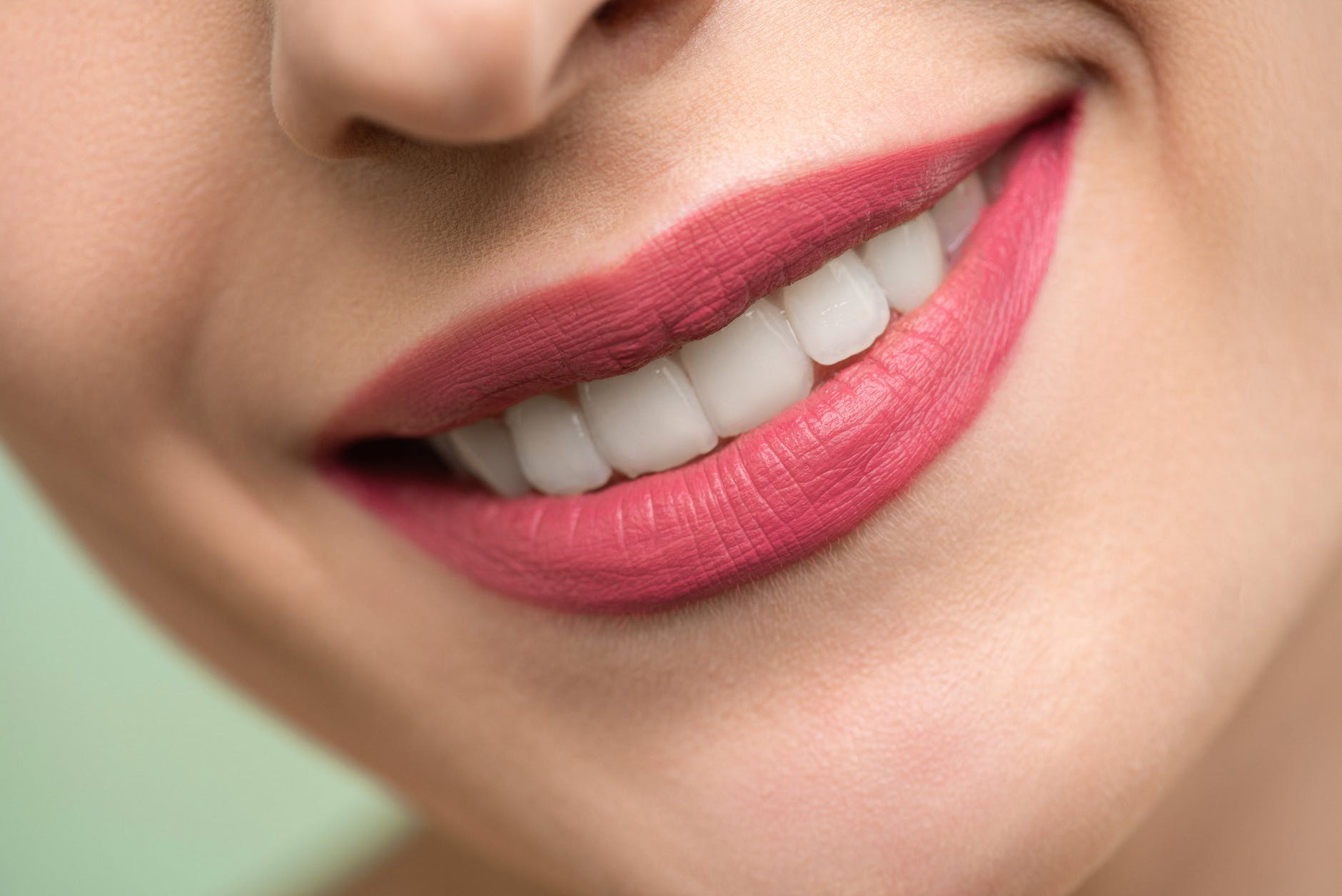
Lip tissue is roughly a third as thick as facial skin and absorbs more, while the ingestion estimates used to assess safety date from 2003 to 2005.
Two critical reviews in Integrated Environmental Assessment and Management examine how lip cosmetics are assessed in the UK, the US, the EU, Canada, China and South Korea, and identify the same gap in all six: the frameworks treat the lip as ordinary skin, and the figures they use for how much of a lip product a person actually swallows were established twenty years ago.
The reviews stop short of a safety verdict. The authors do not conclude that lip products are safe or unsafe; their claim is that risks at modern usage rates are not being accurately assessed.
A conflict of interest to state first
One thing about this work needs flagging before the findings, because the release presents it without comment.
The reviews were commissioned by The Lip Service Alliance, a body whose founder, the lawyer Laura DiGirolamo, also founded the lip-product company YOM Beauty. The University of Birmingham is a founding member of the Alliance. DiGirolamo is quoted in the release alongside Professor Iseult Lynch, Professor of Environmental Nanosciences at Birmingham and a member of the Alliance’s research team, and the page carries no formal conflict-of-interest statement and names no funding source.
That arrangement does not make the reviews wrong. Commissioned reviews are published routinely, the biological points they raise about lip tissue are checkable against the existing literature, and the recommendation — better testing — is not self-evidently commercial. But a set of reviews arguing that lip products need to be regulated differently, commissioned by an alliance founded by someone who sells lip products, is a context readers are entitled to be told about, and the release does not tell them.
Why a lip is not a cheek
The anatomical argument is the strongest part of the work. The lip vermilion — the coloured part — has three to five protective cell layers, about one-third the thickness of the equivalent layer of facial skin. It has no oil glands and no hair follicles, and its blood vessels sit close to the surface.
Stricter jurisdictions assess lip products using intact-barrier skin models, which are biologically unlike lip tissue in each of those respects. The reviews note that oral mucosa absorbs substantially more than skin for compounds including benzoic acid, caffeine and hydrocortisone, and that no reviewed framework requires testing on models reflecting these differences.
“Our findings suggest that the lips should not simply be treated as ordinary skin,” Lynch said, describing the reviews as “an important first step in addressing a significant evidence gap”.
There is a regulatory inconsistency alongside the biological one. The US Modernization of Cosmetics Regulation Act of 2022 gives stricter oversight to products that contact the mucous membrane of the eye, but not to products applied to the mouth. All six frameworks classify lip products as cosmetics, which carries an assumption that the product stays outside the body.
The numbers that have not been updated
The exposure figures are the second finding, and the arithmetic is the part that will travel.
The EU assumes that all applied lipstick and lip salve is ingested, at 0.057 grams a day at the 90th percentile. The US uses 87 milligrams a day at the 95th percentile for lipstick, and applies it only to lead exposure. Both figures come from studies conducted between 2003 and 2005. Canada, China and South Korea rely on the European numbers rather than measuring their own populations.
Against that, the reviews cite a study reporting lip balm consumption of 1,270 milligrams a day at the 95th percentile — 22 times the EU assumption. A heavy single-product user at that rate would take in roughly 463 grams a year, more than 90 standard 5-gram tubes.
Two caveats belong with those figures. The 22-fold comparison is between a lip balm study and a lipstick-and-salve assumption, which are different products used differently, so it is not a like-for-like contrast. And the finding that 40 per cent of US women aged 18 to 34 use four or more types of lip product comes from proprietary market research, not peer-reviewed work — a source a reader cannot check.
The figure for children is harder to discount: among US girls aged 6 to 8, 45 per cent already use lipstick or lip gloss.
Titanium dioxide, banned in food, permitted on lips
The clearest illustration of the gap the reviews describe is a single ingredient. The EU banned titanium dioxide as a food additive in 2022 over concerns about DNA damage. It remains permitted in lip cosmetics, with no concentration limit.
That is the cosmetic classification doing its work. If a lip product is assessed as something applied to skin, a ban on eating a substance has no bearing on it; if the EU’s own exposure model assumes the entire applied product is swallowed, the two positions are hard to hold together.
DiGirolamo made the point in plainer terms. “Lip products are often made to taste like food and desserts, yet formulated with plastics,” she said. “Nobody has been required to look at what years of that does, and an absence of proven harm is not the same as safety.”
The microplastics question is being handled on a separate and slower track: the EU’s restriction takes effect by 2035, and applies in the EU only.
What the reviews recommend
The recommendations follow from the two gaps. Develop lip-specific exposure assumptions; update the population exposure studies, which are two decades old; test on human lip-specific tissue using validated non-animal methods; account for mucosal permeability using oral and buccal mucosa models; issue clearer lip-specific guidance; and apply food-grade ingredient principles, including Acceptable Daily Intake values, to products that are substantially ingested.
The last of those is the structural proposal. A product whose own regulatory model assumes complete ingestion is, on that model’s terms, a food as much as a cosmetic, and the ingredient standards for the two differ sharply.
“If you identify a problem without a solution or a pathway forward, you cannot inspire change,” DiGirolamo said.
What is missing from all of it is a measurement of harm. These are reviews of regulatory frameworks, not toxicology studies: they establish that the assessments rest on thin and dated evidence, which is an argument for finding out rather than a finding about what is in anyone’s lipstick. The release does not list the papers’ authors, and the articles were published on 5 August 2026.
Notes
- Integrated Environmental Assessment and Management, 2026. DOI: 10.1093/inteam/vjag129. The release does not name the papers’ authors.
- University of Birmingham. “Experts identify ‘blind spot’ in global regulation of lip cosmetics.” EurekAlert!, 4 August 2026. https://www.eurekalert.org/news-releases/1138788.
Photo by Shiny Diamond on Pexels.com



Leave a Reply