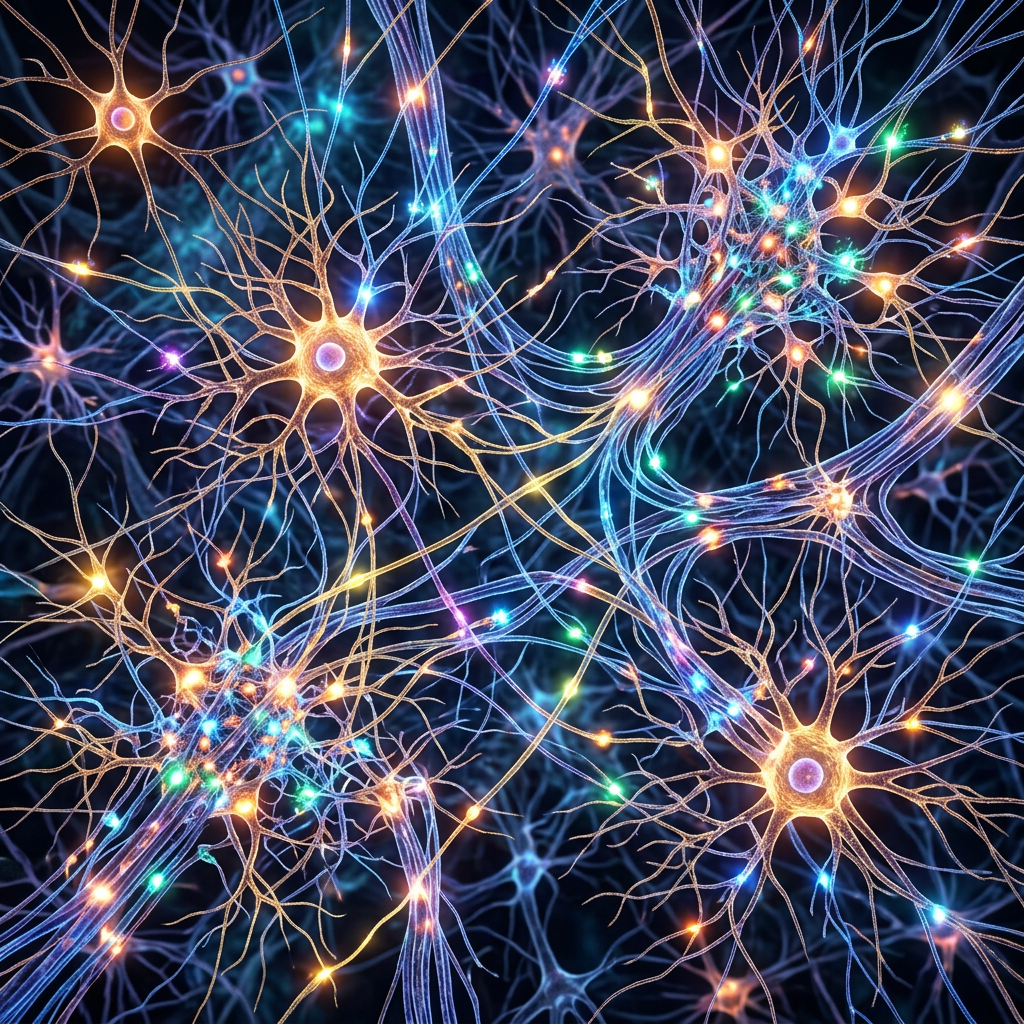
What makes the brain fall asleep? For nearly a century, scientists have looked to structures deep within the brain for the answer. In the traditional view, these regions control when we sleep and wake, while the cerebral cortex — the part of the brain involved in perception, thought, and memory — is largely a passive follower.
A new study led by Renata Batista-Brito, PhD, Associate Professor of Neuroscience at the Icahn School of Medicine at Mount Sinai, and published September 9 in Nature, suggests that this picture is incomplete.
The study team discovered an extraordinarily rare population of neurons in the cortex — called Sst-Chodl neurons — that can synchronize activity across large areas of the brain and promote sleep. The findings suggest that the cortex is not simply put to sleep by the rest of the brain; it actively helps put the brain to sleep.
“The cortex itself contains circuits that can actively drive and synchronize activity associated with sleep,” the researchers note.
Sst-Chodl neurons are exceptionally rare, making up roughly 0.2% of neurons in the cortex. Unlike most inhibitory neurons, which mainly communicate with nearby cells, these neurons send signals across long distances. This gives the small population the potential to influence activity across large areas of the cortex.
The research team observed that when mice were awake and alert, these neurons were largely quiet. As the animals became drowsy and entered deep non-rapid eye movement (NREM) sleep — the quiet, restful phase of the sleep cycle characterized by slowed breathing, reduced muscle activity, and distinct brain-wave patterns — Sst-Chodl cells became active as the cortex shifted into the slow, synchronized rhythms characteristic of sleep.
“These neurons can actually help drive the transition toward sleep,” the researchers found.
Despite being extraordinarily rare, Sst-Chodl neurons have been preserved across hundreds of millions of years of evolution, from amphibians and reptiles to humans. “Evolution has held onto these cells for an incredibly long time, even though there are very few,” the team noted.
Sleep is disrupted in many neurological, neurodevelopmental, and psychiatric disorders, including Alzheimer’s disease and autism spectrum disorder. Researchers can now ask whether these ancient cortical neurons are altered when normal sleep breaks down.
Journal: Nature
DOI: 10.1038/s41586-026-10876-y
Article Title: Neocortical long-range inhibition promotes cortical synchrony and sleep
Publication Date: September 9, 2026
Source: EurekAlert



Leave a Reply