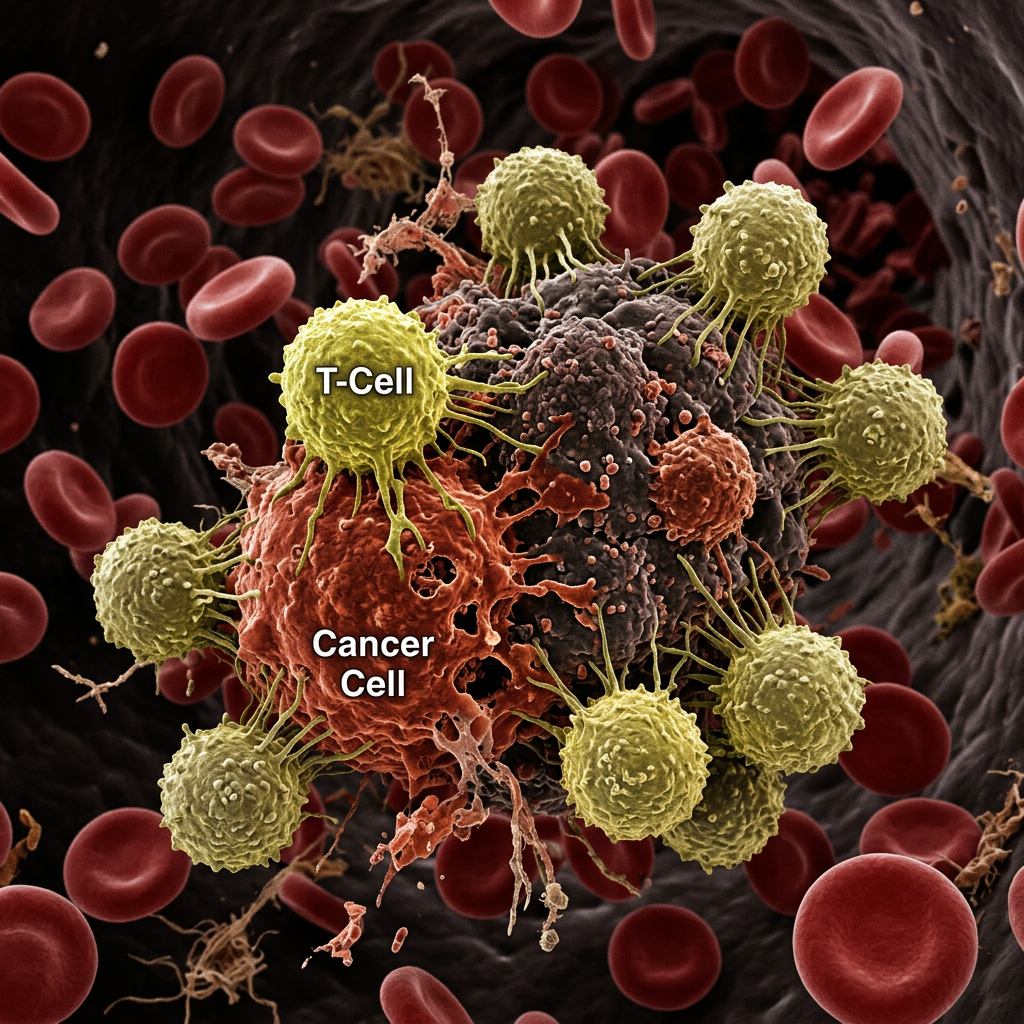
The epigenetic modifier MLL4 has an unassuming name—the 4, for instance, indicates it’s just one in a family of such modifiers. But MLL4 is quite special: In a specific type of leukemia, it drives disease progression, while in solid tumors, it acts as suppressant.
The paradoxical nature of MLL4 made it a compelling enigma for Rockefeller University’s Robert Roeder, a pioneer in the field of genetic transcription. Now his Laboratory of Biochemistry and Molecular Biology at Rockefeller University has used a combination of biochemistry, genetics, and structural biology to find surprising new characteristics of MLL4 that expand our understanding of its range of function, including its relationship to a tumor-suppressing protein. The findings, published in Molecular Cell, could illuminate how the MLL4 complex helps switch genes on—including cancer genes in leukemia.
“This research demonstrates that MLL4 has functions in transcription that were entirely unknown before. And because MLL4 is a key regulator of gene activity, it’s important to understand how it works—especially in cancer cells,” said Robert Roeder.
The Guardian of the Genome
MLL4 is one of six members of the mixed-lineage leukemia (MLL) family of histone lysine methyltransferases, each of which has a unique role in methylating histone 3 at lysine 4 (aka H3K4), which in turn regulates downstream gene activation. MLL4 is also a transcriptional co-factor that plays essential roles in tissue differentiation, organismal development, and, depending on the cellular context, cancer. Its importance is underscored by the fact that it’s found in virtually all mammalian cells and is the largest protein in the mammalian nucleus.
In MLL-rearranged leukemias, it protects leukemia cells from oxidative and genotoxic stress, and helps maintain leukemia stem cells in an undifferentiated, self-renewing state—and yet it suppresses solid tumors in cooperation with p53, a transcription factor and protein sometimes called “the guardian of the genome” for its role in activating genes involved in the cellular response to DNA damage. (The mutation of p53 itself is also linked to many cancers.)
But the molecular mechanics of this cooperation remained unclear. First author Jianfeng Sun, a structural biologist and postdoctoral associate in Roeder’s lab, realized that a better understanding of MLL4’s structure could provide some of that much-needed clarity.
“We know there are four subunits that MLL4 shares in common with the other members of its histone methylating family, but it has other subunits that are unique to it, and there are no high-resolution images of these structures. We wondered whether having a more complete picture of the entire nine-subunit complex would provide insights into how it promotes transcription,” said Jianfeng Sun.
A Synergistic Relationship
Sun employed a combination of cryo-EM imaging, genetics, and an in vitro transcription system pioneered in the Roeder lab. The imaging revealed the first complete model of the MLL4’s nine subunits—five of them unique—in multiple conformations. Intriguingly, it anchors itself to the nucleosome with rigid structures but deploys a flexible “arm” to search for histones to tag with a methylation marker—an on-switch for gene activation.
“We also found that the N-terminal region folds back onto the C-terminal region to form a unique structural architecture that is essential for the transcriptional coactivation function of MLL4 as well as for p53-dependent transcription in cells,” said Jianfeng Sun.
Additional evidence came from genetically knocking out MLL4, which resulted in fewer of the genes p53 targets—which often involve genome-protecting mechanisms such as cell cycle arrest, DNA repair, and programmed cell death—being turned on. Without MLL4, p53’s effectiveness as a transcription factor—and genome guardian—was essentially hobbled.
“This was a very surprising finding. MLL4’s primary function in gene transcription is through histone 3 methylation, and yet here we’re seeing that it’s also essential for p53 target gene transcription as a direct p53 co-activator. That’s a second—and entirely new—function,” said Robert Roeder.
The next step of their research is to look into how MLL4 interacts with leukemia transcription factors—essentially parallels to p53—to get a better understanding of the molecular mechanisms underlying its context-dependent functions in cancer.
“In the long range, we want to know how this MLL4 can support leukemia-associated transcriptional programs in one context and tumor suppression in another,” said Robert Roeder.
Journal: Molecular Cell
DOI: 10.1016/j.molcel.2026.05.006
Article Title: “Molecular Mechanisms of the MLL4 Complex in H3K4 Methylation and p53-Dependent Transcription Activation”
Publication Date: July 13, 2026
Source: Rockefeller University



Leave a Reply