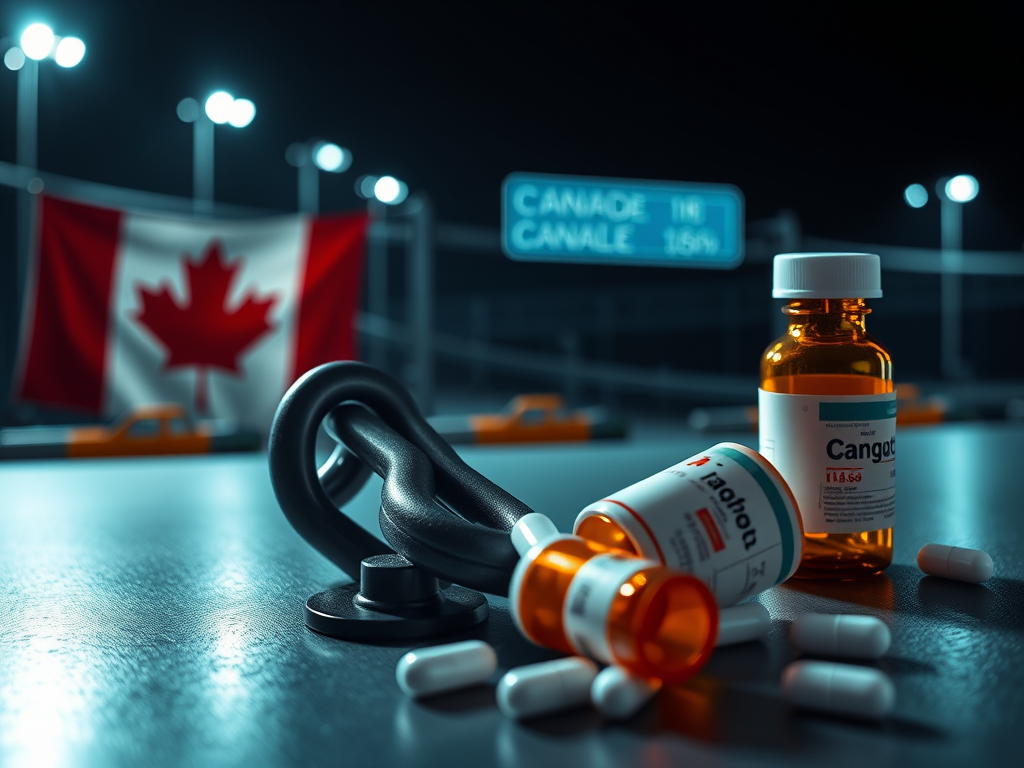
As former President Donald Trump prepares to implement a sweeping set of tariffs starting April 2—his so-called “Liberation Day”—health policy experts are raising alarms over one critical sector caught in the economic crossfire: pharmaceuticals.
While the Trump administration previously spared drugs from trade penalties under the U.S.–Mexico–Canada Agreement (USMCA), new proposed tariffs may no longer exempt pharmaceutical imports. Among the most vulnerable are medications manufactured in Canada, a country that plays a small but strategically vital role in the U.S. drug supply chain, particularly for generics.
A newly published research letter in JAMA (March 31, 2025) highlights the potential fallout. Analyzing sales and volume data from IQVIA’s MIDAS database and the FDA’s DailyMed listings, researchers found that of 22,082 drug products sold in the U.S. between late 2022 and 2023, 411 (1.9%) were made in Canada—amounting to $3 billion in sales and nearly 4 billion standard units dispensed.
Crucially, 52 drugs rely on Canadian manufacturers for more than half their U.S. supply. Among those, 28 have no alternative sources. Nearly half are clinically essential, and over half have faced prior shortages. Tariffs on these products—expected to rise to 25%—could add an estimated $750 million in annual costs, a burden that will likely be passed along to consumers or result in tighter margins for already strained manufacturers.
Dr. Mina Tadrous, lead author and pharmaceutical policy expert at the University of Toronto, cautioned that “even minor disruptions in pharmaceutical supply chains can quickly lead to cascading shortages,” particularly for generics where profit margins are slim and manufacturing is less agile.
The looming tariff hike is part of Trump’s broader agenda to impose “reciprocal” import taxes on nations that tax U.S. goods—a policy he says will protect American jobs and rebalance global trade. Starting April 2, all countries will be subject to these tariffs, with specific penalties like a 25% duty on foreign-made automobiles kicking in the following day. Pharmaceuticals, copper, lumber, and even drugs are all potentially on the chopping block.

While high-cost brand-name drugs may be able to absorb the blow, generics—often made on tight budgets—may be forced to scale back production, withdraw from the market, or pass on price hikes. Health economists warn that such shifts could accelerate existing trends of drug shortages, a problem that intensified during the COVID-19 pandemic and remains unresolved.
Ironically, the Inflation Reduction Act’s price-control provisions might protect some Medicare beneficiaries from feeling the immediate pinch. But those outside that safety net, including private insurers, pharmacy benefit managers, and cash-paying patients, could be in for sticker shock—or worse, an empty shelf.
Canada exports approximately $6.75 billion in pharmaceuticals to the U.S. annually. If Trump’s tariff regime expands beyond Canada to other major suppliers like India, China, and Europe—as many expect—experts say the combined effects could be catastrophic for both access and affordability.
“This isn’t just about trade; it’s about national health security,” said Dr. Ioannis Konstantinidis of the University of Pittsburgh, a co-author on the JAMA study. “Policymakers need to think beyond economic retaliation and consider the fragile ecosystem we rely on to keep people healthy.”
As “Liberation Day” approaches, the rhetoric is heating up, but so are concerns. What may seem like a symbolic move to rebalance global commerce could have very real and dangerous consequences for American medicine cabinets.
WORDS: brice.


Leave a Reply