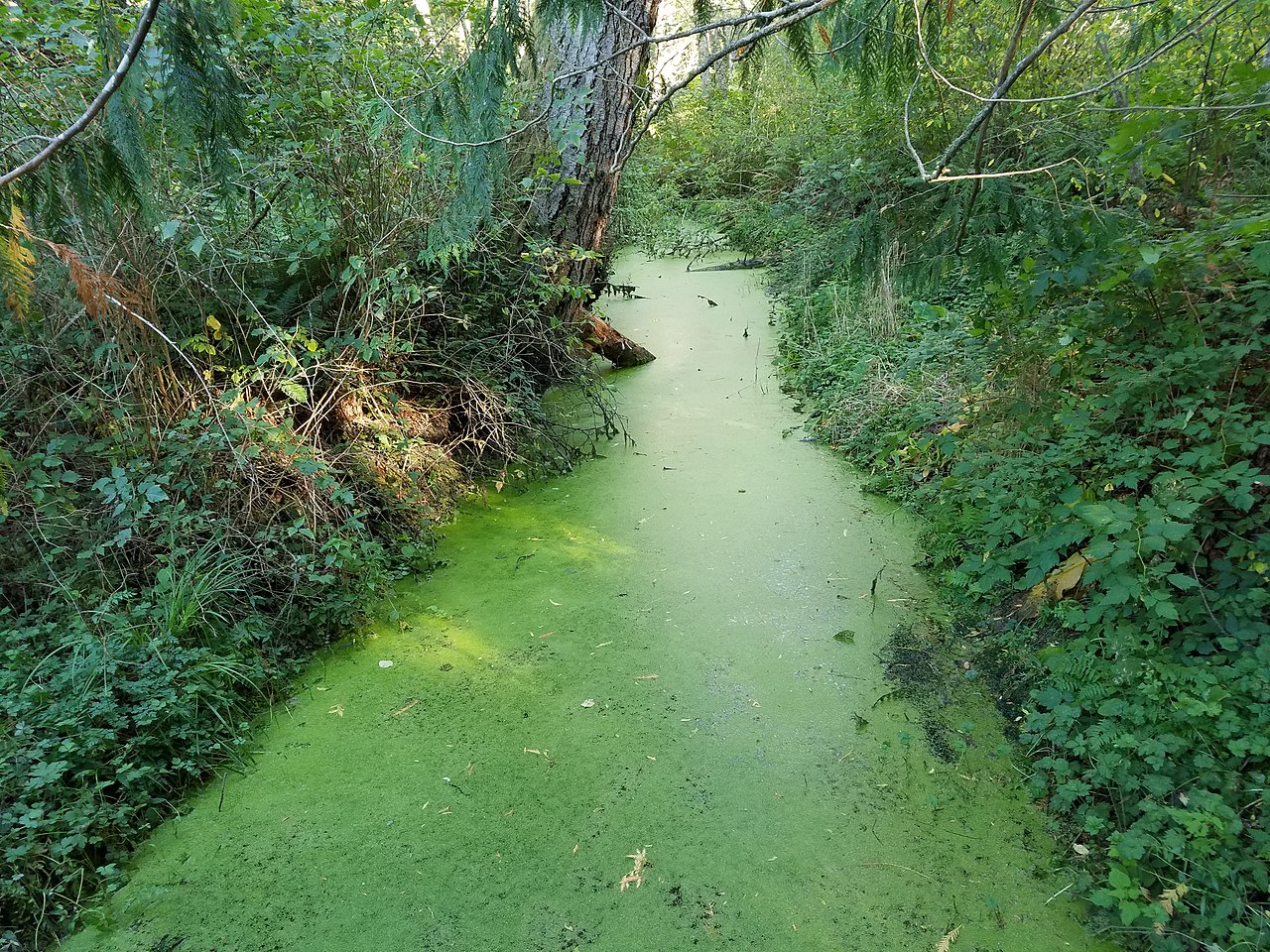
MIAMI—Intense blooms of toxic algae are becoming common occurrences along the coast of Florida and elsewhere. Results from a new study led by University of Miami (UM) scientists found that wearing the face mask everyone has become accustomed to during the COVID-19 pandemic may help protect against these airborne toxins too.
The UM Rosenstiel School of Marine and Atmospheric Science researchers designed an experiment to understand how effective commonly available air conditioner filters and face masks are at filtrating out the toxins emitted during harmful algal bloom events.
“We found that face masks and air conditioner filters with high filter performance ratings can reduce the risk of exposure by filtering out small, toxin-containing particles,” said the study’s lead author Cassandra Gaston, an assistant professor of atmospheric sciences at the UM Rosenstiel School.
“These filter materials can also be effective at filtering out other kinds of small particles as well,” said Haley Royer, a co-first author of the study and Ph.D. student at the UM Rosenstiel School’s Department of Atmospheric Sciences. “As we all know by now, face masks are essential in preventing the transmission of COVID-19 from person to person.”
Harmful algal blooms, often referred to as red tides and blue-green algae, are exacerbated by nutrient-rich runoff from agriculture and industrial waste that end up in waterways. Noxious particles enter the air mostly from the breaking of waves, resulting in airborne toxins that cause serious health problems to humans and marine life. Airborne toxins can also affect indoor air quality particularly for businesses and homes near contaminated waterways.
To conduct the experiment, the researchers created a bubbling device to produce airborne toxin-containing particles in the lab by bubbling air into the liquid containing cultures of a toxic-producing blue-green algae, Microcystis aeruginosa. Cutouts of three types of face masks and six types of AC filters purchased from home improvement stores were placed in-line with generated particles to determine how well the masks and filters blocked particles of different sizes. The researchers used N95, disposable surgical mask and medical-grade, odor-filtering carbon fiber masks. For AC filters, the researchers used filters for window units and central air conditioning units with different filter performance ratings.
They found that AC filters filtered out 20-90% of the airborne particles with particle filtration increasing with increasing filter performance rating. Face masks filtered out over 90% of toxin-containing particles. The findings suggest that low-cost, commercially available face masks and AC filters with high filtration efficiency ratings can help avoid both indoor and outdoor exposure to harmful algal bloom toxins in the air.
Harmful algal blooms are expected to become more prevalent worldwide due to climate change and increased nutrient runoff from a growing human population.
According to the researchers, the study also has relevance for the transmission of SARS-CoV-2, the virus responsible for the current COVID-19 pandemic. The virus has an average size of 60-140 nanometers, which is within the size of particles investigated in this study.




Leave a Reply