A novel technique for studying vortices in quantum fluids has been developed by Lancaster physicists.
Andrew Guthrie, Sergey Kafanov, Theo Noble, Yuri Pashkin, George Pickett and Viktor Tsepelin, in collaboration with scientists from Moscow State University, used tiny mechanical resonators to detect individual quantum vortices in superfluid helium.
Their work is published in the current volume of Nature Communications.
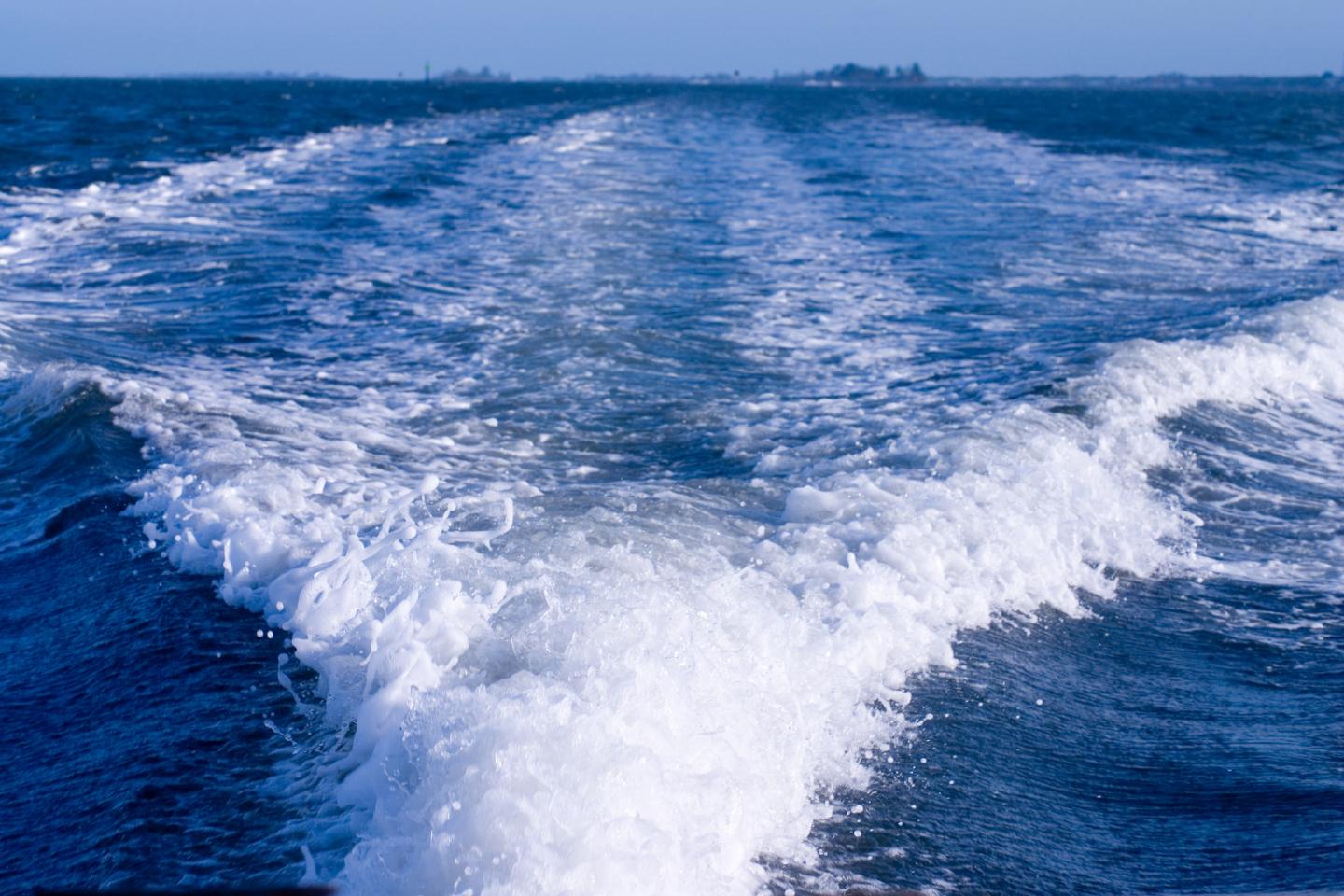
This research into quantum turbulence is simpler than turbulence in the real world, which is observed in everyday phenomena such as surf, fast flowing rivers, billowing storm clouds, or chimney smoke. Despite the fact it is so commonplace and is found at every level, from the galaxies to the subatomic, it is still not fully understood.
Physicists know the fundamental Navier-Stokes Equations which govern the flow of fluids such as air and water, but despite centuries of trying, the mathematical equations still cannot be solved.
Quantum turbulence may provide the clues to an answer.
Turbulence in quantum fluids is much simpler than its “messy” classical counterpart, and being made up of identical singly-quantised vortices, can be thought of as providing an “atomic theory” of the phenomenon.
Unhelpfully, turbulence in quantum systems, for example in superfluid helium 4, takes place on microscopic scales, and so far scientists have not had tools with sufficient precision to probe eddies this small.
But now the Lancaster team, working at temperature of a few thousandths of a degree above absolute zero, has harnessed nanoscience to allow the detection of single quantum vortices (with core sizes on a par with atomic diameters) by using a nanoscale “guitar string “in the superfluid.
How the team does it is to trap a single vortex along the length of the “string” (a bar of around 100 nanometres across). The resonant frequency of the bar changes when a vortex is trapped, and thus the capture and release rate of vortices can be followed, opening a window into the turbulent structure.
Dr Sergey Kafanov who initiated this research said: “The devices developed have many other uses, one of which is to ping the end of a partially trapped vortex to study the nanoscale oscillations of the vortex core. Hopefully the studies will add to our insight into turbulence and may provide clues on how to solve these stubborn equations.”
IMAGE SOURCE: Lancaster University.




Leave a Reply