Scientists have developed vaccines for COVID-19 with record speed. The first two vaccines widely distributed in the U.S. are mRNA-based and require ultracold storage (-70 C for one and -20 C for the other).
Now, researchers reporting in ACS Omega have developed a tamper-proof temperature indicator that can alert health care workers when a vial of vaccine reaches an unsafe temperature for a certain period, which could help ensure distribution of effective mRNA vaccines.
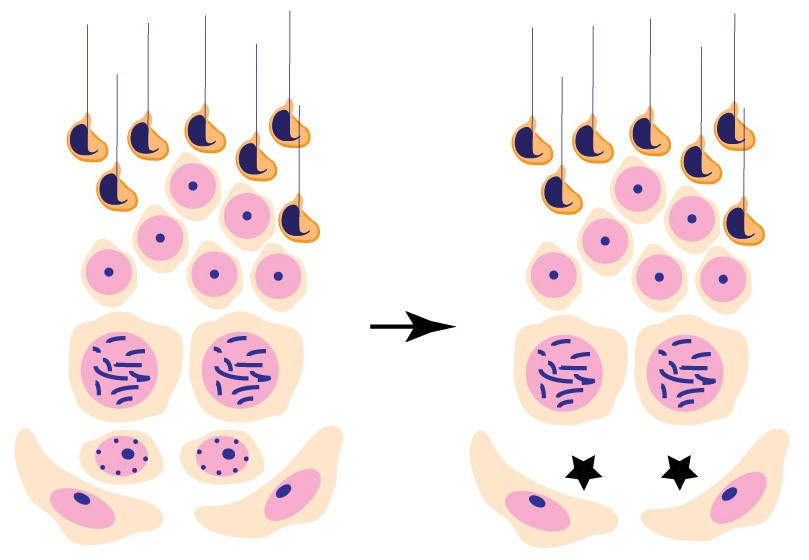
The two COVID mRNA vaccines contain instructions for building harmless pieces of the SARS-CoV-2 spike protein. Once the vaccine is injected into the body, human cells use the mRNA instructions to make the spike protein, which they temporarily display on their surface, triggering an immune response. But mRNA is highly unstable, requiring ultracold storage and transport conditions for the vaccines to remain effective.
Sung Yeon Hwang, Dongyeop Oh, Jeyoung Park and colleagues wanted to develop a time-temperature indicator (TTI) to identify mRNA vaccines that are exposed to undesirable temperatures during storage or transport, so that they could be discarded.
To make their TTI, the researchers added a mixture of ethylene glycol (antifreeze), water and blue dye to a small tube and froze it in liquid nitrogen. Then, they added a white cellulose absorbent to the top of the frozen coolant, turned the tube upside down, and adhered it to a larger glass vial containing simulated vaccine at -70 C.
At temperatures above -60 C, the antifreeze mixture melted, and the dye diffused into the white absorbent, turning it light blue. The color change happened about 2 minutes after the simulated vaccine was exposed to a higher temperature. Importantly, exposures of less than 2 minutes — which are unlikely to impair vaccine efficacy — did not turn the TTI blue.
The color change persisted if the tube was refrozen at -70 C, making the system tamper-proof. By changing the coolants or their mixing ratio, or by using different absorbents, the TTI could be tailored to monitor the ideal storage conditions of different mRNA vaccines, the researchers say.

Leave a Reply