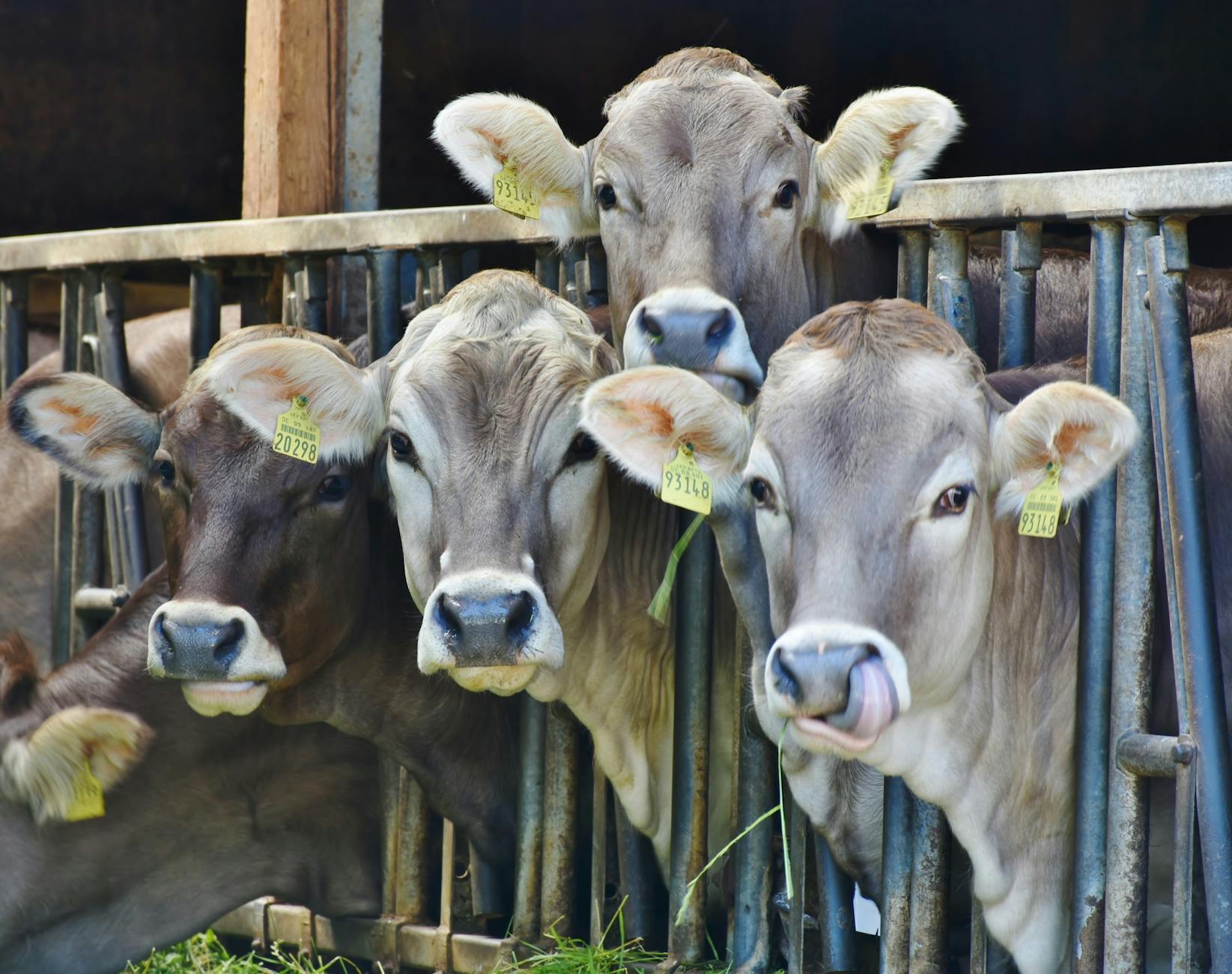
An INRAE-coordinated study reports that the bacterium behind mastitis builds its envelope from milk lipids rather than making its own, tripling its thickness and raising its tolerance to the antibiotics used to treat the infection.
Mastitis — inflammation of the mammary gland, usually from bacterial infection — is one of the most common complications of breastfeeding in humans and one of the costliest diseases in dairy farming. Staphylococcus aureus is a frequent cause of both. A study coordinated by INRAE, France’s National Research Institute for Agriculture, Food and Environment, with ENS Paris-Saclay, reports that the bacterium behaves very differently in milk than in the media where it is usually studied, and that the difference works in its favour.
The finding, published in Communications Biology, is that S. aureus growing in milk incorporates milk lipids directly into its own membrane rather than synthesising its lipids itself. The result is an envelope — membrane plus cell wall — roughly three times thicker than when the same bacterium grows in serum or in standard laboratory culture medium.
Building with borrowed material
Making lipids is metabolically expensive. A bacterium sitting in a fluid that is already rich in fat has an alternative: take what is there and use it. Milk is an unusually lipid-dense environment, and the study indicates that S. aureus exploits this, outsourcing a basic construction task to its surroundings.
A thicker envelope has direct consequences for drug treatment. Antibiotics must reach their targets, and for many that means crossing the cell envelope. Tripling the barrier is a straightforward way to reduce how much drug arrives inside. The study reports that the bacterium grown in milk became considerably more robust and more tolerant of the various antibiotics used against mastitis that were tested.
The lipids do a second thing as well. According to the study, milk lipids stimulate greater production of pigment by the bacterium, and the pigment increases both virulence and resistance to oxidative stress. S. aureus is named for its golden colour — aureus means golden — and the carotenoid pigment responsible is known to protect the bacterium against reactive oxygen species, one of the main weapons immune cells deploy against it. More pigment means better survival of the immune attack.
Why the growth medium matters
The broader implication concerns how antibiotic susceptibility is measured. Clinical laboratories test bacteria in standardised culture media, and treatment guidelines rest on those results. If a bacterium in milk is a structurally different organism from the same bacterium in a culture flask — thicker-walled, more pigmented, harder to penetrate — then susceptibility measured in the flask may overstate how well a drug will work in the udder or the breast.
The authors suggest, on that basis, that mastitis treatment protocols may need adapting for situations where milk is abundant, in humans as well as in domestic animals. That is a measured conclusion: not that current antibiotics fail, but that the environment in which the infection sits should inform how they are chosen and dosed.
The research group reports work underway on a combination approach — pairing an antibiotic with a molecule that blocks the bacterium from taking up environmental lipids. If the thickened envelope depends on scavenged milk fat, then cutting off the supply should leave the bacterium building its envelope the ordinary way, and as penetrable as it is in the laboratory. It is a logical strategy, and an untested one; the release gives no indication of how far along it is or whether any candidate molecule works.
An unusually bare release
This release is thin in ways worth stating plainly for readers who want to assess the work. It names no authors at all, saying only that an international team was coordinated by INRAE; the two people listed are a media contact and an expert contact, neither identified as an author. It contains no direct quotations from anyone involved, so none appear in this article. It lists no funding sources and no conflict-of-interest statement.
The quantitative content is similarly sparse. The threefold increase in envelope thickness is the only number given. There is no figure for how much antibiotic tolerance rose, no indication of which antibiotics were tested or at what concentrations, no measure of how much additional pigment was produced, and no data on virulence beyond the assertion that it increased. The claim that the bacterium is “highly resistant and virulent in milk,” as the release’s headline puts it, is therefore directional rather than quantified.
Nor is it clear from the release whether the milk used was human, bovine or both, which matters: the lipid composition of milk differs between species, and a mechanism driven by lipid uptake could plausibly operate with different force in each. The study’s title refers to biotope-dependent behaviour, comparing milk against serum and laboratory media, but the species of origin is not specified in the release.
A plausible mechanism, pending the detail
What the study offers, on the evidence presented, is a coherent and biologically sensible mechanism: a bacterium in a fat-rich fluid uses that fat to build a thicker, better-pigmented envelope, and is correspondingly harder to kill with drugs and harder for the immune system to oxidise. It is the sort of explanation that would account for a long-standing clinical frustration — mastitis caused by S. aureus is notoriously prone to recurrence and to treatment failure — and it points toward an intervention that does not require a new antibiotic, only a way to interrupt the scavenging.
Confirming that will require the numbers the release does not give, and the paper is where they will be.
Notes
- “Biotope-dependent Resistance to Reactive Oxygen Species, Antibiotic Tolerance, and Virulence of Staphylococcus aureus.” Communications Biology, 2026. DOI: 10.1038/s42003-026-10771-2.
- INRAE. “Staphylococcus aureus is highly resistant and virulent in milk.” EurekAlert!, 1 October 2026. https://www.eurekalert.org/news-releases/1145929.

Leave a Reply