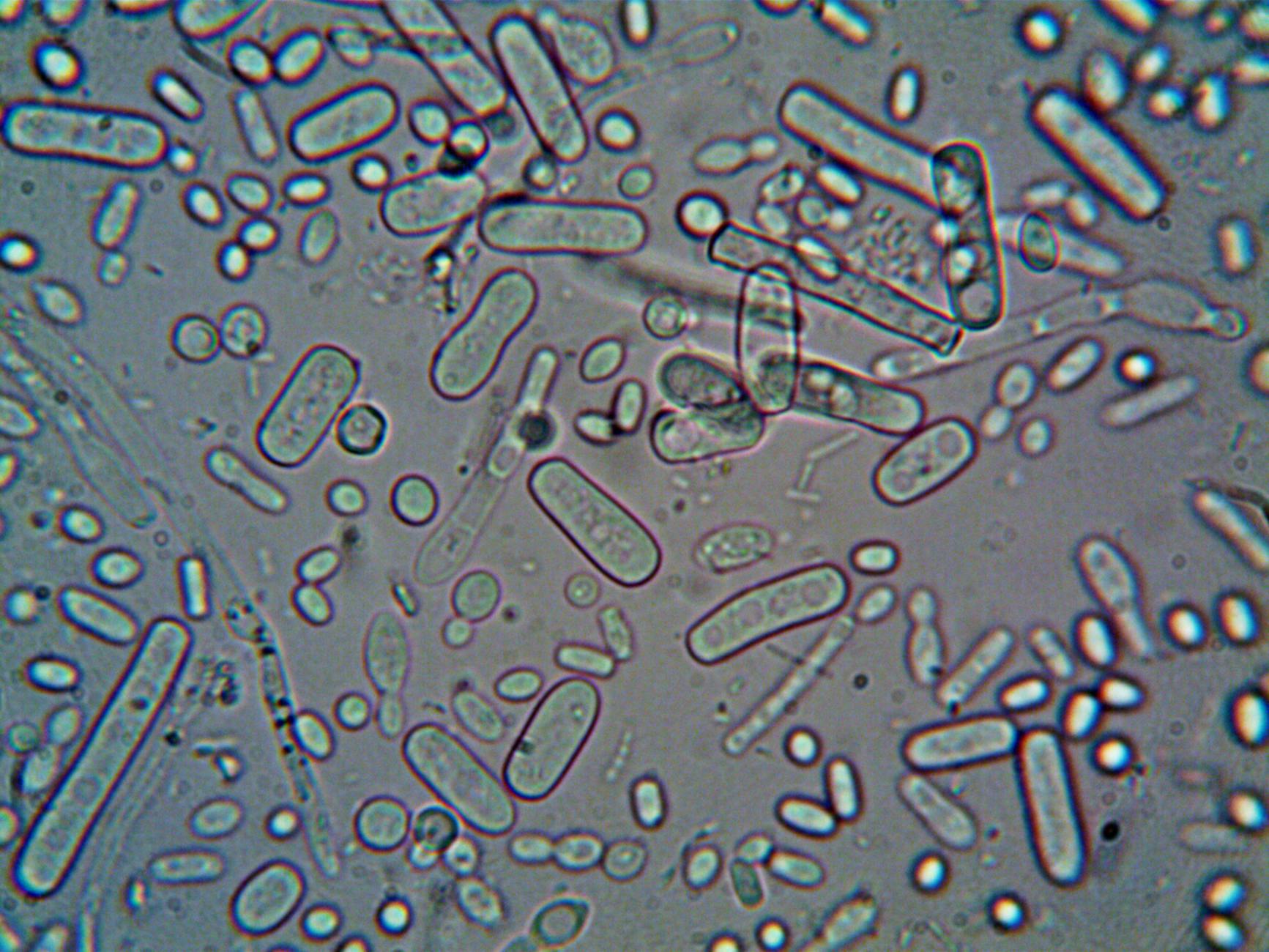
Sungkyunkwan University researchers seeded a microfluidic array with lung cells and a coronavirus, and found transmission fragmented once four in five cells could not be infected.
Herd immunity is normally a mathematical object. The threshold at which an outbreak cannot sustain itself is derived from a reproduction number and the structure of the contact network, and it is tested against epidemiological data gathered after the fact — which means the concept is modelled and observed, rather than experimented on.
A study in Advanced Science from Sungkyunkwan University builds a physical system in which something resembling it can be watched directly: a chip of interconnected chambers holding living cells, a virus introduced at the centre, and seven days of observation.
The corresponding authors are Professor Sungsu Park of SKKU’s School of Mechanical Engineering, who led the team, and Professor Byung Mook Weon of its School of Advanced Materials Science and Engineering, with co-first authors Jiande Zhang, a PhD student at SKKU, Dr Narina Jung of the Korea Institute for Advanced Study, Dr Min-Hyeok Kim of SKKU, and Wanyoung Lim, a researcher at Samsung Electronics.
The device
The platform is a centimetre-scale microfluidic chip containing 444 interconnected hexagonal microchambers. Lung fibroblast cells stand in for individuals, the chambers for social spaces, and the microchannels between them for contact routes.
Coronavirus-infected cells were placed at the centre, with susceptible and non-susceptible cells distributed through the surrounding chambers, and transmission was monitored over seven days.
The hexagonal arrangement is a deliberate choice rather than a manufacturing convenience. Hexagons tile a plane with each cell touching six neighbours, which produces a regular contact network of fixed degree — the standard idealised lattice in network epidemiology, and the structure whose behaviour theory has the most to say about. Building the physical system on the same geometry as the models makes the comparison meaningful.
What happened
Three results are reported. Densely packed susceptible cells, or a high initial number of infected cells, accelerated spread. Restricting cell movement slowed transmission. And when non-susceptible cells made up 80 per cent or more of the population, transmission fragmented and spread was effectively suppressed.
The 80 per cent figure is the headline, and the word doing the work in that sentence is fragmented. What the chip shows is not that the virus was neutralised but that the connected network of susceptible cells broke into isolated pockets — which is precisely the mechanism herd immunity theory describes. Above a critical density of immune individuals, the susceptible population stops forming a path across the network, and chains of transmission terminate for want of anywhere to go.
Observing that percolation behaviour in a physical system, rather than in a simulation, is the study’s genuine contribution. The movement-restriction result points the same way: slowing the agents slows the spread without changing anyone’s susceptibility, which is the mechanism behind distancing measures and is here a direct manipulation rather than an inference from population data.
“This is the first study to directly recreate and experimentally validate viral transmission and herd immunity,” Park said.
“We expect this platform to help predict the population-level protection required when new viral variants emerge,” he said.
Why 80 per cent is not a public health number
That second expectation is where care is needed, and the gap between the chip and a population is wide enough to state plainly.
The 80 per cent threshold here is a property of this system: these cells, this virus, this hexagonal lattice with six neighbours per chamber, these channel dimensions. A herd immunity threshold in a human population depends on how transmissible the pathogen is, on how contacts are actually distributed — which in people is wildly uneven, with a minority having far more contacts than the average — and on how long immunity lasts. Human contact networks are not regular lattices, and the difference is not a detail: heterogeneity in contact rates changes the threshold substantially in either direction.
The cells are also not people in a more basic way. Lung fibroblasts in a channel do not travel, cluster, isolate when ill, or change behaviour because of what they have heard — and human epidemics are shaped by exactly those things. Nor does a cell have an immune system in any useful sense: the non-susceptible cells here are cells the virus cannot enter, which models immunity as a binary property rather than as the partial, waning, variant-specific thing it is in a person.
Read as epidemiology, then, the number does not transfer. Read as physics, the result is interesting: it demonstrates that a herd-immunity-like percolation threshold emerges in a real biological system with real contact structure, which is confirmation that the phenomenon is a property of networks and transmission rather than an artefact of how the models are written.
What the release leaves out
Several specifics are missing. The virus is described only as a coronavirus, with no strain named, and no figures are given for infection rates, replication, or how many chips were run — so there is no way to judge how reproducible the 80 per cent threshold was, or how sharply the transition occurred.
Whether the threshold varied with the lattice’s connectivity is also unreported, and it is the most interesting experiment the platform makes possible. Changing the number of neighbours each chamber has would test whether the system reproduces the theoretical relationship between network degree and threshold, which is what would establish the chip as a predictive tool rather than a demonstration.
Neither funding sources nor conflicts of interest are stated. One co-author is a researcher at Samsung Electronics, which is ordinary in Korean engineering research and is the circumstance in which a competing-interests statement would be worth having.
The paper was published in Advanced Science on 3 September.
Notes
- Zhang, J., Jung, N., Kim, M., Lim, W., Chen, Z., Weon, B.M., and Park, S. “Decoding viral transmission dynamics in structured populations using a microfluidic herd-immunity-on-a-chip platform.” Advanced Science, 2026. DOI: 10.1002/advs.77383.
- Sungkyunkwan University. “SKKU research team recreates viral transmission and herd immunity on a chip.” EurekAlert!, 6 October 2026. https://www.eurekalert.org/news-releases/1146785.
Photo by turek on Pexels.com

Leave a Reply