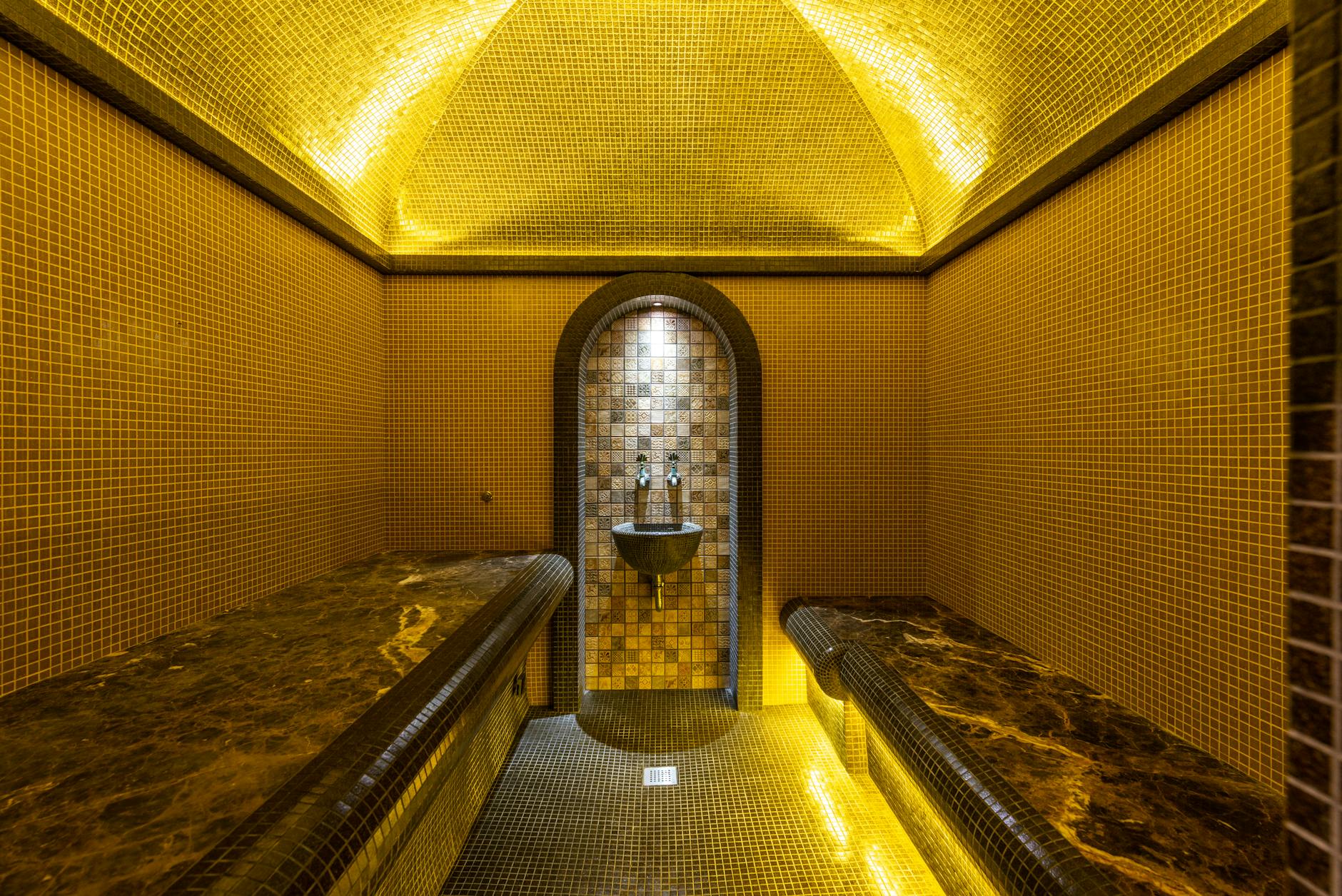
Fifty adults sat through four sauna conditions while researchers tracked heart rate and core temperature, and found humidity exerting an effect of its own.
Anyone who has thrown water on sauna stones knows that the room changes character immediately, and that the change has little to do with the thermometer on the wall. The air becomes harder to sit in. Whether that is a genuine physiological effect or a matter of perception is the question a study in Temperature set out to settle.
The answer is that it is genuine, and separable. Researchers at the University of Jyväskylä, working with the Finnish Institute of High Performance Sport and the sauna manufacturer Harvia, report that temperature and air humidity independently influence the body’s thermoregulatory response to a Finnish sauna.
Fifty adults, four conditions
The study put 50 healthy adults through four sauna experiments, varying temperature and humidity so that the contribution of each could be assessed separately. Average heart rate rose from 79 to 121 beats per minute over ten minutes — an increase of more than 40 beats per minute — and average core body temperature rose from 37.4 °C to 37.8 °C.
Both variables contributed to the heart rate increase, and hotter, more humid saunas were associated with higher core temperatures. Temperature remained the larger factor of the two.
“In addition to temperature, the relative humidity of sauna air affects the thermoregulatory responses,” said Iida Laatikainen-Raussi of the Faculty of Sport and Health Sciences at the University of Jyväskylä. “While temperature is still the most significant factor, steam also clearly impacts heart rate and core temperature.”
The cooling mechanism that humidity blocks
The physiology here is unglamorous and well understood. Sweating does not cool the body; the evaporation of sweat does, by carrying away latent heat. Evaporation depends on the vapour pressure difference between skin and air, which is another way of saying it depends on how much water the surrounding air can still take up.
In a humid sauna the air is already close to saturated, so sweat sits on the skin instead of evaporating. The body has produced the coolant and lost access to the mechanism that makes it work, leaving the cardiovascular system to carry more of the load by moving blood to the surface.
“This increases thermal strain and forces the cardiovascular system to work harder to maintain an adequate body temperature,” Laatikainen-Raussi said.
This is the same principle behind wet-bulb temperature in heat-wave research, where humidity determines whether a given air temperature is survivable. A sauna is a controlled, voluntary and brief version of the same problem, which is part of what makes it a useful laboratory.
Why earlier work may have missed it
Finnish sauna bathing has a substantial research literature, including cohort studies linking regular use to cardiovascular outcomes, so the finding that one of its two main physical variables has been under-characterised is a methodological claim as much as a physiological one.
The authors suggest that earlier studies may have underestimated steam’s role because they did not measure humidity in sufficient detail. That is an easy omission to make: humidity in a sauna is not a setting but an event, changing sharply each time water hits the stones and decaying afterwards, and a single number recorded at the start of a session will not describe what a participant actually experienced.
“Future sauna studies and practices should pay more attention to humidity and consider and measure sauna conditions more thoroughly,” Laatikainen-Raussi said.
If that recommendation is right, it complicates comparison across the existing literature. Two studies reporting the same temperature may have exposed participants to meaningfully different conditions, and differences between results attributed to population or protocol could partly reflect unmeasured humidity.
What the study does not say
Greater physiological strain is not the same as greater risk, nor the same as greater benefit, and the study measured strain rather than either. A 40-beat rise in heart rate over ten minutes is a cardiovascular stimulus; whether it is a useful one or a hazardous one depends entirely on the person sitting in the room, and this work does not address that.
The participants were healthy adults, which is the population in which a thermoregulatory response is cleanest to measure and the least informative about people with cardiovascular disease, who are the group for whom the distinction between a dry and a steam-laden sauna would matter most. The release reports no clinical outcomes of any kind.
The 0.4 °C rise in core temperature is also worth keeping in proportion. It is a real shift, measurable across 50 people, and it is a fraction of a degree — well inside the range the body manages routinely. The heart rate change is the more striking of the two numbers.
The commercial context
One feature of the study needs flagging plainly, because the release presents it without comment. Data collection was partly funded by Toyota Motor Corporation, and the study was conducted in collaboration with Harvia, a manufacturer of saunas and sauna equipment.
Nothing in the findings is obviously congenial to a sauna manufacturer — the result is that steam increases physiological strain, which is not a marketing line — and industry collaboration is routine in sauna research for the practical reason that the equipment and the controlled rooms belong to the industry. But a finding that the field should measure sauna conditions more thoroughly, arrived at in partnership with a company that builds and instruments those rooms, is the kind of thing a reader is entitled to know about, and the release does not say it.
The release names only Laatikainen-Raussi and does not give the full author list.
Notes
- “Temperature and humidity independently influence thermoregulatory responses during Finnish sauna bathing.” Temperature, 2026. DOI: 10.1080/23328940.2026.2698162.
- University of Jyväskylä. “Research: Steam increases physiological strain during sauna bathing.” EurekAlert!, 3 August 2026. https://www.eurekalert.org/news-releases/1138625.
Photo by Max Vakhtbovycn on Pexels.com


Leave a Reply