Two complete assemblies of Plasmopara viticola found nearly 90 per cent of its weapon genes sitting in duplicated clusters inside unstable, transposon-rich stretches of chromosome.
Grape breeders have been handing the same problem back and forth for a century. A resistance gene is found in a wild grape, bred into a commercial variety, and for a while the vines stay clean. Then the pathogen gets past it.
The list of broken defences is specific. Rpv3.1, Rpv10 and Rpv12 have all been overcome by grapevine downy mildew, and more recently so has Rpv1. The pathogen, an oomycete called Plasmopara viticola, has a way of finding the exit.
Writing in Horticulture Research, a team led by researchers at the Institute of Plant Protection of the Chinese Academy of Agricultural Sciences has assembled two complete genomes of the organism and found a plausible explanation in how its genome is physically arranged.
“The pathogen’s genome is far more dynamic than we previously appreciated,” the authors said.
Two genomes, chromosome by chromosome
The assemblies were built with PacBio HiFi long-read sequencing, which produces reads long enough to span repetitive stretches that defeat short-read methods. That matters here more than usual, for reasons the results make clear.
The two isolates are PvH, 115.3 megabases, taken from the European wine grape Vitis vinifera, and PvS, 113.0 megabases, from the Amur grape Vitis amurensis. Both resolved into 17 chromosomes, with 14 of PvH’s and 15 of PvS’s complete from telomere to telomere.
Telomere-to-telomere completeness is the standard that distinguishes a finished chromosome from a good draft. Earlier assemblies of this organism left the repetitive regions as gaps, which is precisely where this study’s findings turn out to live.
Weapons kept in clusters
The genes at issue are effectors: proteins a pathogen injects into its host to suppress defences or manipulate cell behaviour. They are the pathogen’s working armoury, and they are also what a plant resistance gene recognises. A resistance gene typically detects one specific effector, which is why losing or altering that effector lets the pathogen slip past.
Nearly 90 per cent of the effector genes in these genomes occur as locally duplicated clusters rather than as single scattered copies. They concentrate in chromosomal regions with elevated densities of transposable elements, the mobile sequences that copy and insert themselves around a genome.
That combination is the heart of the paper. Tandem, proximal and segmental duplications are identified as the main drivers of effector expansion, and transposable elements provide the repetitive scaffolding on which such duplications happen: stretches of near-identical sequence give the cell’s recombination machinery the wrong places to line up, and genes between them get copied, deleted or inverted.
An organism that keeps its most rapidly evolving genes in its least stable neighbourhoods will generate variation there faster than anywhere else in its genome. For a pathogen under constant selection to escape recognition, that is an advantage rather than a defect.
The gap between two strains
The counts of one effector family make the point numerically. CRN effectors, named for the crinkling and necrosis they cause in plant tissue, number 379 in PvH, 240 in PvS and 219 in the reference isolate PV221. PvH alone carries 35 strain-specific CRN genes.
The release describes this as a 1.4-fold increase in PvH, but the figures it gives do not support that number: 379 against 240 is about 1.6-fold, and against 219 about 1.7-fold. One of the two is wrong, and the release does not say which.
Either way the direction is unambiguous, and it is what the authors single out. They report being most struck by the extent of the “isolate-specific effector differences” — two strains of one species carrying substantially different collections of virulence genes.
This has a practical edge. Resistance screening and diagnostics are usually built against a reference genome, and if isolates differ this much in the genes that determine whether a resistance gene works, a reference is a weak guide to what is in a particular vineyard.
At the loci that have already fallen
The clearest link to the broken resistance genes comes at three avirulence loci: AvrRpv3.1, AvrRpv10 and AvrRpv12. These are the pathogen-side counterparts of the grape resistance genes with matching names.
At all three, PvS shows effector deletions that correlate with lost expression. PvH retains several novel effector variants, and transposable elements are enriched at these sites.
The logic of plant immunity makes a deletion a form of escape. If a resistance gene works by recognising a particular effector, a pathogen that has deleted that effector is invisible to it. The cost is whatever the effector was doing, which is why such deletions are not free and not universal.
Structural variation also reaches the effectors through inversions, in which a segment of chromosome is flipped. The team found 104 putative effectors inside inversion regions: 21 RxLRs, 59 CRNs and 24 CAZymes. An inverted region is partly sealed off from recombination with its non-inverted counterpart, so the genes inside it accumulate differences on their own trajectory.
What this does and does not solve
The study is descriptive. It establishes that the genome is arranged in a way that generates effector variation quickly, and that two isolates differ substantially at the loci that matter. It does not demonstrate that any particular structural change caused any particular resistance breakdown in a vineyard, and it involves two isolates, which is a thin basis for claims about the species as a whole.
What it does supply is a target. If effector diversity is concentrated in identifiable transposon-rich regions, those regions are where to look when a resistance gene starts failing, and knowing which effectors sit inside inversions suggests which are most likely to vary between populations.
For breeding, the implication is the familiar one, now with a mechanism behind it. Stacking several resistance genes with different effector targets is harder for a pathogen to defeat than relying on one, because escaping each requires a separate change. A genome built to produce those changes rapidly is an argument for not relying on a single gene.
The work also drew on collaborations with China Agricultural University, the Chinese Academy of Tropical Agricultural Sciences and Yunnan Agricultural University. It was supported by the National Key Research and Development Program of China (2023YFD1401405), the China Agricultural Research System (CARS-29), the Expert Workstation Project in Yunnan Province (202305AF150129) and the Central Public-interest Scientific Institution Basal Research Fund (82025X131).
Notes
- “Complete genomes of grapevine downy mildew reveal effector cluster evolution driven by complex structural variations.” Horticulture Research, 2026, 13(6). DOI: 10.1093/hr/uhag073.
- Nanjing Agricultural University The Academy of Science. “Genomic upheaval: How grapevine downy mildew builds its weaponry through structural chaos.” EurekAlert!, 3 August 2026. https://www.eurekalert.org/news-releases/1138547.
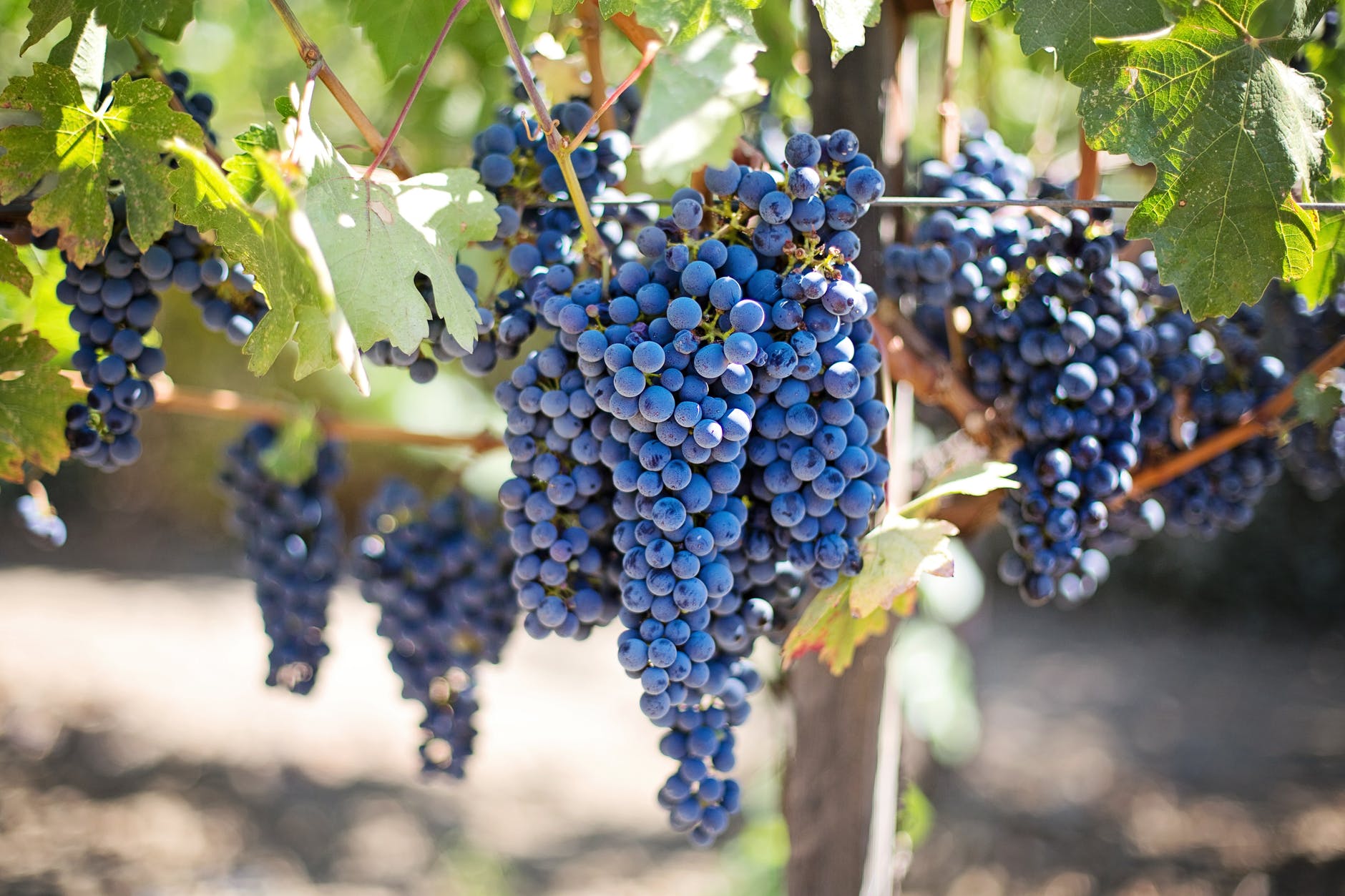
Photo by Pixabay on Pexels.com


Leave a Reply