A Tsukuba-led study of eosinophilic granulomatosis with polyangiitis in Japan found a TSLP variant and HLA-DRB1*07:01 in common with European patients, and a second HLA allele that appeared only in Japan.
Eosinophilic granulomatosis with polyangiitis is rare enough that most clinicians will see very few cases. It usually begins as asthma, adds a high count of eosinophils — a white blood cell that normally handles parasites and allergic responses — and then progresses to inflammation of small blood vessels, which can damage nerves, skin, lungs, heart and kidneys. It was known for decades as Churg-Strauss syndrome.
Nearly everything known about its genetics comes from European patients. A study from the University of Tsukuba and Juntendo University, published in RMD Open, asks what the picture looks like in Japan.
The answer is partly the same and partly not, which is the useful kind of result.
What was found
Three findings are reported. A variant in the TSLP gene may be associated with susceptibility to the disease in both Japanese and European populations. HLA-DRB1*07:01 was associated with it in both. And HLA-DRB1*09:01 was associated with it only in the Japanese population.
The conclusion the authors draw is that genetic risk for the condition includes both shared and population-specific components.
It needs saying up front that the release reports no numbers at all: no sample sizes, no odds ratios, no p-values, no confidence intervals. For a genetic association study those are not decoration, they are the result. Without them it is impossible to judge how strong any of these associations is, or how confidently the Japan-specific finding can be separated from the shared ones. The hedged phrasing around TSLP — that it “may be” associated — suggests the authors are themselves cautious about it.
Why TSLP is an interesting gene to land on
TSLP encodes thymic stromal lymphopoietin, a signalling protein released by the epithelial cells lining the airways and gut when they are irritated or damaged. It belongs to a class sometimes called alarmins: molecules that announce that a barrier surface has been disturbed and set off the response.
The response it sets off is type 2 inflammation, the arm of the immune system associated with allergy, asthma and eosinophils. That makes it a coherent candidate for a disease that starts with asthma and runs on eosinophils, rather than a statistical curiosity.
It is also a gene with therapeutic traction. TSLP is the target of an approved biologic for severe asthma, which means the pathway is already druggable. A genetic association does not establish that blocking the pathway would help in this disease, but it is the sort of convergence that shapes which trials get run.
Why the HLA result splits
The HLA region on chromosome 6 is the most variable stretch of the human genome and the most frequent hit in autoimmune disease genetics. HLA-DRB1 encodes part of a molecule that displays protein fragments to T cells, and which fragments get displayed depends on the version a person carries. That is the mechanical reason HLA variants turn up repeatedly in conditions where the immune system attacks the body’s own tissue.
The split between the two alleles here has a straightforward explanation and a less comfortable one.
The straightforward part is frequency. HLA allele frequencies differ substantially between populations, and HLA-DRB1*09:01 is considerably more common in East Asian populations than in European ones. An allele that is rare in a population is hard to detect as a risk factor there, however real its effect, because too few people carry it. A Japan-specific association may therefore reflect a Japan-specific opportunity to see it rather than a biologically different disease.
The less comfortable part is that this cuts both ways. Associations found only in European cohorts have the same problem in reverse, and the field’s heavy European bias means the standard account of which genes cause which autoimmune diseases is shaped by which variants happened to be common in the populations studied.
A thin release on a question that matters
This is a sparse press release. It names no first author, gives no numbers, carries no quotation from any researcher and supplies no image. The correspondence authors are Aya Kawasaki, an assistant professor at the Institute of Medicine at the University of Tsukuba, and Naoto Tamura, professor and chairman of the Department of Internal Medicine and Rheumatology at Juntendo University Faculty of Medicine.
The underlying question is not sparse at all. Eosinophilic granulomatosis with polyangiitis is already understood to be heterogeneous: patients who test positive for anti-neutrophil cytoplasmic antibodies tend to have more vasculitic features, while those who test negative tend toward tissue eosinophilia, and the two groups have shown different genetic associations in European work. Adding a second population to that picture is how a disease definition gets tested rather than assumed.
What a study like this cannot do is settle anything on its own. Genetic associations in rare diseases are built from small cohorts, and small cohorts produce findings that sometimes do not replicate. The value here is directional: it indicates that the architecture of risk is partly common to both populations, which supports treating this as one disease with shared biology, and partly local, which means a risk model built in Europe will not transfer unchanged.
The work was supported by the Japan Agency for Medical Research and Development (17ek0109104h0003, 17ek0109121h0003, 20ek0109360h0003), the Ministry of Health, Labour and Welfare (JPMH20FC1044, JPMH23FC1019, JPMH26FC1018) and Japan Society for the Promotion of Science KAKENHI grants (JP17K09967, JP21K08435, JP25K11700), with research support from Bristol-Myers Squibb K.K., the Takeda Science Foundation, the Uehara Memorial Foundation, the Japan Rheumatism Foundation, the Ichiro Kanehara Foundation and H.U. Group Research Institute G.K., and award grants from the Japan College of Rheumatology and the Japan Rheumatism Foundation.
Notes
- “Genetic factors associated with eosinophilic granulomatosis with polyangiitis in the Japanese population.” RMD Open, 2026. DOI: 10.1136/rmdopen-2025-006644.
- University of Tsukuba. “Study reports genetic factors associated with eosinophilic granulomatosis with polyangiitis in the Japanese population.” EurekAlert!, 3 August 2026. https://www.eurekalert.org/news-releases/1138711.
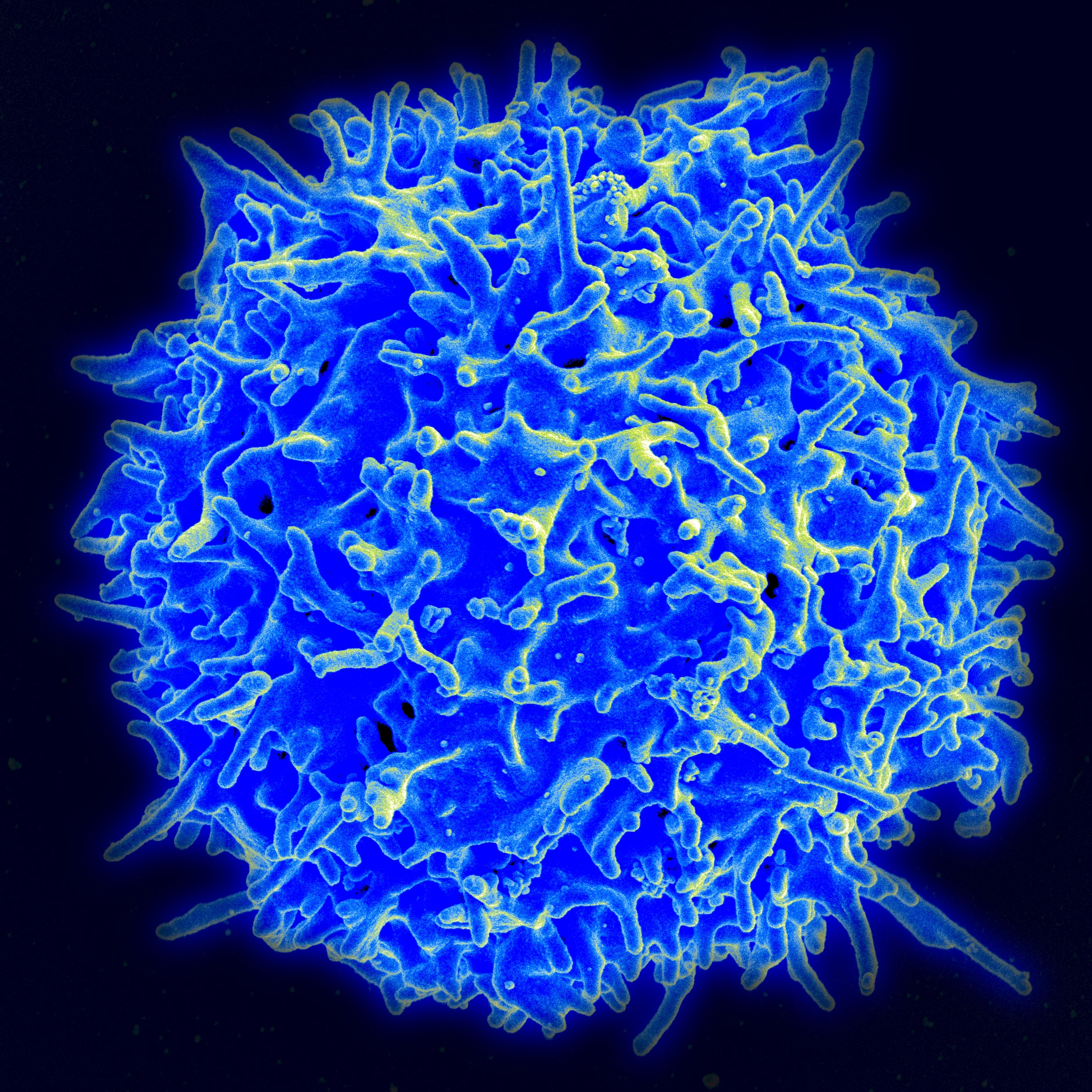
Credit: NIAID/NIH


Leave a Reply