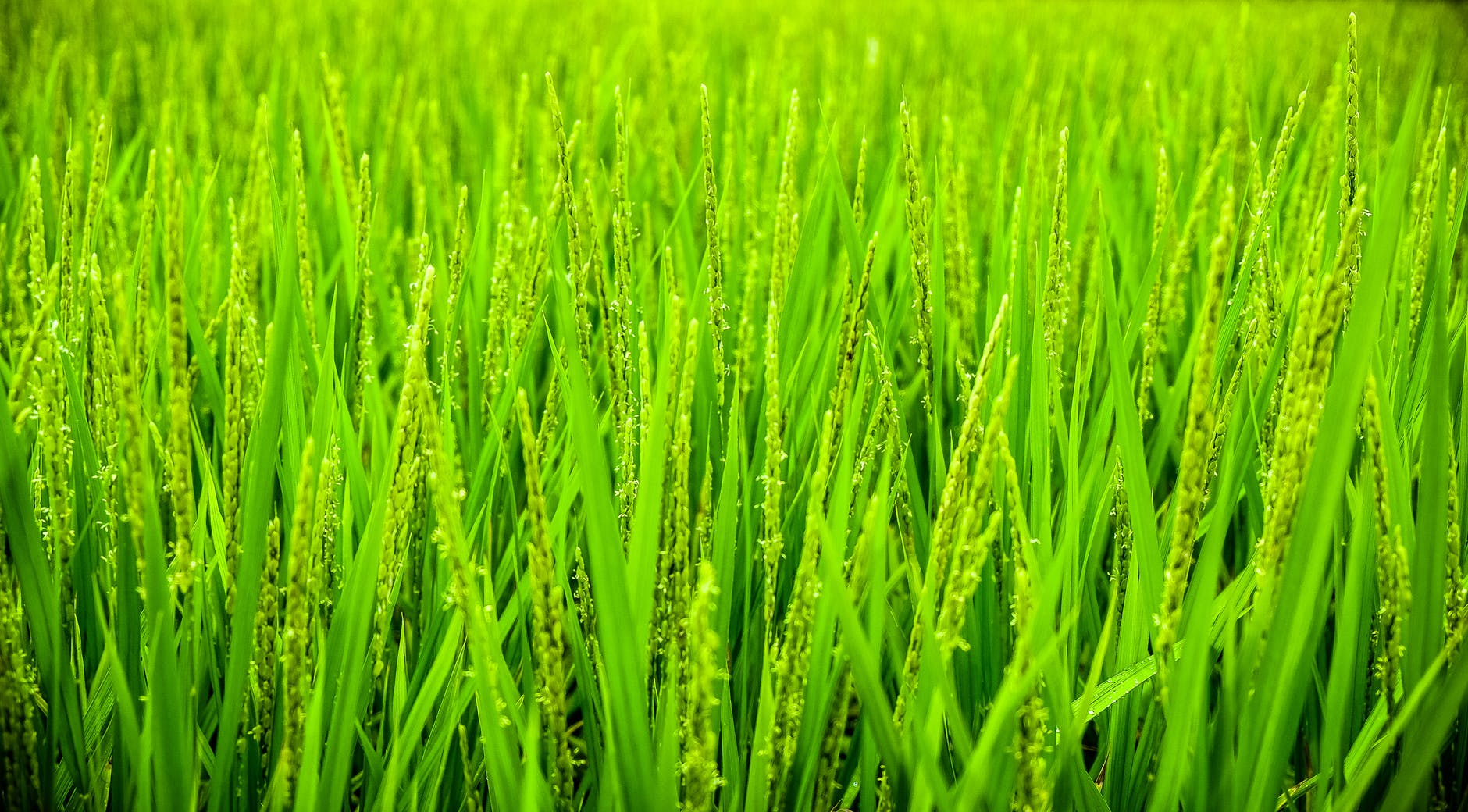
Nanjing researchers found that mild cold leaves histone marks on stress genes during recovery, and that primed plants came through a second chill with less damage rather than more repair.
Plants cannot move away from bad weather, so they prepare for it. One of the ways they do so is called priming: a mild dose of stress leaves the plant better able to withstand a worse dose later. The effect is well documented. What has been less clear is where the information is kept between the two events.
Researchers at Nanjing Agricultural University report in The Crop Journal that in wheat, part of the answer is written into chromatin, the packaging of DNA, during the recovery period after the first cold.
“The exposed plants were much more tolerant to the next chilling,” said Professor Xiao Wang, a co-corresponding author, “as exemplified by better photosystem II performance.”
What the primed plants kept
The experiment gave wheat seedlings a mild, non-lethal cold exposure, let them recover, then subjected them to a stronger chill. Primed plants came through it in better condition than unprimed ones on three measures.
Photosystem II stayed in better shape. This is the protein complex that splits water at the start of photosynthesis, and it is the part of the machinery most readily damaged by cold and light together. When a chilled leaf cannot use the light it absorbs, the excess energy damages the system that captured it.
Primed plants also produced less hydrogen peroxide and retained more of their key antioxidants. Hydrogen peroxide is one of the reactive oxygen species generated when photosynthesis is disrupted, and it damages proteins and membranes at high levels while serving as a stress signal at low ones.
Recovery is not a rest
The finding that reframes things concerns timing. Some of the differences between primed and unprimed plants appeared not during the cold but afterwards, during the recovery period.
“Recovery is therefore not a passive return to normal,” Wang said, “but a key window in which wheat reorganizes its stress response.”
Many stress-related genes behaved in a way that supports this. Genes involved in jasmonic acid biosynthesis, heat-shock responses and protein folding were only weakly activated during the first cold, then became much more active once the plants were returned to normal temperatures.
“This pattern suggests that the first cold exposure initiates a distinct post-stress regulatory program,” Wang said.
That is counterintuitive. The obvious expectation is that stress genes switch on during stress and switch off afterwards. Here the larger response came after the threat had passed, which looks less like coping than like preparing.
Bookmarks on the genome
The mechanism the researchers point to involves histone modifications, chemical tags attached to the proteins around which DNA is wound. Two were central.
Certain stress-responsive genes gained H3K4me3, a mark associated with active transcription, or lost H3K27me3, associated with repression. Both changes leave a gene more readily switched on.
“These delayed responses were accompanied by lasting changes in histone modifications,” Wang said, adding that the first cold exposure appears to leave molecular “bookmarks” at selected genes, preserving information for later.
Crucially, in several cases the histone changes appeared before any clear difference in gene expression. The same pattern held for photosystem-related genes: many had already shifted their histone states before the second cold arrived, while their transcript levels were still largely unchanged.
A mark that precedes a change in activity is the signature of a stored instruction rather than a record of one. The gene is not being expressed differently yet; it has been made easier to express when needed.
Less damage, not more repair
The most elegant result concerns what happened during the second chill, and it runs opposite to the intuitive prediction.
Unprimed plants strongly induced many genes for photosystem components and chloroplast protein synthesis, the machinery of repair. Primed plants induced those genes more weakly, despite their photosystem II being in better condition.
“Primed plants did not repair more; they appeared to need less repair,” said Professor Dong Jiang, the other co-corresponding author. “Cold memory seems to protect the photosystem before extensive repairs.”
Wang made the same point from the other direction: if previous cold exposure simply strengthened the repair system, primed plants would be expected to mount a stronger repair response, not a weaker one. Jiang’s reading is that if the photosynthetic machinery suffers less damage in the first place, the plant has less need to switch on a large repair programme.
The distinction matters for how priming is understood. Protection and repair are different strategies, and repair is expensive: synthesising replacement proteins consumes energy and nitrogen the plant could spend on growth.
What is not settled
The release reports no numerical results at all, so the sizes of these effects, the number of genes involved and the temperatures used are not stated.
The authors also identify the next question: how signals from the chloroplast, where the damage occurs, interact with the chromatin-regulating machinery in the nucleus, where the marks are placed. Something must carry the message between the two compartments, and that link remains to be worked out.
For agriculture the appeal is obvious enough. Wheat is sown in autumn across much of the world and faces late-spring frosts at its most vulnerable stage, and a trait that reduces damage without the growth penalty of constant defence would be worth having. Whether cold priming can be managed deliberately in a field, rather than observed in seedlings, is a separate question this study does not address.
The release does not state the study’s funding sources.
Notes
- “Photosystem adaptation and histone modification signatures are induced by cold priming in wheat.” The Crop Journal, 2026. DOI: 10.1016/j.cj.2026.07.019.
- KeAi Communications Co., Ltd. “Wheat remembers the cold: Molecular changes prepare plants for the next chill.” EurekAlert!, 19 October 2026. https://www.eurekalert.org/news-releases/1148477.
Photo by Francesco Ungaro on Pexels.com


Leave a Reply