Southampton and IIT Kanpur researchers argue that a heavy neutrino, long treated as irrelevant, decayed so slowly that it briefly dominated the universe and moved the switch that favoured matter.
The Big Bang should have produced matter and antimatter in equal measure, and equal measures annihilate. There should be nothing here but radiation. Instead there are galaxies, planets and the people wondering about it, which means something tipped the balance in matter’s favour very early on.
“The fact that we are here at all proves that an asymmetry between matter and antimatter occurred,” said Dr Rishav Roshan of the University of Southampton.
Writing in Physical Review Letters with Dr Sudipta Show of the Indian Institute of Technology Kanpur, Roshan proposes that the culprit is a particle that theorists have carried in their models for decades while assuming it did nothing of consequence.
The particle nobody needed
The model is the minimal seesaw, an explanation for why neutrinos have such extraordinarily small masses. The mechanism posits heavy partner particles: the heavier they are, the lighter the neutrinos we observe become, as though the two ends of a seesaw were connected.
Such models typically include more heavy neutrinos than the mechanism strictly requires, and one of them often interacts so weakly with everything else that it is effectively invisible. It is described as decoupled, and it is generally ignored.
“This decoupled heavy neutrino has long been dismissed as an irrelevant background detail in particle physics,” Roshan said.
The reason it was dismissed is also the reason it may matter. A particle that interacts feebly decays slowly, because decay requires interaction. And in the early universe, slow decay has a dramatic consequence.
Long-lived enough to take over
“However, it decays incredibly slowly,” Roshan said. “As the cosmos cooled after the Big Bang, the particle lived long enough that it temporarily took over the energy density of the universe and triggered a matter-dominated period.”
The mechanism here follows from how different contents of the universe dilute as space expands. Radiation thins faster than matter does, because each photon also loses energy as its wavelength stretches. A population of massive, long-lived particles therefore grows in relative importance simply by persisting, and can come to dominate the total energy density even while being a minor component at first.
Domination changes how fast the universe expands. The expansion rate, in turn, sets the clock against which every reaction in the early universe is measured: whether a given process has time to reach equilibrium depends on how it compares with that rate.
Moving the switch
The specific consequence the authors identify concerns the leptons, the family of particles that includes the electron. Leptons reach equilibrium with their antiparticles through interactions involving the Higgs boson, and there is a temperature at which that equilibration occurs.
“The decoupled neutrino shifted the temperature in the early universe at which fundamental particles – like electrons and other leptons – interacted with their anti-particles with the help of Standard Model Higgs boson,” Roshan said. “This temperature acts like a switch that shapes how the matter-antimatter imbalance was built up.”
The paper’s title names the effect directly: “Delayed Charged Lepton Yukawa Equilibration in Minimal Seesaw.” The Yukawa interactions are those couplings to the Higgs field, and delaying their equilibration is what the extra matter-dominated phase achieves.
Timing is everything in this kind of account. Whatever asymmetry is generated must survive the processes that would otherwise erase it, and those processes switch on and off at particular temperatures. Changing when a reaction comes into equilibrium changes what survives, which is why a detail about one weakly interacting particle can propagate into the amount of matter left in the universe.
“It offers us a new explanation for how matter won,” Show said.
A way to test it
Proposals about the first fraction of a second are notoriously hard to check, because no light reaches us from that era. The authors argue their scenario leaves a trace in something that does.
“The dramatic shift in the early expansion of the cosmos leaves distinct but detectable imprints of changes, for example on primordial gravitational waves,” Show said. “These gravitational wave signatures open up new avenues for us to unravel the evolution of the early universe after the Big Bang.”
The reasoning is that gravitational waves generated in the early universe propagate freely, unlike light, which was scattered until the universe cooled enough for atoms to form. A period of unexpected matter domination alters the expansion history that those waves pass through, and so alters their spectrum today.
Whether such a signal is within reach is another matter. No primordial gravitational wave background has yet been detected, and the frequencies relevant to this era may fall outside what current and planned instruments can measure. “Detectable” here means detectable in principle.
One of many candidate explanations
Baryogenesis, the generation of the matter-antimatter asymmetry, has no shortage of proposed mechanisms, and none is established. Leptogenesis via heavy neutrinos is among the most studied, and this work is a refinement of that family rather than a departure from it.
What gives it a particular appeal is parsimony. The particle it invokes is already in the model, included for reasons unconnected to this problem, and the claim is simply that its consequences were not followed through. Explanations that require no new ingredients are preferred when they work, which is an argument for taking the proposal seriously and not an argument that it is right.
The release does not state the study’s funding sources.
Notes
- Roshan, R., Show, S. “Delayed Charged Lepton Yukawa Equilibration in Minimal Seesaw.” Physical Review Letters, 2026. DOI: 10.1103/nfkx-q6z7.
- University of Southampton. “Forgotten particle could answer mystery of why we exist, say physicists.” EurekAlert!, 19 October 2026. https://www.eurekalert.org/news-releases/1147955.
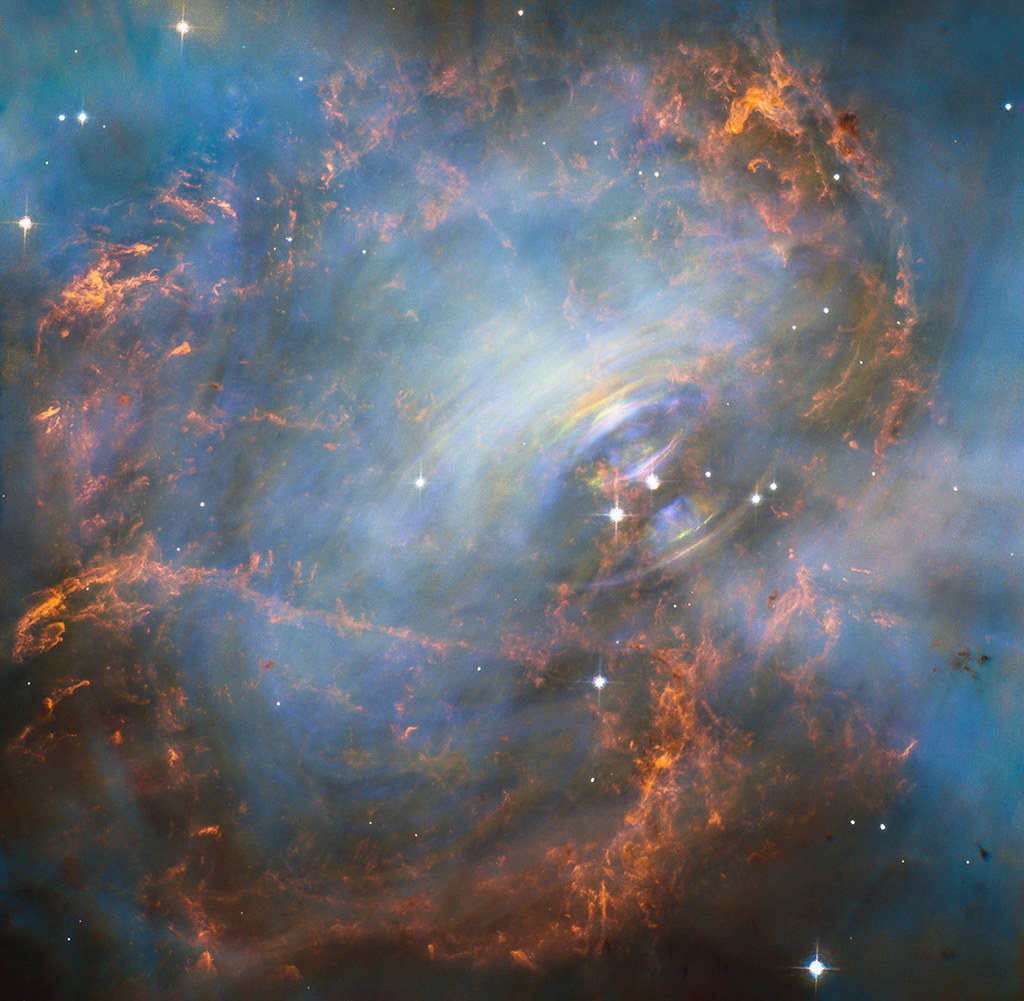
Image credit: NASA Goddard Space Flight Center (CC BY 2.0)



Leave a Reply