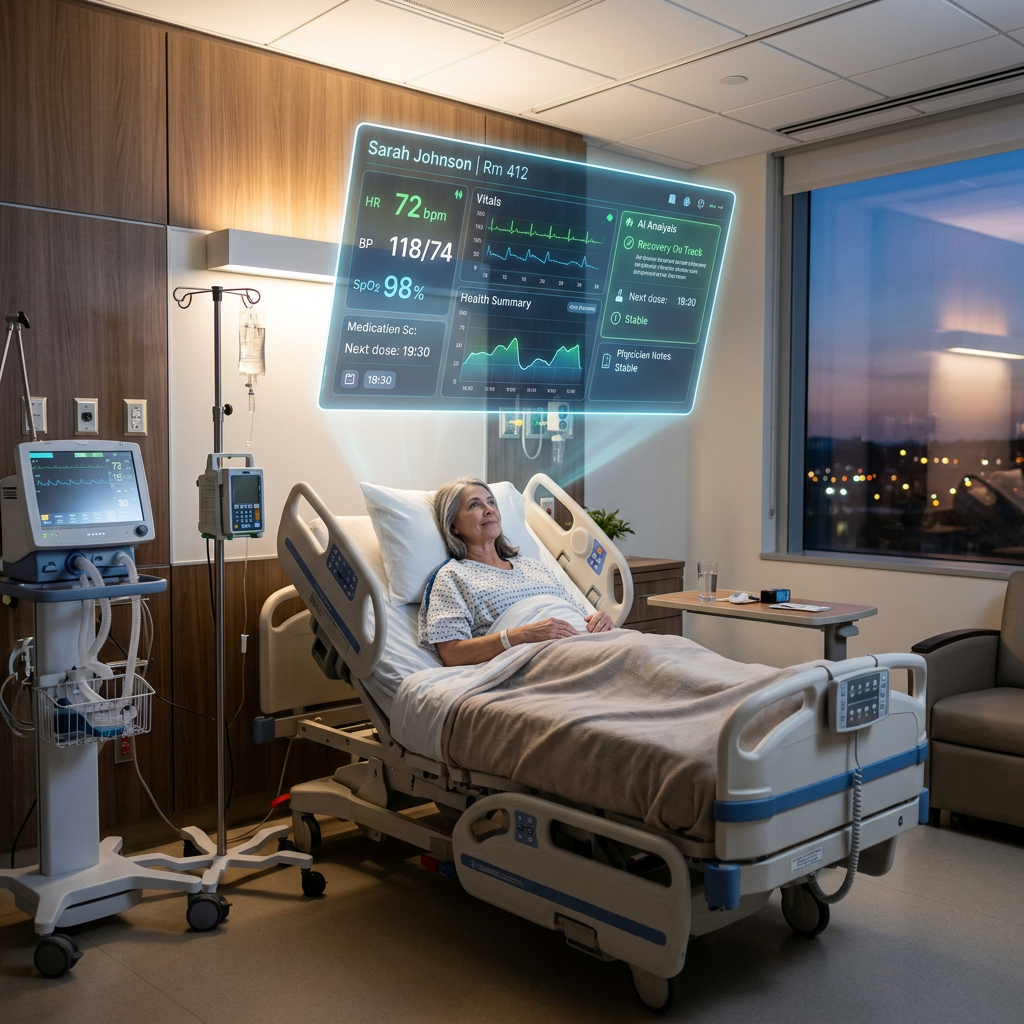
An international team led by Ateneo de Manila University reports a neural network that predicts cardiac index from skin-sensor and other non-invasive data with 97.78% classification accuracy.
Heart disease is often thought of as a problem of old age, but it is increasingly turning up in younger people. According to the World Health Organization, as cited in a new release, cardiovascular disease is becoming more common among people in their 20s, a trend linked to rising rates of obesity, high blood pressure, high cholesterol and diabetes among young people worldwide.
Catching heart problems early can make a large difference. But detailed assessments of how well the heart is working usually require specialized equipment and trained staff, which are mostly found in large hospitals in big cities. For many people at risk, those tests are hard to reach.
An international team led by Patricia Angela R. Abu of the Department of Information Systems and Computer Science at Ateneo de Manila University in the Philippines reports an artificial intelligence model that could help close that gap. The work was published in the April 2026 issue of the journal Bioengineering.
Measuring the heart’s output
The model predicts cardiac index, a measure of how well the heart pumps blood. Cardiac index is based on cardiac output, the volume of blood the heart pumps each minute, adjusted for body size so that people of different sizes can be compared. It reflects factors including heart rate and the amount of blood pumped with each beat.
Doctors use cardiac index to evaluate heart function and to guide treatment, for example in people with heart failure or in critically ill patients. Measuring it accurately has traditionally required invasive procedures, such as threading a catheter into the heart, or specialized hemodynamic analyzers operated by trained professionals in controlled clinical settings.
In healthy adults at rest, cardiac index typically falls somewhere between about 2.5 and 4 liters of blood per minute for each square meter of body surface area. Values well below that range can signal that the heart is struggling to supply the body, as in heart failure or shock.
Learning from simpler signals
The new model takes a different approach. It analyzes physiological indicators collected with non-invasive instruments, including adhesive sensor stickers placed on the skin, and uses a neural network to predict cardiac index.
The release describes three instruments used to develop the model: an InBody 720 body composition analyzer, a TERUMO ES-P2000 blood pressure monitor and a PhysioFlow blood flow analyzer. The PhysioFlow device estimates blood flow by sending a tiny electrical current through the chest through skin electrodes and measuring changes in impedance with each heartbeat, a technique known as impedance cardiography.
The paper’s title describes the approach as combining features from these measurements with a data-augmented neural network, a type of AI model trained in part on artificially expanded data to make it more robust.
The model achieved a classification accuracy of 97.78 percent. That means it sorted cases into categories of cardiac index, rather than estimating an exact value for each person, and it placed nearly all of them in the correct category.
An alternative to specialized care
The researchers present the approach as an alternative to conventional heart monitoring. By applying common algorithms to basic health data, they suggest, it could make advanced cardiac assessment available in places without specialized equipment or expertise, such as smaller clinics or rural areas.
According to the release, the model performed strongly even with fewer inputs, which the authors take as a sign that reliable cardiovascular assessment may not always require complex procedures.
The work fits into a broader wave of efforts to use AI with wearable and low-cost sensors to monitor health. Smartwatches, for example, can now detect irregular heart rhythms such as atrial fibrillation, and researchers are exploring many other ways to extract clinical information from simple signals.
What remains to be shown
The release leaves several important questions unanswered. It does not report how many people the model was trained and tested on, what their health status was, or how the cardiac index categories were defined. High accuracy on one dataset does not guarantee similar performance in other populations or real-world settings, where measurement conditions vary.
The researchers acknowledge some of this. They plan to test the approach in more diverse populations and to further reduce the number of measurements it needs. The release contains no comments from the researchers and does not name funders.
The authors are Chih-Hao Chang, Mei-Ling Chan, Yu-Hung Fang, Po-Lin Huang, Tsung-Yi Chen, Tsun-Kuang Chi, I Elizabeth Cha, Tzong-Rong Ger, Kuo-Chen Li, Shih-Lun Chen, Liang-Hung Wang, Jia-Ching Wang and Patricia Angela R. Abu.
If the approach holds up in larger and more varied groups of patients, it could offer a simpler way to keep watch on the heart, particularly for people far from the hospitals where such monitoring is usually done.
Notes
- Chang, C.-H., Chan, M.-L., Fang, Y.-H., Huang, P.-L., Chen, T.-Y., Chi, T.-K., Cha, I E., Ger, T.-R., Li, K.-C., Chen, S.-L., Wang, L.-H., Wang, J.-C., and Abu, P. A. R. “Robust Non-Invasive Cardiac Index Prediction via Feature Integration and Data-Augmented Neural Networks.” Bioengineering, April 2026. DOI: 10.3390/bioengineering13040477.
- Ateneo de Manila University. “Ateneo-led scientists invent artificial brain to predict heart health.” EurekAlert!, 29 July 2026. https://www.eurekalert.org/news-releases/1138006.


Leave a Reply