Hokkaido University researchers wrapped isolated mitochondria in polyethylene glycol topped with cell-penetrating peptides, improving uptake and boosting respiration in recipient cells in the lab.
Nearly every cell in the body depends on mitochondria, the tiny structures that turn nutrients into usable energy. When they fail, the consequences can be severe. Mitochondrial dysfunction contributes to serious conditions affecting the brain, the heart and other organs, many of which have few effective treatments.
Most current approaches to mitochondrial disorders try to compensate for what is missing, for instance by supplying a missing protein or an antioxidant. A growing number of researchers are pursuing a more direct idea: replacing damaged mitochondria by delivering healthy ones into cells.
Researchers at Hokkaido University in Japan now report a way to make that delivery more effective. In a study published in Advanced Materials Interfaces, they describe coating mitochondria with a protective layer that helps them enter cells while keeping their energy-producing function intact.
Borrowed powerhouses
Mitochondria are thought to descend from bacteria that took up residence inside ancestral cells more than a billion years ago. They still carry their own small genome, and in humans they are inherited almost entirely from the mother. Mutations in mitochondrial DNA, or in nuclear genes needed for mitochondria to work, cause a range of inherited diseases.
Mitochondrial transplantation has already been tried in people in limited settings. At Boston Children’s Hospital, for example, doctors have injected mitochondria taken from a patient’s own muscle into the damaged hearts of infants after heart surgery, an experimental approach reported in the late 2010s. But the technique faces practical problems.
The number of mitochondria in a cell varies with its energy needs, from a handful to many thousands. Heart muscle cells, which never stop working, are packed with them, which is one reason the heart is so vulnerable when mitochondria fail.
Isolated mitochondria are fragile. Removed from the protective environment of the cell, they lose function during handling and storage, and cells take them up poorly.
A two-part coat
The Hokkaido team addressed these problems with a two-step surface treatment. First, they coated isolated mitochondria with polyethylene glycol, or PEG, a material widely used in pharmaceuticals. Attaching PEG to drugs, a process called PEGylation, is a common way to protect them and help them last longer in the body.
In this case, the PEG layer shields the mitochondria, helps preserve their structure and provides an anchor for attaching other molecules.
Next, the researchers attached cell-penetrating peptides to the outer end of the PEG layer, away from the mitochondrial membrane. Cell-penetrating peptides are short chains of amino acids that can carry cargo across cell membranes. One of the best known was derived from a protein of HIV in the late 1980s, and many others have since been developed.
According to the release, adding the peptides improved uptake by cells and helped keep the mitochondria’s outer membrane intact under experimental conditions.
The researchers call the approach “e-MITO,” short for enhanced artificially designed mitochondria.
More uptake, more respiration
In laboratory experiments, the coated mitochondria were taken up by cells more efficiently than unmodified mitochondria. The recipient cells also showed increased mitochondrial respiratory activity, suggesting that the delivered mitochondria may have been contributing to the cells’ energy production.
The approach is modular, meaning that different molecules could in principle be attached to the PEG layer to direct mitochondria to particular destinations.
“The modular nature of this approach could be a real advantage that could enable us to design mitochondria targeted to treat a specific disease or tissue,” said Professor Yuma Yamada of Hokkaido University, who led the study.
Organelles as medicine
Yamada sees the work as part of a larger shift in how medicine might use the components of cells. “This work represents an early step toward a new field in which organelles themselves serve as therapeutic tools, much like genes, proteins, and cells,” he said. “Organelle-derived materials could offer new opportunities to control cellular functions in the future.”
That vision remains a long way off. The release describes only laboratory experiments and gives no numbers for how much uptake or respiration improved. It does not name the types of cells used or describe any tests in animals or people. How long the delivered mitochondria survive and function inside cells, and whether the coating causes any unwanted effects, are questions for future work.
Still, the study offers a practical step toward solving one of the main obstacles to mitochondrial transplantation: getting healthy mitochondria into cells without breaking them along the way.
Notes
- “CPP–PEG-Guided Surface Engineering of Mitochondria Enables Efficient Cellular Uptake and Respiratory Modulation.” Advanced Materials Interfaces, 1 July 2026. DOI: 10.1002/admi.70583.
- Hokkaido University. “A better way to deliver mitochondria into living cells.” EurekAlert!, 30 July 2026. https://www.eurekalert.org/news-releases/1138330.
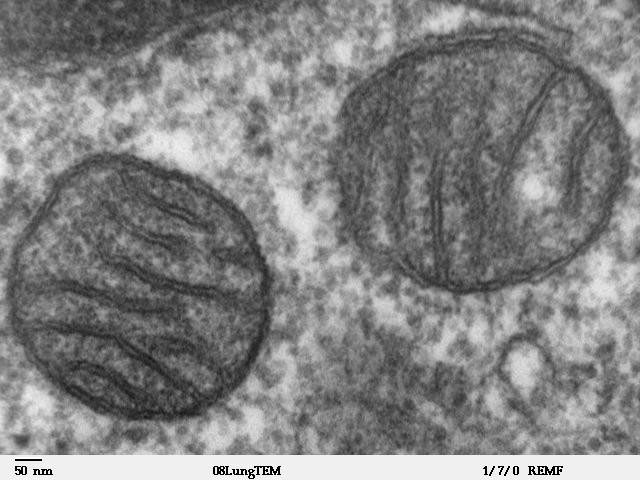
Featured image: Transmission electron microscope image of mitochondria in mammalian lung tissue. Credit: Louisa Howard



Leave a Reply