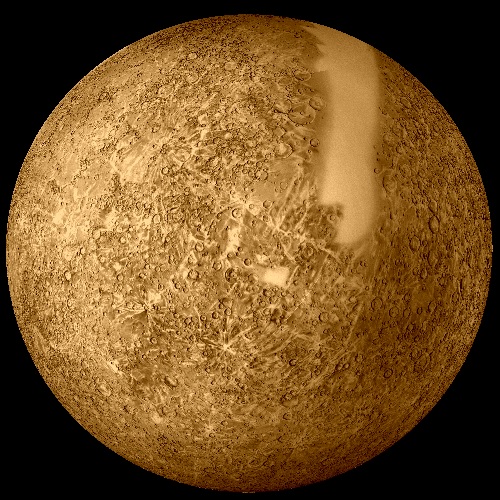
Research from Hokkaido University, working with the German Aerospace Center and The University of Tokyo, indicates that Mercury’s contraction may have been significantly underestimated. The study reveals that “Mercury appears to have shrunk considerably more than what the visible tectonic record alone suggested,” according to lead researcher Gaku Nishiyama.
Key Details
As Mercury cooled over billions of years, its surface crumpled like drying fruit skin, creating ridges and cliffs. Scientists traditionally estimated the planet’s radius decreased by 8.3 kilometers, but this new analysis suggests the actual figure ranges from 10 to 30 percent higher—approximately 11.6 kilometers.
The research identifies a critical problem: rough terrain obscures tectonic structures used to measure contraction. Impact crater ejecta particularly masks older geological features, hiding evidence of the planet’s shrinkage.
Future Research
The BepiColombo mission’s laser altimeter will provide finer-scale surface measurements, potentially revealing previously undetected relationships between geological events and tectonic structures.
Journal: Geophysical Research Letters
DOI: 10.1029/2026GL124067
Publication Date: 10-Sep-2026
Source: EurekAlert



Leave a Reply