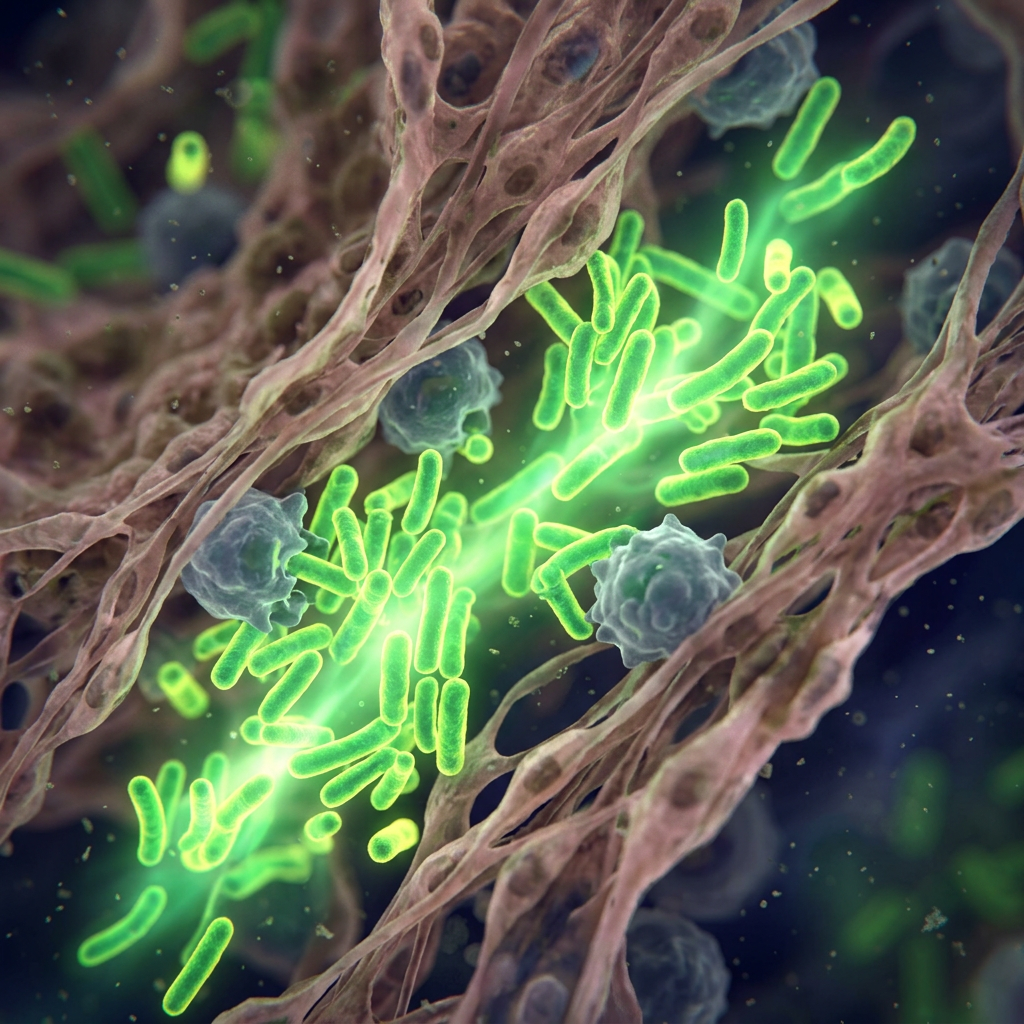
Faster and more effective ways to treat Pseudomonas aeruginosa, a bacterium the World Health Organization identifies as one of the most life-threatening pathogens, could be on the way thanks to a first-of-its-kind 3D computer model developed by the University of Surrey.
The model shows how P. aeruginosa grows, reshapes its protective layer, and spreads to new surfaces. The WHO estimates that bacterial antimicrobial resistance — where antibiotics are no longer effective — was directly responsible for 1.27 million deaths worldwide in 2019 alone.
Using BioDynaMo, an open-source simulation platform developed through an international collaboration involving the University of Surrey and partners worldwide, researchers created a three-dimensional agent-based model that recreates how the bacterium forms biofilms — communities of bacteria encased in a protective, sticky layer of sugars, proteins, and DNA that let them cling to surfaces and resist antibiotics. For P. aeruginosa, these biofilms commonly form in flowing environments such as catheters and plumbing systems.
Unlike previous computer models, the Surrey-developed model captures how biofilms grow under constant fluid flow, similar to real-world conditions, and how bacteria naturally break away to colonize new surfaces. The team validated the simulation against laboratory experiments, showing that it accurately reproduces the growth, structure, and detachment patterns seen in real bacterial biofilms.
“Biofilms are incredibly difficult to study because many of the important interactions happen at a microscopic level,” said Ryan Bournes, a postgraduate researcher at the University of Surrey and the study’s lead author.
“Antimicrobial resistance is steadily rising due to the overuse and misuse of antibiotics, so finding faster and smarter ways to understand the behaviour of pathogens is essential,” added Dr Roman Bauer, senior lecturer at Surrey’s Computer Science Research Centre and a BioDynaMo spokesperson. The framework could eventually be adapted to study other biofilm-forming bacteria and help optimize experiments, reduce laboratory costs, and support the design of safer medical devices and hospital plumbing systems.
Journal: npj Biofilms and Microbiomes
DOI: 10.1038/s41522-026-01052-1
Article Title: “Agent-based modeling of erosion and sloughing during growth of Pseudomonas aeruginosa biofilms”
Publication Date: June 22, 2026
Source: EurekAlert

Leave a Reply