
Ancient Andean Civilizations Harnessed Psychedelic Rituals: New archaeological evidence is revealing how psychoactive drugs helped shape political and religious life in the ancient Andes. At Peru’s Chavín de Huántar temple complex, researchers found bone tubes containing traces of tobacco and vilca seeds rich in bufotenine, DMT and 5-MeO-DMT, providing direct evidence of intense hallucinogenic rituals. Similar practices later spread through Tiahuanaco and Wari societies, where psychoactives may have reinforced religious authority, trade networks and social bonds. At some Wari sites, vilca appears to have been mixed with fermented molle beer during elite feasts, possibly creating prolonged altered states. New residue-analysis techniques are now allowing archaeologists to detect ancient drugs directly, strengthening long-debated theories about their role in the rise of complex Andean societies. (Science)
Climate Change May Be Fueling Legionellosis Rise: A new study suggests warming temperatures and increased rainfall are contributing to the sharp rise in US legionellosis cases. Researchers analyzed infection, temperature, and precipitation data from 1999 through 2021 and found age-adjusted incidence climbed more than sixfold, from 0.40 to 2.37 cases per 100,000 people. Rising temperatures and precipitation were strongly correlated with increasing infections, likely because warmer, wetter conditions favor Legionella growth in soil and water. The study also explored a more speculative pathway involving contaminated road puddles, where bacteria may become aerosolized by vehicle traffic. Cases fell during the COVID-19 period as driving declined, then rebounded alongside vehicle mileage. Outside experts consider road exposure plausible but say the clearest evidence links increasing heat and rainfall with rising Legionnaires’ disease incidence. (CIDRAP)

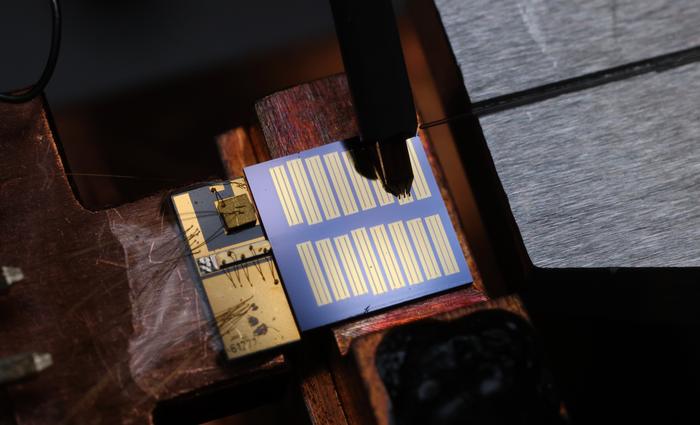
Quantum Computer Could Transform Electron Microscopy: Researchers in Austria are building an electron microscope connected directly to a quantum computer, potentially allowing scientists to extract substantially more information from every electron used to image a specimen. Conventional electron microscopes construct images largely by counting electrons, effectively discarding additional quantum information they carry. The new approach would entangle electrons with trapped ions that store their quantum states, enabling algorithms to combine information from successive electrons and reveal signals otherwise obscured by noise. Researchers have demonstrated the advantage mathematically and are now constructing an experimental system at TU Wien. If successful, the technique could produce high-resolution images using fewer electrons—particularly important for proteins and other fragile biological specimens that can be damaged by conventional electron beams. (ScienceDaily)
Plastic Waste Becomes Protein-Rich Space Food: Researchers are engineering microbes to transform plastic bottles and agricultural waste into food ingredients. Scientists at Southern Illinois University Carbondale first break polyethylene terephthalate (PET) and plant waste into smaller molecules using high-temperature, high-pressure processing. Engineered yeast then converts those molecules into proteins, fats, acids, beta-carotene and even vanilla flavoring. Researchers combine the resulting ingredients with starch, fiber and sweetener before 3D-printing protein-rich cookies called µBites. Developed partly through NASA’s Deep Space Food Challenge, the system could eventually recycle waste while producing food aboard spacecraft, submarines or in disaster zones. Safety data are encouraging, but formal taste testing awaits institutional approval and the researchers are still working toward producing more of the cookie entirely through microbial fermentation. (ScienceDaily)
Global Warming Disrupts Centuries-Old Ocean Connection: The tropical Indian and Pacific oceans have generally moved in climatic step for centuries, but human-caused warming appears to be disrupting that relationship in an exceptional way. Researchers at Woods Hole Oceanographic Institution combined corals, tree rings and stalagmites with observations and climate simulations to reconstruct ocean variability back to the early 1600s. The relationship remained remarkably stable except between roughly 1810 and 1850, when major volcanic eruptions temporarily weakened Pacific influence over the Indian Ocean. The modern breakdown, however, appears different: greenhouse warming is increasingly overwhelming that historical connection. Published in Nature Communications, the findings matter because interactions between the oceans influence rainfall, temperature and atmospheric circulation across enormous regions. Changing those relationships could complicate climate forecasting based on patterns observed during the historical period. (ScienceDaily)
AI Mines 400,000 Posts for Ozempic Side Effects: Researchers have used artificial intelligence to analyze approximately 400,000 Reddit posts discussing GLP-1 drugs including Ozempic and Wegovy, demonstrating how online conversations might supplement traditional drug-safety surveillance. A system developed at the University of Pennsylvania extracted descriptions of symptoms, experiences and potential adverse effects from users discussing medications such as semaglutide. Unlike formal clinical trials or regulatory databases, social-media posts can capture everyday experiences patients may never report to physicians or regulators. The researchers argue that large language models could continuously organize such unstructured information and potentially flag emerging safety signals earlier. However, Reddit posts are self-reported, medically unverified and susceptible to selection bias, so the system cannot establish that a medication caused a reported symptom. Instead, it offers a potentially powerful hypothesis-generating layer for conventional pharmacovigilance. (ScienceDaily)
Ringed World Chariklo Is Rapidly Changing: Observations from the James Webb Space Telescope indicate that the rings surrounding Chariklo—a small icy body orbiting between Saturn and Uranus—are changing measurably on astronomical timescales. Chariklo became the first known object smaller than a planet to possess rings when astronomers discovered them in 2013. Webb observations now provide exceptionally sensitive measurements of their composition and structure, allowing researchers to compare the system with earlier observations and track changes as Chariklo moves through its orbit. Understanding how its narrow rings evolve could reveal how material migrates, collides and dissipates around small Solar System bodies and help determine whether such rings are temporary structures rather than long-lived features. Chariklo and similar objects provide miniature natural laboratories for studying the same gravitational and collisional processes operating in the much larger ring systems surrounding the giant planets. (Space)
Psychedelics and Anesthetics Produce Opposite Brain States: Researchers at the University of Michigan have identified strikingly opposite patterns of brain organization during psychedelic experiences and anesthesia, potentially providing new clues to the neural foundations of consciousness. Using functional MRI data, the team compared people given LSD, psilocybin or nitrous oxide with participants who were sleeping or sedated with propofol. Psychedelic states produced greater global connectivity, communication efficiency and dynamic complexity across brain networks. Sedation and reduced consciousness produced the reverse pattern, with networks becoming more segregated and less dynamically integrated. Researchers describe the effects as neurological “mirror images.” The findings suggest that integration, efficiency and complexity across large-scale brain networks may represent important measurable dimensions of conscious state and could eventually help scientists distinguish different levels or varieties of consciousness using brain imaging. (Michigan Medicine)
Brain Networks May Predict Consciousness Recovery: Researchers analyzing patients with severe disorders of consciousness have identified patterns of brain-network organization associated with remaining awareness and long-term recovery. Using resting-state functional MRI from 117 patients and 30 healthy controls, scientists examined how effectively different brain regions integrated information while maintaining specialized network organization. Both integration and segregation were disrupted in patients, although loss of segregation was particularly widespread. Importantly, preserved integration correlated with behavioral measures of consciousness, especially within the somatomotor network. Researchers then trained machine-learning models using network topology to predict neurological recovery. Network information alone produced modest predictive performance, but combining it with clinical variables substantially improved results. The findings support the idea that consciousness depends partly on a balance between interconnected and specialized brain systems and could eventually contribute to more objective prognosis after severe brain injury. (Nature)
Body Rhythms Could Improve Consciousness Diagnosis: Subtle fluctuations in patients’ daily activity patterns could help doctors determine when to assess people with disorders of consciousness, potentially reducing diagnostic errors. Researchers studied rest-activity rhythms using actigraphy, a wearable method that continuously measures movement. Patients showed substantially greater variability than healthy controls, with shorter ultradian rhythms often dominating rather than normal 24-hour circadian cycles. Certain rhythm characteristics also appeared capable of distinguishing patients recovering from disorders of consciousness. In simulations using previous clinical data, scheduling examinations according to each patient’s activity rhythm reduced the estimated misdiagnosis rate from 39.9% to 33.5% and decreased the number of assessments required. PET measurements of brain metabolism did not fluctuate similarly. The findings suggest inexpensive wearable monitoring could identify periods when patients are most capable of demonstrating behavioral signs of awareness. (Springer)
Why Uncertainty Makes the Brain Perform Worse: Scientists have identified a possible neural explanation for why people struggle when uncertain about which information matters for a task. Researchers combined human behavioral experiments, recordings from monkey brains and artificial neural-network models to examine performance when participants had to switch between perceptual decisions. Humans and monkeys became less accurate when task requirements were uncertain, while an artificial network optimized simply to make correct decisions avoided much of this decline. Neural recordings suggested that uncertainty caused representations of irrelevant stimulus features to become stronger and more entangled with relevant information. The researchers call this “feature interference.” Rather than cognitive limitations arising solely because the brain lacks processing capacity, performance may deteriorate because competing neural representations interfere with one another. The results offer a mechanistic explanation for some of the familiar difficulties associated with multitasking and rapid task switching. (Nature)
Brain Dynamically Separates Competing Choices During Decisions: MIT neuroscientists have uncovered how the brain keeps competing options separate while making decisions. Researchers recorded hundreds of neurons in the lateral prefrontal cortex while animals evaluated two targets carrying different reward values. Rather than assigning individual neurons permanently to specific options, the brain repeatedly assembled flexible groups of neurons whose coordinated activity represented different pieces of decision-related information. Before a choice, neural ensembles separated options according to their presentation order. Afterward, the brain reorganized those representations around whether each option had been chosen or rejected. The same neuron could participate in different ensembles across successive trials. Researchers argue that this dynamic reorganization prevents competing thoughts from interfering with one another while preserving information about rejected options for future learning. The findings illustrate how cognition may rely on rapidly assembled, temporary neural coalitions rather than fixed circuits. (picower.mit.edu)
IMAGE CREDIT: CONSTANTINO TORRES/INSTITUTE OF ARCHAEOLOGICAL RESEARCH AND MUSEUM/CATHOLIC UNIVERSITY OF THE NORTH


Leave a Reply