Long before Earth had continents as we know them, or an atmosphere with oxygen, or anything alive to breathe it, the planet may have already been running a version of the deep-water plumbing system that shapes it today. That’s the implication of a new study of some of the oldest volcanic rocks on the planet, published this week in Nature Communications.
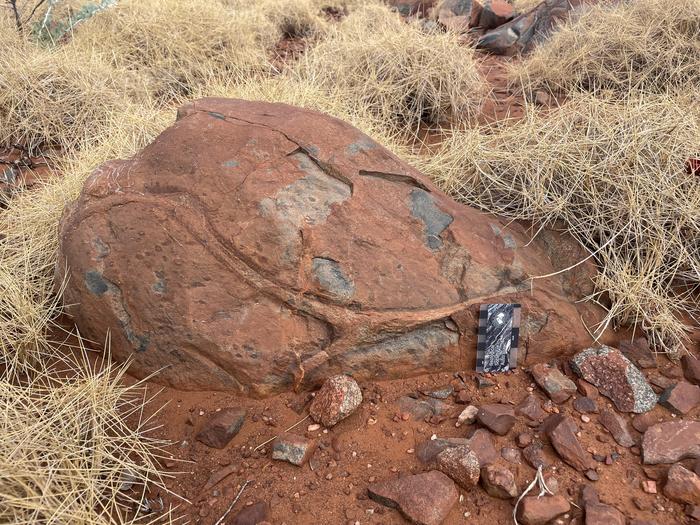
The rocks come from the Pilbara Craton in Western Australia, a slab of ancient crust that has somehow dodged billions of years of plate tectonics, erosion, and general geological violence. Some of its rocks date back 3.6 billion years, making the Pilbara one of the only places on Earth where scientists can get a direct look at conditions from the planet’s infancy. An international team led by geochemist Dr. Eric Vandenburg of Adelaide University analyzed the chemical fingerprints locked inside 3.1-billion-year-old volcanic rocks there and found something unexpected: signs that water had already traveled deep into Earth’s interior, helping generate the magma that fed ancient volcanoes.
That’s a big deal because, today, water gets recycled into the mantle through plate tectonics. At subduction zones, one tectonic plate dives beneath another and drags ocean water down with it. That water lowers the melting point of surrounding rock, generates magma, and fuels the kind of volcanism seen around the Pacific’s Ring of Fire. It’s a tidy system, but it depends on rigid plates sliding past each other, and 3.1 billion years ago, Earth almost certainly didn’t have that yet.

“The early Earth was too hot for plates to behave that way,” Vandenburg said in a statement. “So until now it has been unclear whether surface water could have made that journey more than three billion years ago, and if so, how.”
The rocks suggest it did happen anyway, just not through modern plate tectonics. The team proposes a different mechanism entirely: something they’ve named “dripduction.” Instead of two rigid plates grinding against each other, the early Earth’s crust may have had dense, waterlogged patches that periodically became unstable and simply sagged and dripped down into the hotter mantle beneath them, like cold syrup sinking through something warmer. As those blobs of crust descended, they released their water into the mantle. That water triggered melting, the melting produced magma, and the magma eventually erupted and hardened into the rock the team examined billions of years later.
It’s a strange mental image: continents essentially leaking into the planet’s interior in slow, sporadic drips rather than being fed into orderly subduction trenches. But it would solve a real puzzle. If dripduction is right, it means the deep water cycle that shapes volcanism, continent-building, and possibly the chemistry that supports life didn’t have to wait for modern-style plate tectonics to switch on. Some version of it may have been running while Earth was still figuring out how to be a planet.
“The Earth wasn’t operating exactly as it does now,” Vandenburg said, “but it appears some of the key processes were already in place.”
The question of when Earth started exchanging material between its surface and its deep interior isn’t just trivia for geologists. That exchange influences volcanic activity, how continents grow, and the movement of elements that make the planet more or less hospitable to life. Pinning the process to 3.1 billion years ago pushes the timeline for a “dynamic,” internally connected Earth back further than previously established, and it suggests the planet was more geologically active, earlier, than the standard picture allows.
The study involved researchers from Adelaide University, Monash University, the Geological Survey of Western Australia, Curtin University, the Australian National University, Cardiff University, and Germany’s GEOMAR Helmholtz Centre for Ocean Research. The rocks themselves — a striking type called variolitic pillow lava, dotted with small mineral spots called varioles that form specifically in water-rich lava — will likely stay a go-to reference point for anyone trying to reconstruct what Earth looked like before it looked like anything we’d recognize.
Source: Adelaide University press release via EurekAlert!; Vandenburg, E. et al., “Modern arc-like water content in the source of 3.1-billion-year-old volcanic rocks,” Nature Communications (2026). DOI: 10.1038/s41467-026-74653-1
IMAGE CREDIT: Adelaide University.




Leave a Reply