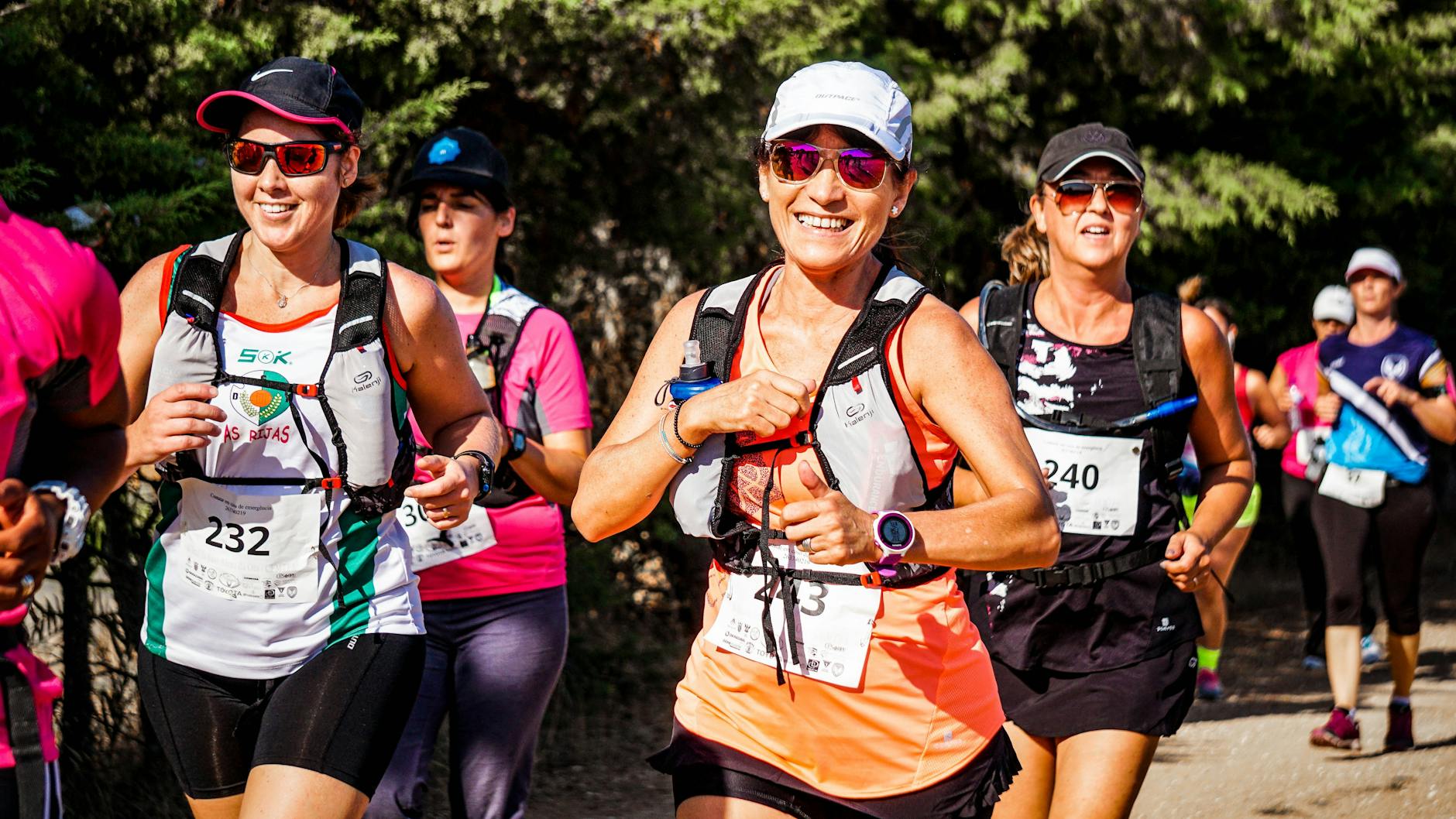
As part of an ongoing national research effort to better understand how physical activity improves health and prevents disease, seven University of Colorado Department of Medicine faculty members contributed to an article recently published in Nature, an international journal of science.
The paper, “Temporal dynamics of the multi-omic response to endurance exercise training,” discusses how eight weeks of endurance exercise training affected male and female young adult rats. The researchers found that all bodily tissues that were tested responded to exercise training — even those not normally associated with movement. This means there were more than 35,000 biological molecules responding and adapting to endurance exercise over time. Researchers also found more widespread differences in molecular responses between male and female rats than they had originally expected.
Traditionally, research has focused on a single bodily tissue or has had a bias toward one sex. This research is unique because it is getting a comprehensive, organism-wide view of the impact of endurance exercise training for both female and male rats.

The research was conducted by the Molecular Transducers of Physical Activity Consortium (MoTrPAC). This program, supported by the National Institutes of Health Common Fund, aims to identify exercise’s impact on the biological molecules of both animals and humans, with the goal of discovering how exercise improves and maintains the health of the body’s tissues and organs.
We asked Wendy Kohrt, PhD, a distinguished professor in the Division of Geriatric Medicine and a leader in the research effort, to discuss the need for this research, the long-term goals of the study, and her takeaways from the recent research paper. Kohrt is the chair of the executive and steering committees of MoTrPAC, as well as the principal investigator of one of the MoTrPAC clinical centers.
Sign up for the Daily Dose Newsletter and get every morning’s best science news from around the web delivered straight to your inbox? It’s easy like Sunday morning.
Q: How would you describe the purpose of your study’s work and the need for this research?
Everybody knows that exercise is good for you, but very few doctors will prescribe exercise. We don’t have the knowledge base to know when we can prescribe exercise to prevent or treat specific health conditions or diseases. That’s because we don’t know the mechanisms by which exercise generates its benefits.
This is the first big leap into developing that underlying evidence base for how exercise works in each of our cells, tissues, and organs. It will fuel the next generation of research to better understand the effectiveness of exercise to prevent or treat disease.
Generating the evidence base to help doctors know when exercise is a reasonable alternative to a medication in hitting these molecular targets is one way I envision this database eventually being used.
Q: Can you provide an overview of the research MoTrPAC has done and is currently conducting?
This paper is on the effects of eight weeks of exercise training. We also studied rats’ responses to just a single bout of exercise, so we are continuing to do deep dives into each piece of the animal studies. We’ve already had several companion papers come out, following the landscape paper.
Our human studies are still happening, with the goal of finishing them next year. We will have somewhere between 1,500 and 1,600 adults and close to 300 adolescents participating. We’re working on two landscape papers from approximately 200 adults enrolled before the COVID pandemic — one will be focused on clinical data and the other will focus on the body’s molecular responses, much like this recently published animal paper. There will be many companion papers that will subsequently come out, as well. This “pilot study” will help guide the analysis of the larger study.
Q: The recently published research paper explains that many tissues in the male and female rats showed sex differences in their exercise training responses. What do you think this means for future research?
We know that women have been under-studied in clinical research, but female animals and cells have often been under-studied in basic and preclinical science as well. I think a lot of my colleagues were surprised by the number, magnitude, and variability of the sex differences between the male and female rats. That is going to be important for any follow-up studies.
The rat has been a pretty good model for how humans respond to exercise in general, but I am cautious because there are some differences in terms of rats and humans with respect to sex differences. For example, in humans, men have higher levels of cardiorespiratory fitness than women. That’s not true in this species of rat.
As excited as I was to see all these sex differences in molecular signaling factors, I’m cautious about the extent to which we’re going to be able to assume these reflect what happens in humans. We need more research to understand whether the sex differences that we see in animals in their blood, muscle, and fat tissues are also reflected in humans.
Q: When looking at the research findings, what were some of your biggest takeaways? Did anything surprise you?
One thing that surprised me was the effect of exercise on the kidney. I knew that exercise is good for people with kidney disease, but looking at this research, you see the number of changes in renal tissue was enormous — and this is one place where there were very pronounced sex differences.
The other result that stood out was brown adipose tissue. Most of our fat is white adipose tissue, but brown adipose tissue got its name because of its color, and it has more mitochondria. For a long time, it was believed that humans lost their brown adipose tissue shortly after birth. However, in the last 15 years, there has been considerably more interest in the fact that humans do seem to maintain some brown adipose tissue into adulthood, although it seems to decline with advancing age and may also decline in women around the time of menopause. Many suspect that this decline in brown adipose tissue is associated with increased propensity for weight gain. And so, looking at this research and seeing that brown adipose tissue signals appear to be mostly male-specific is of great interest to me.
Overall, it’s too early to make any leaps of faith regarding what these molecular data are telling us in terms of human physiology, but they are going to help people generate plausible hypotheses about how all these molecular signals might be involved in any health condition or disease that we think might be benefited from regular exercise.
IMAGE: Pixabay
If you enjoy the content we create and would like to support us, please consider becoming a patron on Patreon! By joining our community, you’ll gain access to exclusive perks such as early access to our latest content, behind-the-scenes updates, and the ability to submit questions and suggest topics for us to cover. Your support will enable us to continue creating high-quality content and reach a wider audience.
Join us on Patreon today and let’s work together to create more amazing content! https://www.patreon.com/ScientificInquirer


Leave a Reply