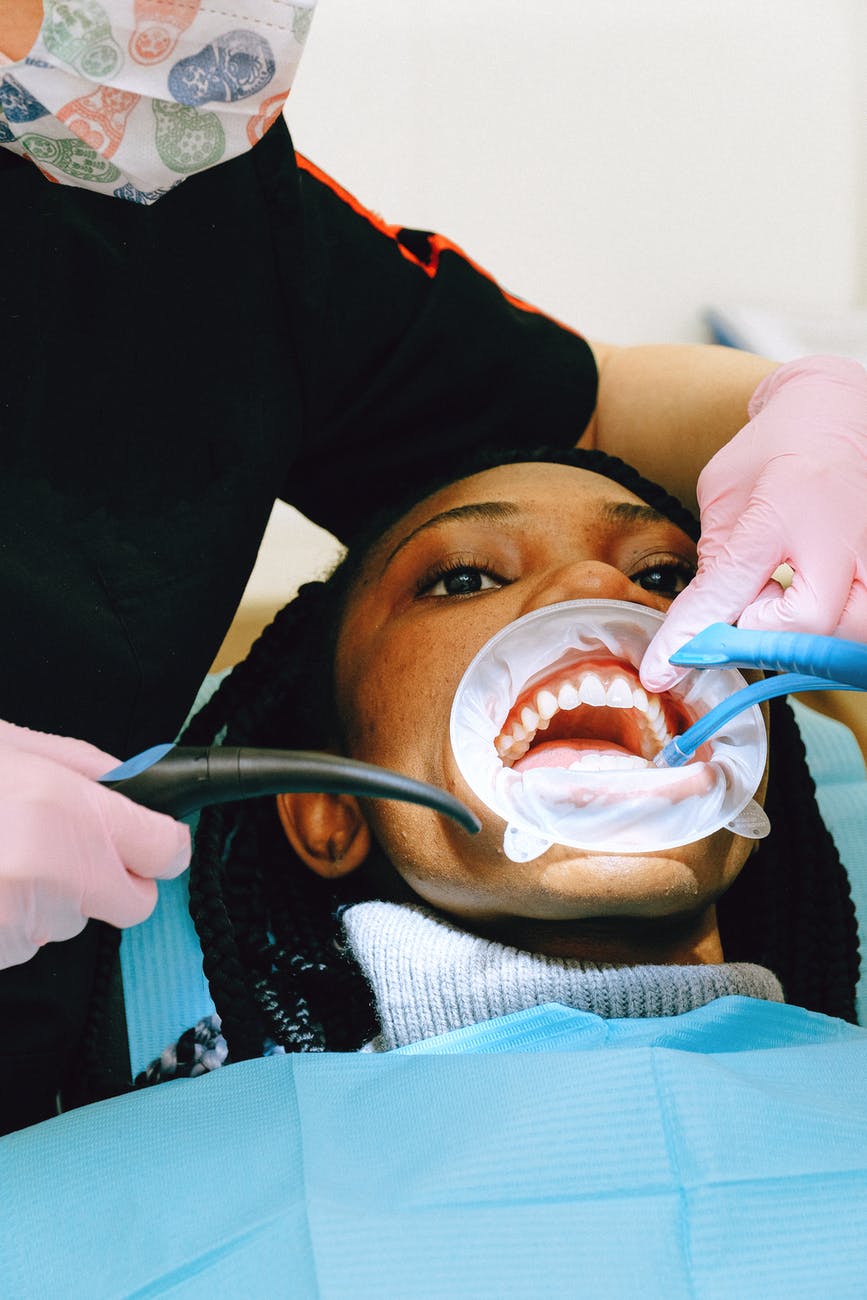
The WIRES patch degrades when an inflammation enzyme rises, changing its radio signal and releasing an immune-calming microRNA, which reduced inflammation in mice with periodontitis.
Gum disease rarely announces itself. Periodontitis, a chronic inflammatory disease of the tissues that hold the teeth in place, can progress quietly for years. Left untreated, it destroys gum tissue and bone, and teeth can loosen and fall out.
It is also extremely common. The World Health Organization estimates that severe periodontal disease affects roughly a fifth of adults worldwide, making it one of the most widespread chronic diseases.
The effects may reach beyond the mouth. Periodontitis has been linked in many studies to conditions including diabetes and cardiovascular disease, and while the nature of those connections is still debated, the chronic inflammation involved is thought to play a role.
Researchers have now developed a flexible, battery-free patch that could both monitor periodontal inflammation and treat it. The device, called WIRES, is described in National Science Review.
The limits of current care
Periodontitis is diagnosed today mainly through visual examinations, in which a dentist probes the pockets between gums and teeth, and through dental X-rays. These methods reveal damage that has already occurred but offer little real-time information about how active the inflammation is.
Treatment also has limits. Drug treatments, such as antibiotics, often struggle to maintain high drug levels at the affected site, where saliva and constant movement quickly wash medicines away.
A patch that listens for inflammation
WIRES combines two components: a hydrogel that responds to inflammation and a soft electronic device that communicates by radio frequency. The patch needs no battery and can be read wirelessly by an external device.
The hydrogel is designed to respond to MMP-9, an enzyme whose levels rise with periodontal inflammation. MMP-9 belongs to a family of enzymes called matrix metalloproteinases, which break down the proteins that give tissues their structure, including collagen. In periodontitis, they contribute to the destruction of gum tissue.
When MMP-9 levels rise, the enzyme cuts peptides within the hydrogel, causing it to break down. That change alters the radio-frequency response of the electronic device, turning local inflammation into a wireless signal.
Therapy on demand
The hydrogel does a second job. It carries therapeutic microRNA, small RNA molecules that regulate which genes are active in cells. As the hydrogel degrades, the microRNA is gradually released and taken up by nearby cells, so more inflammation leads to more treatment.
The team identified a microRNA called let-7c that can push macrophages, immune cells central to inflammation, toward an anti-inflammatory state. The let-7 family of microRNAs was among the first discovered, and work on microRNAs earned Victor Ambros and Gary Ruvkun the 2024 Nobel Prize in Physiology or Medicine.
Macrophages can take on different roles depending on the signals they receive. Some promote inflammation and help destroy microbes, while others help resolve inflammation and repair tissue. Shifting the balance toward the second type is a common goal of treatments for chronic inflammatory diseases.
Tests in saliva and mice
The researchers tested the system on saliva samples and in mouse models of periodontitis. In saliva, it distinguished MMP-9 levels between healthy volunteers and patients with periodontitis, with results consistent with a commercial laboratory assay.
In mice with periodontitis, let-7c treatment reduced local inflammation and helped regulate the immune status of macrophages.
The authors present WIRES as a new strategy for managing periodontitis, pairing wireless feedback on inflammation with an immune therapy that responds to it. They suggest that similar bioelectronic systems could be developed for other chronic inflammatory diseases.
Hydrogels, water-swollen networks of polymers, are already used in contact lenses and wound dressings. Their softness makes them well suited to contact with delicate tissues, and chemists can design them to break down in response to specific enzymes or conditions, as the WIRES team did.
What remains to be shown
The work is at an early stage. The release does not report how many saliva samples or mice were tested, how long the patch can remain in place, or how its radio signal would be read in a person’s mouth. It also does not name the paper’s title, authors or funders, and it contains no comments from the researchers. Its listed expert contact is Professor Qingjun Liu of Zhejiang University.
Any device designed to sit in the mouth would need to withstand saliva, chewing and brushing, and would have to be shown safe and effective in human trials before it could be used in dental care.
Notes
- National Science Review, 2026. DOI: 10.1093/nsr/nwag409.
- Science China Press. “Flexible bioelectronics armed to the teeth.” EurekAlert!, 2 August 2026. https://www.eurekalert.org/news-releases/1138524.
Photo by Anna Shvets on Pexels.com

Leave a Reply