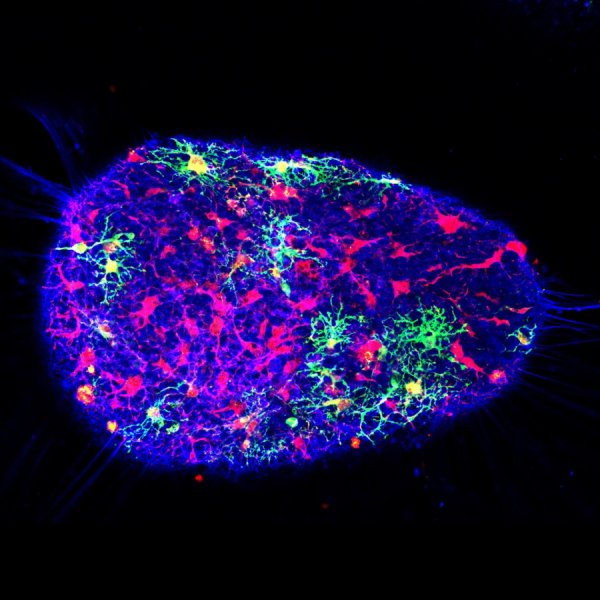
Research on long-term memories has largely focused on the role of neurons—the brain’s nerve cells. However, in recent years, scientists are discovering that other cell types are also vital in memory formation and storage.
A new study, published in the journal Neuron, reveals the crucial role of vascular system cells—known as pericytes—in the formation of long-term memories of life events—memories that are lost in diseases such as Alzheimer’s disease. The research, conducted by New York University neuroscientists, shows that pericytes, which wrap around the capillaries—the body’s small blood vessels—work in concert with neurons to help ensure that long-term memories are formed.
“We now have a firmer understanding of the cellular mechanisms that allow memories to be both formed and stored,” says Cristina Alberini, a professor in New York University’s Center for Neural Science and the paper’s senior author. “It’s important because understanding the cooperation among different cell types will help us advance therapeutics aimed at addressing memory-related afflictions.”
“This work connects important dots between the newly discovered function of pericytes in memory and previous studies showing that pericytes are either lost or malfunction in several neurodegenerative diseases, including Alzheimer’s disease and other dementia,” explains author Benjamin Bessières, a postdoctoral researcher in NYU’s Center for Neural Science.

Pericytes help maintain the structural integrity of the capillaries. Specifically, they control the amount of blood flowing in the brain and play a key role in maintaining the barrier that stops pathogens and toxic substances from leaking out of the capillaries and into brain tissue.
The discovery, reported in the new Neuron article, of the pericytes’ significance in long-term memory emerged because Alberini, Bessières, Kiran Pandey, and their colleagues examined the role of insulin-like growth factor 2 (IGF2)—a protein that was known to increase following learning in brain regions, such as the hippocampus, and to play a critical role in the formation and storage of memories.
They found that IGF2’s highest levels in the brain cells of the hippocampus do not come from neurons or glial cells, or other vascular cells, but, rather, from pericytes.
IGF2’s presence in pericytes, then, raises the following question: How is this linked to memory?
The scientists conducted a series of cognitive experiments using mice, comparing behaviors of those with pericytes that produced IGF2 and those that did not. By removing IGF2-producing capacity in some, the researchers could isolate the significance of both pericytes and IGF2 in neurological processes.
In these experiments, the mice were subjected to a series of memory tests—learning to associate a mild foot shock to a specific context or learning to identify objects placed in a new location.
Their results showed that production of IGF2 by pericytes in the hippocampus was enhanced by the learning event. More specifically, this increase in pericytic IGF2 took place in response to activity of neurons, revealing a concerted, neuron-pericytic action. In addition, IGF2 produced by pericytes were shown to circle back to influence biological responses of neurons that are critical for memory.
“IGF2 produced from pericytes and acting on neurons support the idea that a neurovascular unit regulates neuronal responses as well as functions of the blood barrier and may have repercussions on brain injury and inflammation,” notes Pandey, a postdoctoral researcher in NYU’s Center for Neural Science.
“Cooperation between neurons and pericytes is necessary to assure that long-term memories are formed,” observes Alberini. “Our study provides a new view of the biology of memory—though more research is needed to further understand the roles of pericytes and the vascular system in memory and its diseases.”
IMAGE CREDIT: Eltobgy.
Sign up for the Daily Dose Newsletter and get the morning’s best science news from around the web delivered straight to your inbox? It’s easy like Sunday morning.


Leave a Reply