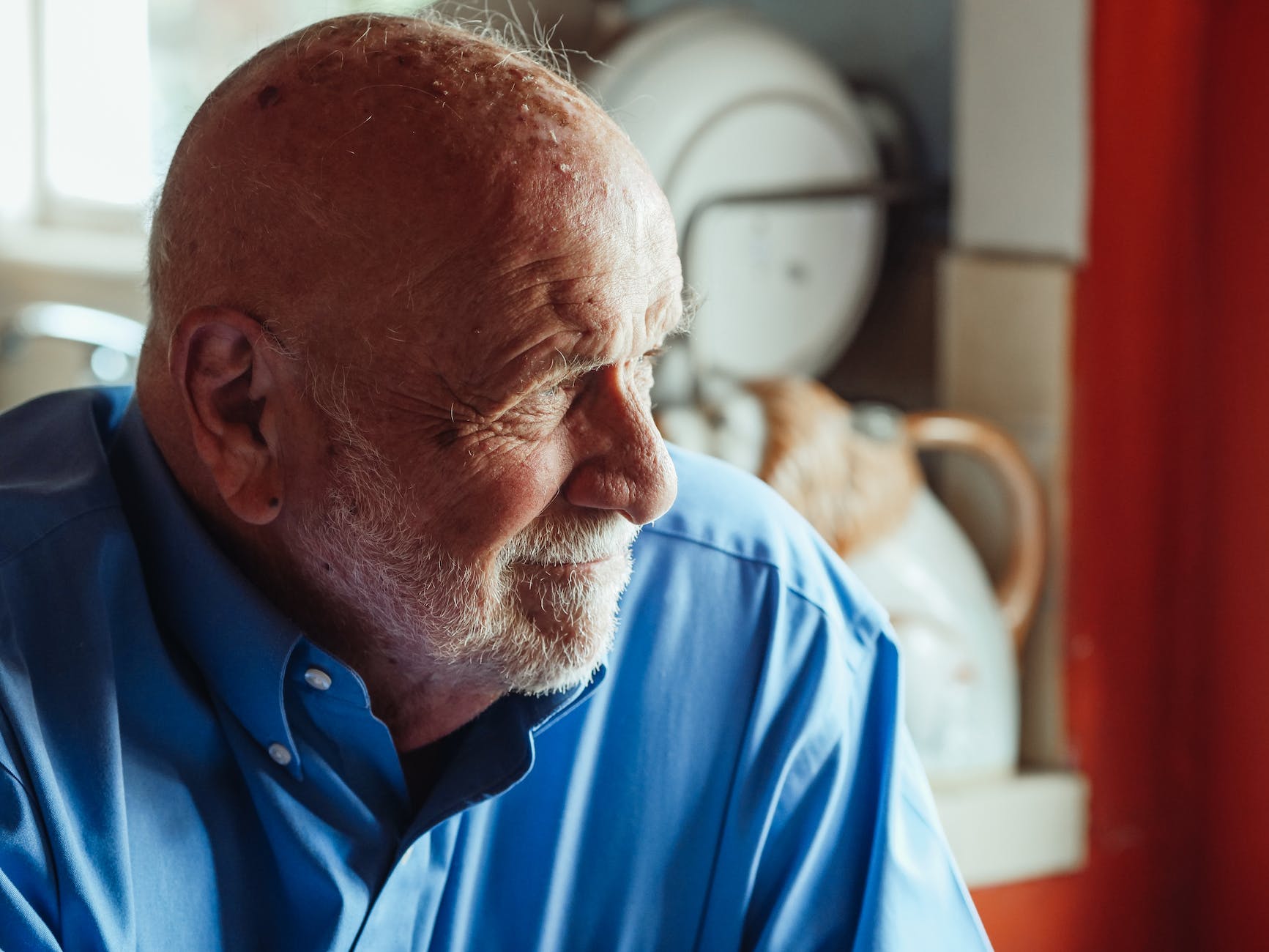
It’s a good day when Frank Lee, a retired chef, can slip out to the hardware store, fairly confident that his wife, Robin, is in the hands of reliable help. He spends nearly every hour of every day anxiously overseeing her care at their home on the Isle of Palms, a barrier island near Charleston, South Carolina.
Robin Lee, 67, has had dementia for about a decade, but the couple was able to take overseas trips and enjoy their marriage of some 40 years until three years ago, when she grew more agitated, prone to sudden outbursts, and could no longer explain what she needed or wanted. He struggled to care for her largely on his own.
“As Mom’s condition got more difficult to navigate, he was just handling it,” said Jesse Lee, the youngest of the couple’s three adult children. “It was getting harder and harder. Something had to change, or they would both perish.”
Frank Lee’s search for trustworthy home health aides — an experience that millions of American families face — has often been exhausting and infuriating, but he has persisted. He didn’t entirely trust the care his wife would get in an assisted living facility. Last August, when a respite program paid for her brief stay in one so Frank, 69, could take a trip to the mountains, she fell and fractured her sacrum, the bone that connects the spine to the pelvis.
There is precious little assistance from the government for families who need a home health aide, unless they are poor. The people working in these jobs are often woefully underpaid and unprepared to help a frail, older person with dementia bathe and use the bathroom, or to defuse an angry outburst.
Usually, it is family that steps into the breach — grown children who cobble together a fragile chain of visitors to help an ailing father; a middle-aged daughter who returns to her childhood bedroom; a son-in-law working from home who keeps a watchful eye on a confused parent; a wife who can barely manage herself looking after a faltering husband.
Frank Lee finally found two aides on his own, with no help from an agency. Using the proceeds from the sale of his stake in a group of restaurants, including the popular Charleston bistro Slightly North of Broad, he pays them the going rate of about $30 an hour. Between his wife’s care and medical expenses, he estimates he’s spending between $80,000 and $100,000 a year.
“Who the hell can afford this?” he asked. “There’s no relief for families unless they have great wealth or see their wealth sucked away.” He worries that he will run out of money and be forced to sell their home of more than three decades. “Funds aren’t unlimited,” he said.
Credited with emphasizing local ingredients and mentoring young chefs in Charleston, Lee retired in 2016, a few years after his wife’s diagnosis.
In an interview at the time, he said, “My wife has given up her life to help me in my career, and now I need to pay attention to her.”
In 2020, he contacted a half-dozen home care agencies. Some couldn’t fill the position. Others sent aides who were quickly overwhelmed by his wife’s behavior. Doctors told the family they believed she has frontotemporal dementia, which appeared to affect her language and how she behaved.
One woman seemed promising, only to quit after a week or two. “We never saw her again,” Lee said. He tried a friend of the family for a time, but she left when her grandmother developed liver cancer.
“It was the whole year of going through different caregivers,” said son Jesse.
Finally, Frank found two women to help. One of them, Ronnie Smalls, has more than a dozen years of experience and is trained in dementia care. She has developed a rapport with Robin, who seems reassured by a quick touch. “We have a really good bond,” Smalls said. “I know her language, her expression.”
Sign up for the Daily Dose Newsletter and get every morning’s best science news from around the web delivered straight to your inbox? It’s easy like Sunday morning.
One day at the Lees’ cozy one-story house, decorated with furniture made by Robin, and with a yard overflowing with greenery, Smalls fed her lunch at the kitchen table with her husband and daughter. Robin seemed to enjoy the company, murmuring in response to the conversation.
At other times, she seemed oblivious to the people around her. She can no longer walk on her own. Two people are often needed to help her get up from a chair or go to the bathroom, transitions she often finds upsetting. A day without an aide — out because of illness or a family emergency — frays the tenuous links that hold the couple’s life together.
Lee said his wife barely resembles the woman he married, the one who loved hiking, skiing, and gardening, and who started a neighborhood preschool while raising their three children. A voracious reader, she is now largely silent, staring into space.
The prognosis is bleak, with doctors offering little to hang onto. “What’s the end game look like?” Lee asks, wondering if it would be better if his wife had the right to die rather than slowly disappear before his eyes. “As she disintegrates, I disintegrate,” he said. She recently qualified for hospice care, which will involve weekly visits from a nurse and a certified nursing assistant paid under Medicare.
Charleston is flush with retirees attracted by its low taxes and a warm climate, and it boasts of ways to care for them with large for-profit home health chains and a scattering of small agencies. But many families in Charleston and across the nation can’t find the help they need. And when they do, it’s often spotty and far more expensive than they can afford.
Most Americans want to remain in their own homes, living independently, for as long as possible. They want to avoid nursing homes, which they see as providing poor care, polls have found. And the ranks of older people who need such help will grow. By 2030, 1 in 5 Americans will be at least 65 as millions in the baby boomer generation retire.
In dozens of interviews, families described a desperate and sometimes fruitless search for aides to help loved ones with simple tasks on a predictable schedule at an hourly rate they can afford.
Roughly 8 million people 65 and older had dementia or needed help with two or more activities of basic daily life, like getting out of bed, according to an analysis of a federally funded survey of older Americans by KFF Health News and The New York Times. Only a million received paid help outside of a nursing home, and nearly 3 million had no help at all.
Most families can’t afford what agencies charge — about $27 an hour, according to Genworth, a long-term care insurance company. So, many take their chances on untrained caregivers found through word-of-mouth, Craigslist, or other resources.
A Scarcity of Workers
One of the main obstacles to finding paid help is the chronic shortage of workers. Some 3.7 million people had jobs as aides in home health or personal care in 2022, with half of them earning less than $30,000 year, or $14.51 an hour, according to the Bureau of Labor Statistics. The number of people needed is expected to increase by more than 20% over the next decade. But the working conditions are hard, the pay is usually bad, and the hours are inconsistent.
About 3 million people are working in private homes, according to a 2023 analysis by PHI, a nonprofit that studies and acts as an advocate for the workforce, although official estimates may not count many workers paid off the books or hired outside of an agency by a family. Eighty-five percent of home care workers are women, two-thirds are people of color, and roughly a third are immigrants. The pay is often so low that more than half qualify for public assistance like food stamps or Medicaid.
Dawn Geisler, 53, has made only $10 an hour working as a home health aide in the Charleston area for the past four years, without ever getting a raise. She declined to name the agency that employs her because she doesn’t want to lose her job.
Geisler discovered she liked the work after caring for her mother. Unlike an office job, “every day is just a little bit different,” she said. She now juggles two clients. She might accompany one to the doctor and keep the other one company. “I’m taking care of them like they were my own family,” she said.
The agency provides no guarantee of work and doesn’t always tell her what to expect when she walks through the door, except to say someone has Alzheimer’s or is in a wheelchair. Her supervisors often fail to let her know if her client goes to the hospital, so families know to call her cellphone. She has waited weeks for a new assignment without getting paid a penny. She herself has no health insurance and sometimes relies on food banks to put meals on the table.
“I’m not making enough to pay all the bills I have,” said Geisler, who joined an advocacy group called the Fight for $15, which is pushing to raise the minimum wage in South Carolina and across the country. When her car broke down, she couldn’t afford to get it fixed. Instead, she walked to work or borrowed her fiancé’s bicycle.
Most home health agencies nationwide are for-profit and are often criticized for ignoring the needs of workers in favor of the bottom line.
“The business models are based on cheap labor,” said Robyn Stone, senior vice president of research for LeadingAge, which represents nonprofit agencies. The industry has historically tolerated high turnover but now can’t attract enough workers in a strong, competitive job market. “I think there has been a rude awakening for a lot of these companies,” she said.
Many agencies have also refused to pay overtime or travel costs between jobs, and many have been accused of wage theft in lawsuits filed by home care workers or have been sanctioned by state and federal agencies.
Medicaid, the federal-state program that provides health care for the poor, is supposed to provide home aides but faces shortages of workers at the rates it pays workers. At least 20 states pay less than $20 an hour for a personal care aide, according to a recent state survey by KFF. Aides are often paid less under Medicaid than if they care for someone paying privately.
With low pay and few benefits, many people would rather work the checkout line in a supermarket or at a fast-food chain than take on the emotionally demanding job of caring for an older person, said Ashlee Pittmann, the chief executive of Interim HealthCare of Charleston, a home health agency. She said that she recently raised wages by $2 an hour and had had more success keeping employees, but that she still worried that “we may not be able to compete with some larger companies.”
The Biden administration failed to obtain an additional $400 billion from Congress for home- and community-based services to shift emphasis away from institutional care. President Joe Biden signed an executive order this year to encourage some reforms, and federal officials have proposed requiring home health agencies to spend 80 cents of every government dollar on paying workers under Medicaid. But so far, little has changed.
Falling Through the ‘Doughnut Hole‘
Long-term care coverage for most Americans is a yawning gap in government programs. And the chasm is widening as more Americans age into their 70s, 80s, and 90s.
The government’s main program for people 65 and older is Medicare, but it pays for a home aide only when a medical condition, like recovery from a stroke, has made a person eligible for a nurse or therapist to come to the home. And the aide is usually short-term. Medicare doesn’t cover long-term care.
Medicaid, which does pay for long-term care at home, is limited to serving the poor or those who can demonstrate they have hardly any assets. But, again, the worker shortage is so pervasive that waiting lists for aides are years long, leaving many people without any option except a nursing home.
So millions of Americans keep trying to hang in and stay home as long as they can. They’re not poor enough to qualify for Medicaid, but they can’t afford to hire someone privately.
Many fall through what April Abel, a former home health nurse from Roper St. Francis Healthcare in Charleston, described as “the doughnut hole.”
“I feel so bad for them because they don’t have the support system they need,” she said.
She tried fruitlessly for months to find help for Joanne Ganaway, 79 and in poor health, from charities or state programs while she visited her at home. Ganaway had trouble seeing because of a tear in her retina and was often confused about her medications, but the small pension she had earned after working nearly 20 years as a state employee made her ineligible for Medicaid-sponsored home care.
So Ganaway, who rarely leaves her house, relies on friends or family to get to the doctor or the store. She spends most of her day in a chair in the living room. “It has been difficult for me, to be honest,” she said.
Turning to Respite Services
With no hope of steady help, there is little left to offer overstretched wives, husbands, sons, and daughters other than a brief respite. The Biden administration has embraced the idea of respite services under Medicare, including a pilot program for the families of dementia patients that will begin in 2024.
One nonprofit, Respite Care Charleston, provides weekday drop-off sessions for people with dementia for almost four hours a day.
Lee’s wife went for a couple of years, and he still makes use of the center’s support groups, where caregivers talk about the strain of watching over a loved one’s decline.
On any given morning, nearly a dozen people with dementia gather around a table. Two staff members and a few volunteers work with the group as they play word games, banter, bat balls around, or send a small plastic jumping frog across the table.
Their visits cost $50 a session, including lunch, and the organization’s brief hours keep it under the minimum state requirements for licensing.
“We’re not going to turn someone away,” Sara Perry, the group’s executive director, said. “We have some folks who pay nothing.”
The service is a godsend, families say. Parkinson’s disease and a stroke have left Dottie Fulmer’s boyfriend, Martyn Howse, mentally and physically incapacitated, but he enjoys the sessions.
“Respite Care Charleston has been a real key to his keeping going,” she said, “to both of us, quite frankly, continuing to survive.”
This article originally appeared in KFF Health News and the New York Times.
WORDS: Reed Abelson, The New York Times: Abelson@nytimes.com, @ReedAbelson
IMAGE CREDIT: Jonathan Meyer.
If you enjoy the content we create and would like to support us, please consider becoming a patron on Patreon! By joining our community, you’ll gain access to exclusive perks such as early access to our latest content, behind-the-scenes updates, and the ability to submit questions and suggest topics for us to cover. Your support will enable us to continue creating high-quality content and reach a wider audience.
Join us on Patreon today and let’s work together to create more amazing content! https://www.patreon.com/ScientificInquirer


Leave a Reply